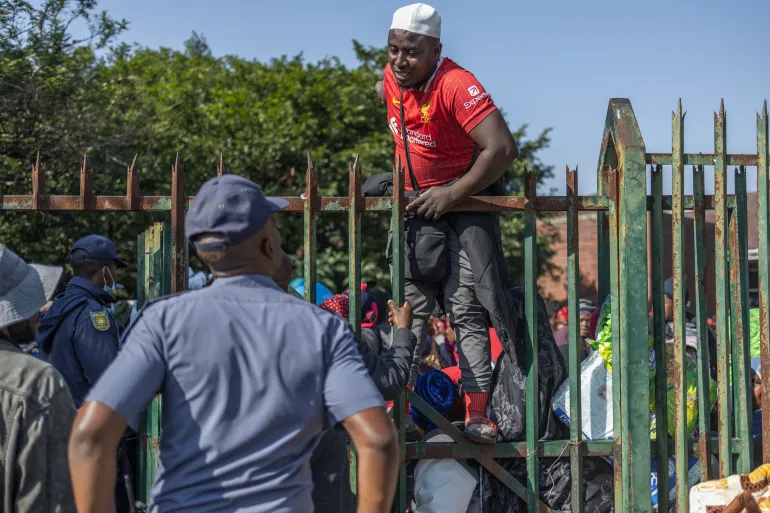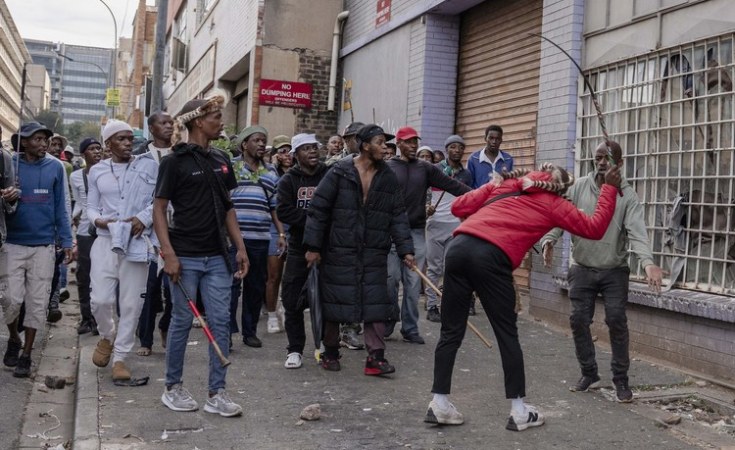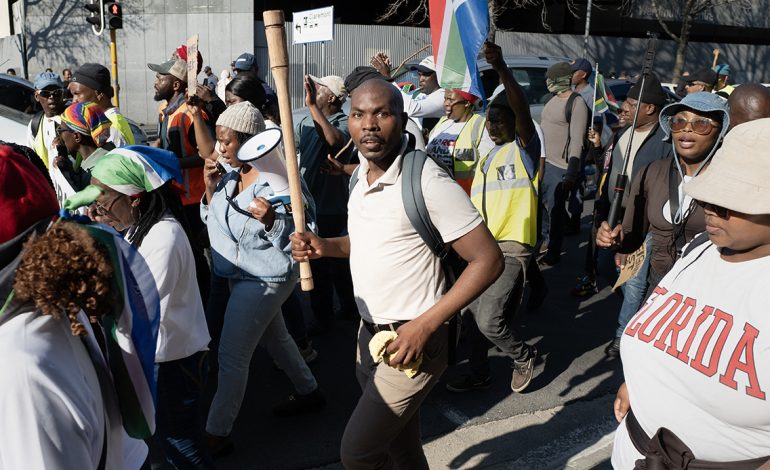
Xenophobic violence in South Africa has sparked deep disappointment across the African continent, leading some families to question the nation's commitment to regional solidarity. This sentiment stems from a historical legacy that explains why such violence resonates profoundly beyond South Africa's borders. Today, many African families witness loved ones returning home from South Africa following episodes of xenophobic attacks, prompting them to wonder about their genuine welcome in the country. This legacy explains why xenophobic violence resonates so deeply beyond South Africa’s borders. Today, some African families watch loved ones return home from South Africa after episodes of xenophobic violence, wondering whether they were ever truly welcome.
Gina Din, a Kenyan communications consultant, stated, "The disappointment many Africans feel today is not from strangers. It is the family’s disappointment, of neighbours and people who spent decades wishing South Africa well." Din further emphasized that people hold South Africa to a higher standard. "People expect more of South Africa because South Africa has taught them to expect more," she added, reflecting a widespread belief that the nation, given its history, should exemplify pan-African unity.
A Legacy of Shared Struggle
Long before democracy arrived in South Africa, Africans across the continent invested themselves emotionally, politically, and morally in the nation's struggle against apartheid. During this period, governments throughout Africa frequently opened their borders to South African exiles. Churches within various nations mobilized significant support for the anti-apartheid movement, organizing campaigns and providing material aid. Activists campaigned relentlessly, and ordinary citizens followed events in South Africa with a profound sense of personal investment, seeing the struggle as their own.
Support for South Africa did not originate from countries untouched by hardship. Many of these nations were grappling with the legacies of colonialism while simultaneously striving to build their own institutions, economies, and national identities. Yet, despite their own challenges, they made room for South African exiles and accepted various political and economic costs. This was primarily because apartheid was viewed as more than an internal South African problem. Apartheid was widely considered an assault on the dignity of an entire continent, a system that undermined the aspirations of all African peoples.
While South Africa’s freedom ultimately belonged to South Africans, when liberation finally came, Africans everywhere celebrated as though it were their own victory. The shared struggle against apartheid had united a continent; the victory did too. Its eventual triumph further solidified this unity. Through this process, South Africa was persuaded that reconciliation was indeed possible, both within its borders and with its continental neighbors. This profound shared history created a bond that went beyond mere political alliance, forging a deep emotional connection across the continent.
Building Trust and Reputation
Citizens embraced a democratic project that was far from assured in South Africa. Investors backed the country through profound change, recognizing the potential for stability and growth in a newly democratic nation. Neighbouring nations saw a partner, one with shared interests in regional peace and prosperity. Across the world, people saw possibilities within the transforming nation, inspired by its journey from oppression to liberation. Over time, South Africa earned credibility on the global stage, becoming a beacon of hope and a model for peaceful transition.
South African banks, telecommunications companies, insurers, retailers, and breweries became part of everyday life across the continent, extending the country's economic reach and fostering interconnectedness. Universities in South Africa attracted students from across Africa, fostering intellectual exchange and contributing to the development of human capital throughout the region. Musicians, artists, entrepreneurs, and innovators shaped conversations far beyond the country’s borders, contributing to a vibrant cultural landscape that showcased African talent and innovation. South Africa is not merely part of Africa’s story; it has helped to write it, contributing significantly to the continent's narrative of progress and self-determination.
Gina Din, a Kenyan communications consultant, stated that South Africa understood that "You do not need to borrow someone else’s identity to earn global respect. People are drawn to places that know who they are." This notes a self-assured identity that resonated internationally, demonstrating a unique path to global standing. South Africa demonstrated that reconciliation was possible and that a painful history need not dictate the future of a nation, offering a powerful example to a world often mired in conflict.
A reputation is built through experience, according to Din. She explained, "People form opinions based on what they see, whom they meet and how a place makes them feel." South Africa earned its place through struggle, sacrifice, and an extraordinary act of national reinvention, cementing its standing through these lived experiences and the positive perceptions it cultivated globally. This hard-won reputation was a source of pride for many across Africa, reinforcing the belief in the continent's capacity for overcoming adversity.
The Quiet Erosion of Trust
Migration pressures are not unique to South Africa. Across much of the world, societies are trying to balance security, legality, and humanity. The countries that earn the greatest trust often face the greatest disappointment when they fall short of expectations, precisely because their high ideals set a benchmark. Every sovereign state has the right and responsibility to secure its borders, uphold the rule of law, and distinguish between legal and illegal migration. Citizens are entitled to expect that governments will manage these responsibilities effectively and humanely. Legal migration and human dignity can co-exist, as can border security and African solidarity, provided there is a commitment to upholding both principles.
Gina Din, a Kenyan communications consultant, stated, "Trust rarely disappears overnight. It erodes quietly, a little at a time, often unnoticed until a moment arrives that reveals how much has already been lost." This quiet erosion has tangible consequences. When investors hesitate, they pull back from commitments, impacting economic growth and development. When neighbours become suspicious of one another, cooperation diminishes, and regional integration suffers. When institutions lose credibility, the social contract weakens, and governance becomes more challenging. And when people begin to feel they no longer belong, the fabric of society frays, leading to alienation and division. Din added, "Trust rarely dominates headlines, yet it quietly determines the health of societies." Across much of the world, faith in institutions and in one another is increasingly hard to sustain, a challenge exacerbated by global uncertainties. South Africa did not create that reality, but it navigates this complex environment like other nations, with the added weight of its unique historical legacy and continental expectations.
Africa's Enduring Hope
Africa, however, refuses to abandon South Africa, according to Kenyan communications consultant Gina Din. "Africa refuses to give up on South Africa. Too much of Africa’s hope is woven into it," Din stated. She explained that too much of the continent’s imagination has been invested in South Africa’s story and its success, a sentiment that extends beyond mere economic ties. While it has been giving, too much of the continent’s imagination has been invested in South Africa’s story and its success. People across the continent celebrated South Africa's freedom and resilience, viewing its journey as a direct reflection of Africa’s own possibilities and potential, a testament to what could be achieved against formidable odds. Din noted that the world begins to judge nations not only by their actions but also by the ideals they embody. She emphasized that South Africa offered "proof that reconciliation was possible, that a shared future could be imagined, and that history did not always have the final say," particularly in a century marked by division and conflict. In a century marked by division, it offered proof that reconciliation was possible, that a shared future could be imagined, and that history did not always have the final say. This enduring hope shows the deep emotional and historical ties that continue to bind South Africa to the rest of the continent, even amidst challenging times.