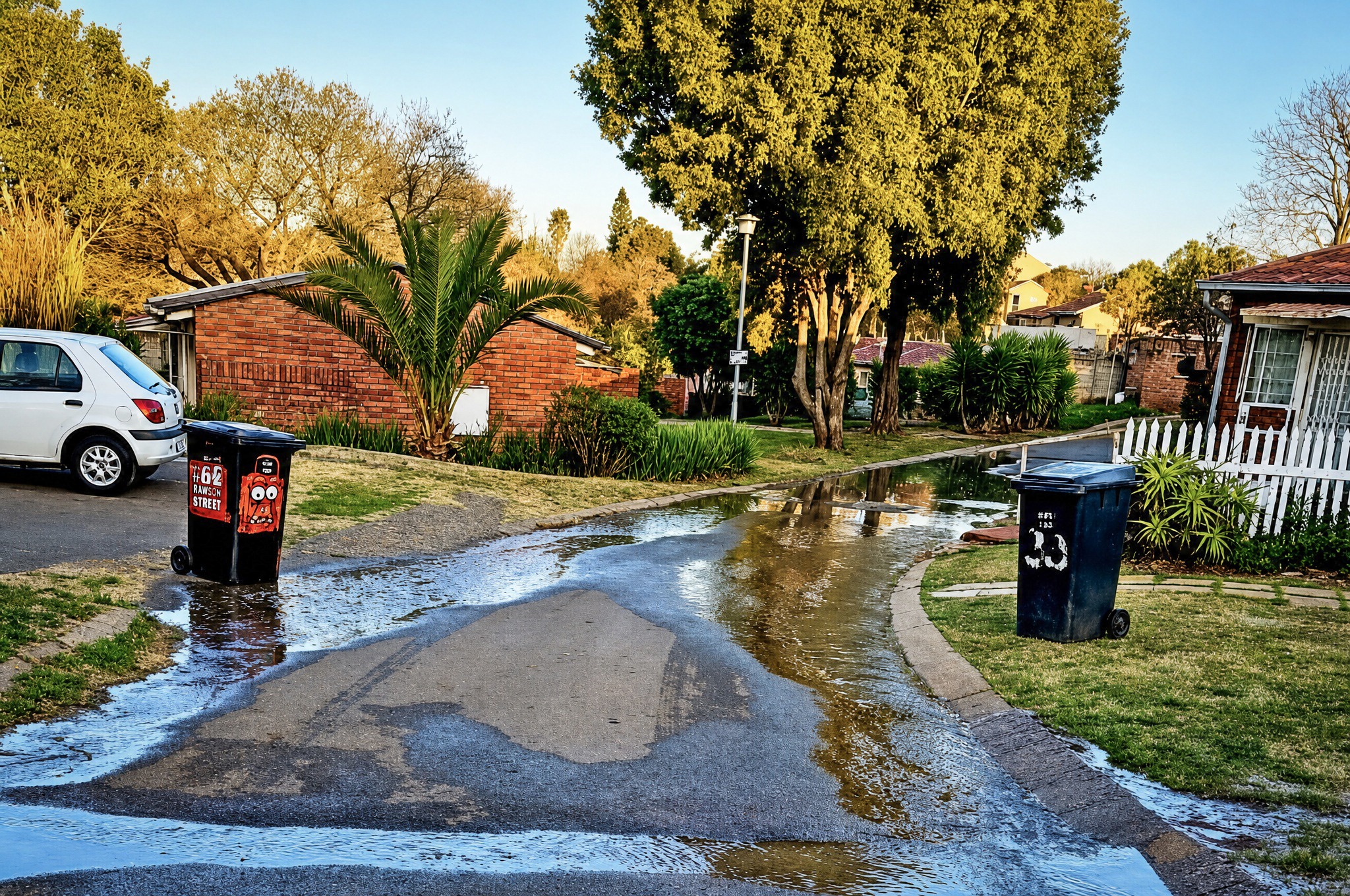
Westdene community members cleaned raw sewage at Eeufees Oord Old Age Home on Tuesday, August 25, 2026, after residents reported official inaction. The cleanup effort addressed a significant sewage spill on the premises of the old age home in Johannesburg, which had become a pressing health and sanitation concern. Johannesburg Water, the municipal entity responsible for water and sanitation services across the city, typically requires a work order from the City's Housing Department before it can dispatch teams to address sewer faults located on the Eeufees Oord site. This procedural requirement reportedly delayed official intervention for an extended period, prompting local residents to take direct action to mitigate the health hazard. The community's proactive measures noted a critical gap in municipal emergency response protocols, particularly concerning vulnerable populations in care facilities.
Official Response Delays and Frustration
Community members reported making several unsuccessful attempts to contact Johannesburg Water regarding the sewage spill at Eeufees Oord Old Age Home. These attempts spanned multiple days, with residents expressing growing frustration over the lack of a timely and effective response from the municipal utility. Despite numerous calls and reports, official assistance remained elusive. Residents indicated that, at one point, Johannesburg Water provided an individual with a bottle of Jeyes Fluid and instructed them to clean up the spill themselves, a directive that was met with disbelief and anger by the community. This incident further showed the perceived inadequacy of the official response. More than 30 people had reported the problem to Johannesburg Water before the entity eventually dispatched personnel to the site, by which time the situation had significantly deteriorated and the community had already begun its own cleanup efforts.
The delays were further exacerbated by official communications that seemed to downplay the urgency of the situation. Johannesburg Water allegedly informed residents that they would only proceed with cleaning and disinfecting the grounds once the sewage had dried. This communication reportedly caused further concern among the community, as it implied a prolonged period of contamination and potential health risks, especially for the elderly residents of the facility. The Gauteng Department of Health was also informed by officials that assistance would only be provided after the sewage had dried completely, mirroring the stance taken by Johannesburg Water. These protracted delays and the seemingly bureaucratic hurdles prompted the community's direct intervention in addressing the contamination, as they felt they could not wait for official channels to resolve the immediate crisis. The residents' determination to act stemmed from a deep-seated concern for the well-being of the old age home's inhabitants and the broader community's health.
Community Takes Charge: A Collective Effort
Faced with the persistent inaction from municipal authorities, residents of Westdene organized private plumbers at their own expense to address the sewage problem. This decisive step was taken out of necessity, demonstrating the community's commitment to resolving the issue independently when official help was not forthcoming. Community members, working alongside ward councillor Genevieve Sherman, also engaged directly with Johannesburg Water to pressure the municipal entity into attending to the blockage. Their collective advocacy and persistent calls for action were instrumental in eventually drawing some official attention to the crisis. These efforts were part of a broader community response to the ongoing sanitation issue, showcasing the resilience and organizational capacity of the Westdene residents.
The community's efforts went beyond mere advocacy. Prior to any significant official assistance, local residents utilized their own equipment to manage the contamination. Community members deployed personal pressure washers and Jeyes Fluid to clean the affected areas within the old age home, taking on the arduous and unpleasant task themselves. This hands-on approach was critical in preventing further spread of the raw sewage and mitigating immediate health risks. The Gauteng Department of Health eventually arrived on Saturday to assist with the cleanup operation, several days after the initial spill and the community's extensive efforts. This intervention occurred after community members had already completed the majority of the work to clear the spill, effectively leaving the official bodies to perform the final stages of disinfection and assessment rather than the initial, urgent cleanup. The community's swift and self-funded response noted both their dedication and the significant failure of municipal services to respond promptly to a critical public health emergency.
Broader Infrastructure Failures and Systemic Neglect
The sewage spill at Eeufees Oord Old Age Home was attributed to roots blocking sewer pipes, a maintenance issue described as longstanding and indicative of deeper systemic problems. Investigations into the cause of the backup revealed a critical point of failure: a blocked pipe on Westdene's Main Road. This specific blockage was identified as the direct cause of the sewage backing up into the old-age facility, leading to the distressing contamination. The severity of the blockage was such that sewage not only inundated the old age home but also entered stormwater drains, raising immediate and serious concerns about potential contamination reaching Emmarentia Dam and the Botanical Gardens. These natural assets are vital to the local ecosystem and recreational activities, and their contamination would represent a significant environmental disaster.
The recent sewage incident is not an isolated event but rather a symptom of deeper, systemic issues. Eeufees Oord has reportedly experienced years of unaddressed infrastructure failures, extending significantly beyond the recent sewage incident. These failures contribute to a challenging and potentially hazardous environment for residents, many of whom are elderly and vulnerable. Earlier in 2026, poor lighting at the facility contributed to an elderly resident falling and sustaining injuries, noting another facet of the facility's neglected infrastructure. Additionally, the facility is reportedly full of black mould, indicating further neglect in its upkeep and maintenance, which poses serious health risks, particularly respiratory issues, for its residents. These issues collectively point to systemic problems within the infrastructure of the old age home and suggest a broader pattern of neglect that requires urgent and full attention from relevant authorities. The community's proactive intervention in the face of the sewage spill shows the critical need for a more strong and responsive municipal infrastructure maintenance system to prevent such crises from recurring.