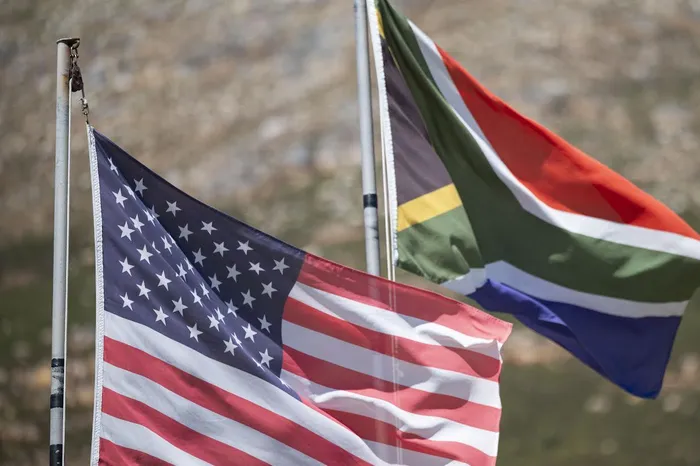
US officials have reportedly informed the newly appointed South African Ambassador to the US, Roelf Meyer, that economic demands for an investment deal between the two countries have not been withdrawn. This communication shows ongoing pressures from Washington DC regarding South Africa's economic trajectory. The US demands that Pretoria halt actions that threaten US national security interests and re-establish verified geopolitical neutrality.
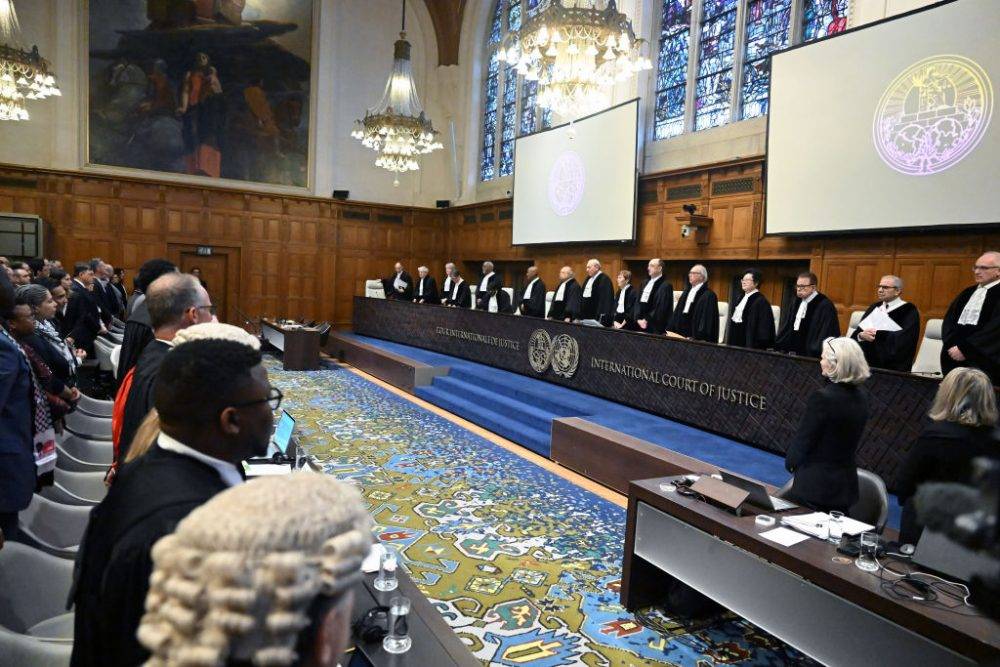
The US demands are partly linked to Pretoria's recent actions, which include South Africa’s legal action against Israel at the International Court of Justice (ICJ) and the hosting of foreign military assets. These activities have contributed to the US stance on the investment deal. Additionally, the United States requires explicit legislative guarantees from South Africa concerning investor protections. These guarantees stipulate that investor assets cannot be seized or expropriated for less than their full market value, a key condition for any potential agreement. This demand is a significant point of contention regarding the legislative framework of the Expropriation Bill.
Diplomatic Hurdles and Core Demands
Among the core demands, the US also seeks exemptions for American companies operating in South Africa from Black Economic Empowerment (B-BBEE) policies. This particular demand represents a significant point of contention concerning the legislative framework of South Africa's Expropriation Bill, as it directly challenges the country's transformation agenda.
Professor Kagiso ‘TK’ Pooe indicated that ongoing geopolitical tensions have provided South Africa with some reprieve by diverting Washington's attention. "South Africa finds itself in a tough situation," Pooe stated, adding, "the ongoing geopolitical tensions have, whether by design or not, kept Washington’s focus largely elsewhere, which has bought South Africa some breathing room." Pooe further elaborated on the need for South Africa to define its stance more clearly. "That definitional work has been notably absent. If South Africa can establish a more coherent and principled non-alignment doctrine, it gives Washington something substantive to engage with, rather than a posture it can simply dismiss or misread." Pooe also noted that South Africa’s stances on Israel and the International Criminal Court (ICC) have historically irritated the United States, contributing to the current diplomatic friction.
The US demands are not overtly stating their full intentions, according to Professor Pooe. "Until the Trump administration is more transparent about that underlying tension, much of what is being demanded is likely a proxy for those deeper grievances. Negotiating around the stated issues, without addressing the actual ones, will only prolong the impasse." This perspective suggests a deeper, unarticulated layer to the US position.
Amid these diplomatic pressures, South African economic sectors continue to operate and seek growth opportunities. The agricultural sector, for instance, has seen events celebrating its progress, such as the centenary celebrations for wool farmers and explorations into the growing connection between agriculture, entrepreneurship, and consumer trends. Black-owned businesses are also encouraged to apply for initiatives like the Agro-Processing Scale-Up Programme, reflecting efforts to foster local economic participation. The importance of insurance cover in unpredictable times is also noted, alongside support for local industries like steelwork through events such as the B.E.D. Initiative at the Steel Awards 2025. Farmers are rethinking traditional methods, such as with mobile coop systems for free-range chicken farming, and analysis is being conducted on how exports support prices in the fresh produce market. These ongoing activities show South Africa’s internal economic focus while navigating external pressures.
Expert Analysis on Trust and Neutrality
Roelf Meyer formally began his tenure last month after presenting his diplomatic credentials in Washington DC. International relations expert, Professor Theo Neethling, stated that rebuilding trust and bridging differences will require considerable time and sustained diplomatic engagement. Professor Neethling indicated that the White House under Donald Trump is unlikely to abandon its positions easily on issues such as South Africa’s relationship with Iran, expropriation without compensation, the issue of so-called Afrikaner refugees, and the role of Black Economic Empowerment (BEE) in trade relations.
Professor Neethling commented, "Considerable time and sustained diplomatic engagement will be required to rebuild trust and bridge differences on key issues. The White House under Donald Trump is unlikely to abandon its positions easily on matters such as South Africa’s relationship with Iran, expropriation without compensation, the issue of so-called Afrikaner refugees, and the role of BEE in trade relations between the two countries."
Meanwhile, the agricultural sector continues to see activity. Expert advice on checking the condition of goats and the difference light can make in chicken farming has been shared. Farmers are also advised on how to protect their livestock in cold, wet conditions. A production auction celebrated Valsrivier Bonsmara breeders' 21 years of excellence, showcasing the quality of South African livestock. A new Fusion Meat programme aims to boost profits for South African red meat farmers, providing innovative strategies for market engagement. The "From our editor" column addressed a foot-and-mouth disease (FMD) campaign, noting a livestock story that had been misrepresented for decades. In related news, a new Proudly SA disinfectant has been proven to kill the FMD virus, offering a key tool for crisis prevention and enhancing biosecurity measures. Resilience, experience, and smart capital are viewed as the future of wine tourism, emphasizing sustainable practices and strategic investment. A DIY guide was also published for creating a Cortool for wire clamps and fencing solutions, empowering farmers with practical, cost-effective tools. The concept of making communal land profitable with Meatmaster sheep and Boer goats is also gaining traction, promoting economic development in rural areas. An Argentine laboratory, Biogénesis Bagó, is bringing its expertise to the world, setting the standard in health emergencies, which could have implications for South Africa's livestock health and disease management.
Professor Neethling added, "The future of US-South Africa relations will be shaped by a delicate balancing act between deep ideological differences and the necessity of economic cooperation." He concluded that "The success of this approach will depend on political will, diplomatic patience, and the ability of both sides to find common ground amid continuing policy disagreements. In this regard, the appointment of Ambassador Meyer in Washington DC might be a small but significant step forward."
Broader Agricultural Context and Opportunities
New research indicates that grape skins, pulp, and seeds, which are byproducts of the winemaking process, could potentially replace antibiotics in broiler chicken feed, offering an innovative and sustainable solution for poultry farming. In other agricultural developments, Bayer and Khula have initiated a R7.5 million accelerator program aimed at emerging farmers, providing essential support and resources for growth. The mohair industry has seen significant progress, with the world record price broken three times, reflecting the most beautiful mohair produced in 44 years and noting the sector's global competitiveness. Separately, a female ostrich has achieved a possible record price at auction, showing the value and potential of specialized livestock farming.
To enhance livestock management, Studbook SA has launched IDTrax, a system designed to strengthen traceability and disease control within the sector, key for maintaining animal health and market access. Equipment manufacturer New Holland offers tractors specifically suited for the needs of emerging and small-scale farmers, providing appropriate technology to boost productivity. In terms of land reform, President Ramaphosa has pledged to provide title deeds to farmers to address the lease trap hindering their progress, a move aimed at securing land tenure and promoting investment. The future of farming is also being shaped by climate-smart solutions that farmers can implement, emphasizing the importance of efficient water use and adaptation to changing environmental conditions.
A video diary provided insights into the daily activities of cucumber farmer Kobela Mokgohloa, offering a glimpse into the dedication required for agricultural success. The story of Sibongile Mabasa notes determination, detailing how she slept in a tent to establish her pecan nut business, showcasing entrepreneurial spirit in challenging circumstances. Innovation is also playing a role in securing the future of potato farming in South Africa, as observed during the International Day of Potato, with new techniques and varieties being explored. Additionally, analysis has been conducted on how interest rate hikes impact farmers and food prices, providing key economic insights for the agricultural community. The market day connecting South Africa’s smallholder farmers to markets, inputs, and support also represents a vital platform for growth and economic inclusion. The phrase "Feathers, data and very big machines" encapsulates the modern approach to farming, integrating technology and scale for greater efficiency. "We are producers, not just beneficiaries" reflects the growing empowerment of food gardens gaining market access on Shoprite Market Day, demonstrating a shift towards self-sufficiency and economic participation.