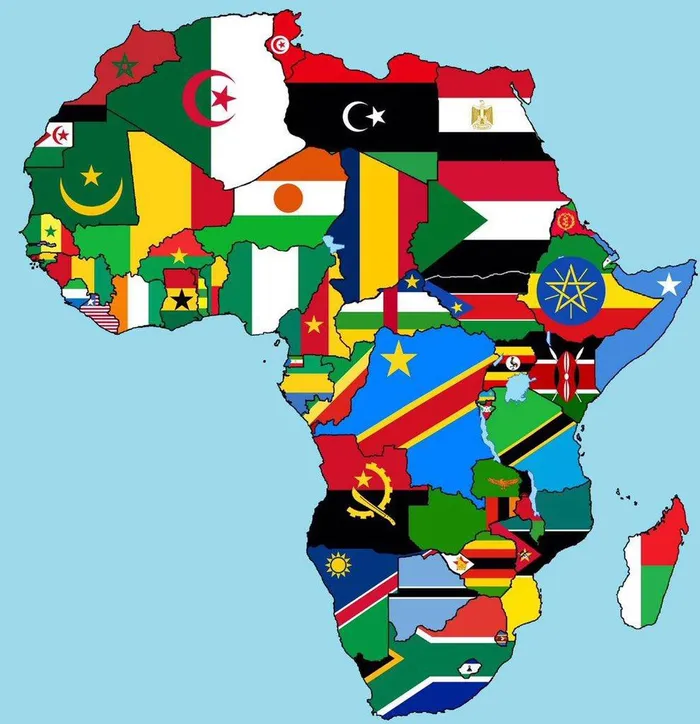
As South Africa faces increasing tensions surrounding immigration and societal challenges, Ven. Sizwe Ngcobo cautioned against attributing the nation's failures to foreign nationals. Ngcobo's remarks come as the country navigates complex social dynamics, emphasizing a need for unity over division. He specifically warned against blaming foreign nationals for the country’s failures, particularly as South Africa grapples with rising tensions over immigration and social decline. The concept of collective strength for African people, articulated through the establishment of Africa Day, underpins a historical commitment to solidarity across the continent. Africa Day originated from the belief that the continent's people are more resilient when united, a sentiment that resonates with calls to address South Africa's deep-rooted issues without resorting to scapegoating. It was born from the conviction that this continent's people are stronger together, a principle that advocates for collective action and mutual support in overcoming shared challenges. This foundational idea notes the importance of solidarity in addressing complex national and continental issues.
Underlying Social Fractures
South Africa faces significant social challenges, including the widespread absence of paternal figures in households. Approximately 70% of South African children, a figure representing around 14 million young people, grow up without their biological fathers consistently present. This demographic reality contributes to a complex social fabric, impacting family structures and community stability across the nation. The absence of consistent paternal presence is a deep-seated issue with broad implications for social development and youth welfare. Another pressing issue is the prevalence of informal housing across the nation. Nearly 2.4 million South African households currently reside in informal dwellings, noting disparities in living conditions and access to adequate housing. These statistics show foundational issues within the country's social structure, pointing to systemic inequalities and the urgent need for full solutions. These widespread challenges require a unified approach, rather than divisive blame, to foster sustainable development and social cohesion.
Lawful Governance and Accountability
Every sovereign nation must manage its own borders, prosecute crime, and hold the corrupt to account. This includes ensuring accountability for officials who enable lawlessness, as their actions undermine the rule of law and public trust. The integrity of national governance relies on the consistent application of legal frameworks and the unwavering commitment to justice for all citizens. Any intervention concerning children must be grounded in South Africa's Children's Act. This act reinforces the constitutional principle that a child's best interests are of critical importance in all matters affecting them, serving as a critical safeguard for the nation's youth. Upholding these legal and constitutional mandates is essential for maintaining a just and orderly society, ensuring that governance is both effective and ethically sound. This commitment to lawful governance and accountability is a cornerstone of national stability and progress.
The Path of Ubuntu and Unity
Social healing for South Africa and the broader African continent cannot be achieved through narratives driven by fear or the scapegoating of vulnerable populations. This perspective emphasizes a need for collective solutions rather than divisive blame, asserting that social healing, for South Africa and for Africa, will not come through fear-driven narratives or the scapegoating of the weak. Instead of attributing the nation's challenges to specific groups, fostering unity is presented as a more constructive approach to addressing deep-rooted issues. The focus remains on solidarity and shared responsibility to overcome complex societal problems. This approach aligns with principles of community and mutual support, aiming to build a more cohesive society where collective well-being is prioritized over individual blame. Embracing the spirit of Ubuntu, which emphasizes interconnectedness and shared humanity, is key for fostering genuine reconciliation and progress.