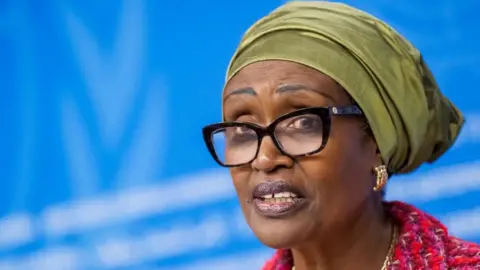
The head of the UN's HIV agency, Winnie Byanyima, stated that the United States' decision to withdraw all HIV and Aids funding from South Africa will likely result in loss of life. Byanyima's comments highlight concerns about the severe public health implications of the US funding cut for South Africa. Byanyima's strong statement shows the gravity of the situation, emphasizing that this financial cut is not merely an administrative adjustment but a direct threat to public health and human lives in a country already grappling with the world's largest HIV epidemic.
US Funding Details and Impact
South Africa does not rely on US funding for HIV drugs, but the United States made a significant contribution to the country's programmes designed to prevent the spread of the virus. While South Africa maintains its own strong procurement system for antiretroviral medications, the US funding was key for the broader ecosystem of HIV prevention services. The US President's Emergency Plan for AIDS Relief (Pepfar) had been providing approximately 17% of South Africa's overall HIV response funding. This substantial contribution meant that Pepfar played a key role in sustaining and expanding key public health initiatives across the nation. This contribution supported various initiatives focused on prevention, including education campaigns and services aimed at reducing new infections. The programs supported by Pepfar were diverse, ranging from community-based outreach to full sexual health education, all designed to curb the transmission of HIV. The withdrawal of this funding stream is expected to create a substantial gap in the resources available for these critical public health efforts. Programmes addressing community outreach, testing, and other preventative measures previously benefiting from Pepfar's financial support will now face significant challenges. The reduction in funding could lead to a scaling back of these vital services, potentially impacting the country's ability to control the epidemic effectively.
Reasons for Funding Withdrawal
The US State Department confirmed a "phased drawdown" of Pepfar funding, stating the decision was due to "South Africa's failure to make demonstrable progress on policy requests by the administration." This withdrawal of financial support comes as South Africa faces the largest HIV epidemic globally, with more than eight million people currently living with HIV within its borders. This figure is higher than anywhere else in the world, making the country's response to HIV a critical global health priority. The country's high prevalence rate shows the significant public health challenge it manages. The US administration's decision has raised questions about the criteria used to assess "demonstrable progress" and the potential impact on vulnerable populations.
Additionally, former US President Donald Trump has made allegations concerning South Africa. Trump has stated that there is a "white genocide" taking place in South Africa. The former president's comments have drawn attention to his perspective on the country's internal affairs. Shortly after he came into office, Trump issued an executive order, alleging that "countless" South African policies dismantled equal opportunities and fuelled violence "against racially disfavored landowners." These allegations, made during his presidency, added a layer of political tension to the bilateral relationship between the two countries. The phased reduction in Pepfar funding marks a shift in the long-standing financial support provided by the United States to South Africa's HIV response efforts.
UNAIDS Chief's Plea
Until 2025, the United States supported South Africa's efforts against HIV with an estimated $400m (£300m) annually through the President's Emergency Fund for Aids Relief (Pepfar). This consistent financial commitment over many years had been a cornerstone of South Africa's full HIV strategy. Former US President Donald Trump issued an executive order shortly after taking office, alleging that "countless" South African policies undermined equal opportunities and fueled violence "against racially disfavored landowners." In response to the funding changes, South Africa's health ministry has stated it had "long been working on a self-reliance plan." This plan aims to reduce the country's dependence on foreign aid for its HIV response. The ministry's proactive approach indicates an understanding of the need for sustainable, domestically funded solutions to manage the ongoing epidemic. However, the immediate impact of such a significant funding cut remains a serious concern for public health experts and international organizations like UNAIDS.