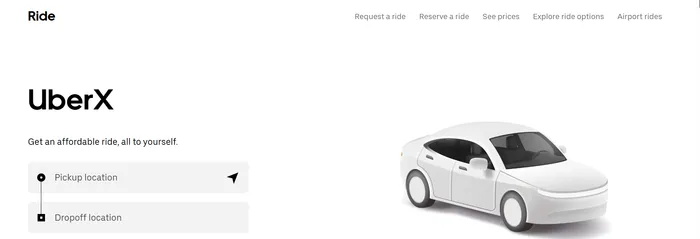
UberX will no longer be available nationwide in South Africa beginning September 1. The ride-hailing company announced the change, stating that simplifying its product offering aims to create clearer categories for both passengers and drivers. This strategic shift reflects Uber's commitment to optimizing its service delivery and enhancing user experience across the country. Uber indicated that drivers operating higher-specification vehicles were not consistently able to benefit from those differences under the previous structure, leading to a re-evaluation of its service tiers. The discontinuation impacts services across the country, signifying a notable change in the ride-hailing landscape for South African users.
New Product Structure
Beginning September 1, passengers will be required to select from Uber's alternative product offerings, which will vary based on their specific location and the vehicle options accessible in their area. This means that from September 1, passengers will need to select from the other Uber products available to them. Uber stated the change is intended to streamline choices for users, ensuring a more intuitive selection process. The company's available services in South Africa include Uber Go, Uber Comfort, Uber Black, UberXL and Van, and Courier (Car & Bakkie). These options provide a range of vehicle types and service levels for consumers, catering to diverse needs and preferences. The new structure aims to provide a clearer understanding of what each service entails for both passengers seeking a ride and drivers providing the service.
Uber's Rationale for Change
Uber is restructuring its products after finding that many trips were being completed by the same vehicles across its Uber Go, UberX, and Comfort offerings. This overlap in vehicle usage across different service tiers prompted the company to re-evaluate its product architecture. Uber also stated that the existing structure had made it more difficult for passengers to understand the distinctions between its various service categories, leading to potential confusion. The company aims to clarify these differences with the new product lineup, ensuring a more straightforward selection process for users. This simplification is expected to benefit both passengers, who will have clearer choices, and drivers, who will operate within more defined service categories. The changes are intended to provide a clearer differentiation of services based on vehicle type and passenger needs, ultimately enhancing the overall efficiency and transparency of the platform.
Impact on Users and Drivers
Drivers whose vehicles meet the requirements for other Uber products will retain the ability to operate within those categories. Drivers will still be able to operate on any product for which their vehicle qualifies, ensuring continued earning opportunities for eligible partners. The company clarified that this restructuring aims to optimize vehicle utilization across its remaining service tiers, potentially leading to more consistent demand for specific vehicle types. For passengers, the discontinuation means that the option for UberX, which provided a private ride for up to four people at an everyday price, will no longer be available. This change will necessitate users selecting from the remaining services based on their needs and the available vehicle options in their location. This adjustment requires passengers to familiarize themselves with the alternative offerings to continue using Uber's services effectively.
Background and Alternatives
UberX has been available on South African roads for more than a decade, establishing itself as a widely used ride-hailing option across the country. The service offered passengers a private ride for up to four people at an everyday price, making it a popular choice for daily commutes and casual travel. Following its discontinuation, passengers will need to select from Uber's remaining product offerings. These include Uber Go, Uber Comfort, Uber Black, UberXL and Van, and Courier (Car & Bakkie), which provide a range of vehicle types and service levels. The company indicated that these alternatives aim to offer clearer categories for both passengers and drivers, addressing the previous complexities identified in its service structure. The transition marks a significant shift in Uber's operational strategy in South Africa, focusing on a streamlined and more differentiated product portfolio.