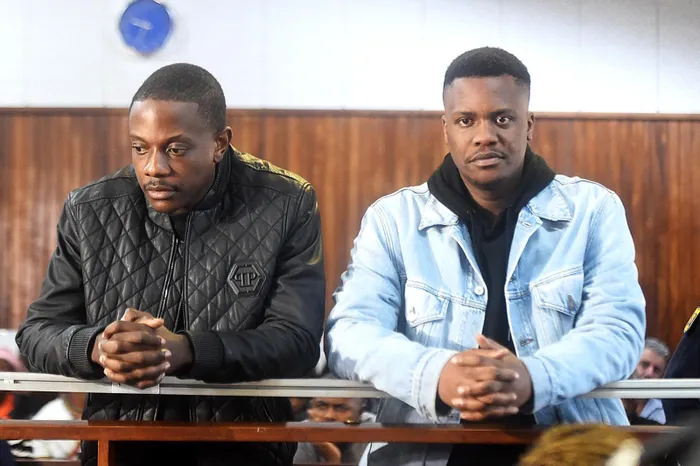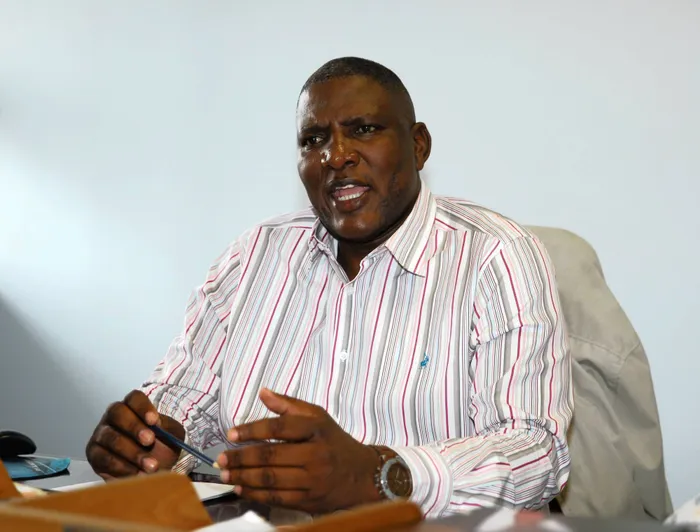
Lieutenant Colonel Khephu Ndlovu and Sergeant Bonginkosi Dlamini were each sentenced to 17 years' imprisonment by the Pinetown Regional Court for corruption and defeating the administration of justice. The former officers accepted a bribe between August and October 2019 to interfere with State witnesses and weaken evidence in the 2018 murder case of Thulani Nxumalo. Nxumalo was an ANC branch leader who was assassinated in KwaNdengezi. The officers' corrupt actions aimed to ensure the acquittal of the killer and mastermind involved in Nxumalo's murder case. The sentencing by the Pinetown Regional Court marked a significant step in addressing corruption within law enforcement and ensuring accountability for those who undermine the justice system. The charges against Ndlovu and Dlamini specifically included corruption and defeating the administration of justice, reflecting the serious nature of their offenses. Their involvement in the 2018 murder case of Thulani Nxumalo, a prominent ANC branch leader, brought their actions under intense scrutiny. The court found that between August and October 2019, the officers accepted a bribe with the explicit intention of weakening the evidence against the perpetrators and interfering with State witnesses. This deliberate subversion of justice was designed to secure the acquittal of the individual responsible for Nxumalo's assassination and the mastermind behind the plot. The conviction and subsequent sentencing of Lieutenant Colonel Khephu Ndlovu and Sergeant Bonginkosi Dlamini show the judiciary's commitment to rooting out corruption within state institutions.
Officers' Roles and Bribe Details
Sergeant Bonginkosi Dlamini served as the detective and investigating officer responsible for the murder case of Thulani Nxumalo. In this critical role, Dlamini was entrusted with uncovering the truth and ensuring justice for the slain ANC branch leader. However, he instead chose to exploit his position for personal gain. Lieutenant Colonel Khephu Ndlovu, who worked in the Visible Policing Unit at the Bhekithemba police station, also held the position of police spokesperson. Despite his high-ranking status and public-facing role, Ndlovu was identified as the coordinator of the scheme designed to weaken the murder case against the accused. His involvement as a senior officer added another layer of gravity to the corruption, as he was expected to uphold the law, not subvert it.
The bribe money involved in the corruption amounted to R120,000. This substantial sum was intended to manipulate the legal process. Sibongile Ndlovu withdrew this sum, playing a direct role in facilitating the corrupt transaction. The intention behind the bribe was to shield Sibongile Ndlovu's husband, Felokwakhe ‘induna’ Ndlovu, from being incarcerated for Nxumalo’s murder. The family's desperate attempt to protect Felokwakhe Ndlovu led them to engage in this illicit activity with the police officers. The exchange of the bribe money occurred at the Durban Central police station, a location that further noted the brazen nature of the corruption, taking place within the very institutions meant to enforce the law. The detailed planning and execution of the bribe indicated a sophisticated attempt to obstruct justice, involving multiple individuals and leveraging the positions of the police officers.
Unraveling the Corruption Scheme
The Political Killings Task Team (PKTT) arrested Sergeant Bonginkosi Dlamini, which led to the exposure of the corruption scheme. Dlamini's arrest initiated a broader investigation into the network involved in obstructing justice in the Thulani Nxumalo murder case. The PKTT's swift action was key in preventing the complete subversion of justice and bringing the corrupt elements to light. Subsequent arrests widened the scope of the inquiry to include several individuals connected to the plot, revealing a complex web of complicity.
Among those later apprehended were Sibongile Ndlovu, her husband Felokwakhe Ndlovu, and Lieutenant Colonel Khephu Ndlovu. The investigation also led to the arrest of Felokwakhe Ndlovu's brother, alongside the couple’s son, Lindokuhle Mbonambi. These arrests demonstrated the extensive reach of the corruption and the involvement of not only the police officers but also the family members of the primary murder suspect. Investigations revealed that Lindokuhle Mbonambi had actively participated by concealing the murder weapon used in Nxumalo's assassination, further implicating the family in the cover-up. His role in hiding key evidence was a significant factor in the obstruction of justice. These arrests were key in dismantling the scheme designed to shield Felokwakhe Ndlovu from prosecution, ensuring that all individuals involved in the corruption and the original murder were brought to justice.
Felokwakhe Ndlovu was ultimately sentenced to life imprisonment in May 2023 by the Durban High Court for his role in the killing of Thulani Nxumalo. This landmark sentencing concluded the primary case that the former police officers had attempted to subvert through their corrupt actions. The Durban High Court's judgment showed the severity of the crime and the persistent efforts made by law enforcement and the judiciary to secure a conviction despite the elaborate corruption scheme. The conviction of Felokwakhe Ndlovu ensured that the victim's family received a measure of justice for the assassination of Thulani Nxumalo.
In addition to Felokwakhe Ndlovu, two other individuals received life imprisonment sentences for their involvement in Nxumalo's murder. These sentences were handed down concurrently with Ndlovu's in the Durban High Court proceedings, affirming the accountability of all principal perpetrators in the assassination. The fact that three individuals received life sentences notes the premeditated and severe nature of the murder, as well as the full success of the prosecution in bringing all those directly responsible to justice. The Durban High Court's ruling sent a clear message that such politically motivated assassinations would be met with the full force of the law, regardless of attempts to obstruct justice.
Magistrate's Scathing Remarks
Magistrate Muntukayise Khumalo presided over the case and delivered strong remarks regarding the potential and actions of the defendants. Magistrate Khumalo noted that Sergeant Bonginkosi Dlamini, despite his initial promise, had arrested a key State witness in the Thulani Nxumalo murder case. This initial action by Dlamini was part of his duties as the investigating officer, but his subsequent conduct revealed a shocking betrayal of trust. Dlamini later pressured this witness to retract their statement and refuse to testify against Felokwakhe Ndlovu, according to the magistrate. This direct interference with a State witness was a critical component of the corruption scheme, designed to collapse the prosecution's case. Magistrate Khumalo strongly criticised the former officers for their actions, stating, "Dlamini was an intelligent young police officer who could have made his name within the police hierarchy in the way he was doing his job." The magistrate's comments reflected the profound disappointment in Dlamini's choice to abandon his duty for illicit gain, squandering a promising career.
The magistrate also noted Lieutenant Colonel Khephu Ndlovu's dereliction of duty, remarking, "As a high-ranking police officer, he (Khephu Ndlovu) ought to have known that it was of utmost importance to protect the victims of crime in this country." This statement showed Ndlovu's failure to uphold the fundamental principles of law enforcement, particularly given his senior position and his role as a police spokesperson, a position that demands integrity and public trust. Magistrate Khumalo noted an alarming increase in corruption within state institutions and society, expressing deep concern over the erosion of public faith in government bodies. He showed the necessity for judicial intervention, observing, "The boldness and audacity of corrupt criminal elements are increasing, which is what calls for the decisiveness of courts to deal with this culture in our society." This powerful commentary from Magistrate Khumalo emphasized the judiciary's role as a bulwark against corruption and its commitment to ensuring justice prevails. His remarks served as a stern warning to others who might consider engaging in similar corrupt practices.
Magistrate Khumalo sentenced all five individuals involved in the corruption scheme to 17 years' imprisonment each for their respective roles in the crime. This full sentencing applied to every participant in the bribery and obstruction plot, demonstrating that no one involved in undermining justice would escape severe consequences. In addition to their prison sentences, all five individuals were declared unfit to possess any firearm. This ruling applies to Lieutenant Colonel Khephu Ndlovu, Sergeant Bonginkosi Dlamini, Sibongile Ndlovu, Felokwakhe Ndlovu, and Lindokuhle Mbonambi. The prohibition on firearm possession is a standard measure for serious offenders, particularly those who have abused positions of power or engaged in violent crimes or their cover-up. The uniform sentencing for all five individuals who participated in the corruption scheme notes the court's view that their collective actions constituted a grave assault on the administration of justice.
Motive Behind the Murder
Thulani Nxumalo’s murder was reportedly motivated by his opposition to Felokwakhe Ndlovu's actions. Nxumalo had publicly opposed Ndlovu's practice of selling Ingonyama Trust land for personal financial benefit. This disagreement over land transactions ultimately led to the assassination of the ANC branch leader in KwaNdengezi in 2018. The motive notes a dispute over communal property and personal profit, which escalated into a fatal conflict. The Ingonyama Trust, which holds vast tracts of land in KwaZulu-Natal, is a sensitive issue, and disputes over its management and use often carry significant social and political weight. Nxumalo's stance against Ndlovu's unauthorized sales positioned him as a protector of community resources, making him a target for those who sought to exploit these lands for personal enrichment. His assassination was not merely a criminal act but also an attack on community leadership and the principles of equitable land management. The subsequent legal proceedings and corruption scheme show the severity of the crime and the lengths taken to cover it up, reflecting the deep-seated interests involved in the land dispute. The revelation of the motive provided key context to the entire case, explaining the extreme measures taken by Felokwakhe Ndlovu and his family, including the attempt to bribe police officers, to avoid accountability for Nxumalo's murder.