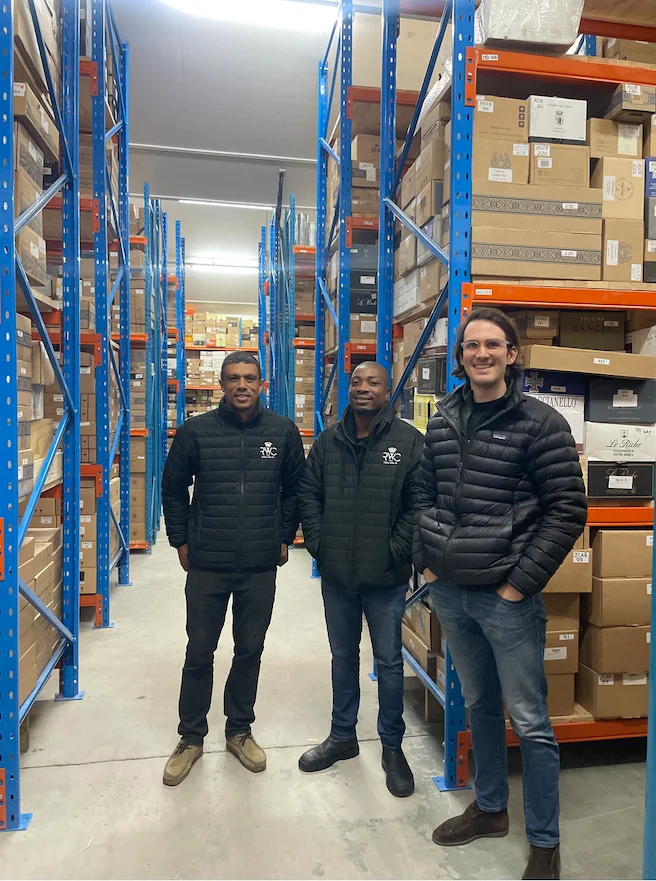
Daléne Fourie reported on Sunday, 10 May 2026, that the future of the wine business is emerging from a warehouse in Cape Town. According to the article, titled "The wine business of the future is already running out of a warehouse in Cape Town," Fernando Rueda and Rueda Wine Co. Are central to this development. The report by Daléne Fourie notes a significant shift in how wine products are handled and distributed, proposing a new benchmark for industry practices.
Revolutionary Warehouse Operations
Fernando Rueda, founder of Rueda Wine Co. Has established a new operational model for the wine business from a warehouse in Cape Town. This facility is central to what Daléne Fourie described on Sunday, May 10, 2026, as the future of the wine industry. The strategic location of the warehouse in Cape Town, a key logistical gateway, further enhances its role in this innovative approach. Rueda Wine Co.'s approach leverages a streamlined logistics process designed to optimize the distribution and storage of wine products. This process incorporates advanced inventory management techniques and efficient handling procedures, aiming to reduce lead times and improve product integrity. The company’s innovative practices aim to address challenges within the traditional wine supply chain, such as fragmented distribution networks and lengthy transit periods. Their Cape Town warehouse serves as a hub for these operations, demonstrating a new paradigm for how wine is managed from production to market. This operational blueprint suggests a move towards greater control and efficiency across the entire supply chain, from the moment wine leaves the vineyard until it reaches the consumer.
Rueda Wine Co. Vision
Fernando Rueda, founder of Rueda Wine Co. Envisions a future for the wine industry where efficiency and strategic logistics play a central role. The company's operations in Cape Town exemplify this approach, aiming to redefine traditional supply chain models. Rueda Wine Co. Seeks to streamline the journey of wine from producer to consumer, addressing historical challenges in distribution and storage. The Cape Town warehouse functions as a critical hub for these advanced logistical processes, setting a precedent for how wine businesses can adapt to evolving market demands. This model emphasizes optimized inventory management and swift delivery, moving away from conventional methods that often involve multiple intermediaries and prolonged transit times. Through its innovative framework, Rueda Wine Co. Aims to create a more responsive and cost-effective ecosystem for wine distribution. This vision extends to ensuring that wines maintain their quality and reach markets in optimal condition, benefiting both producers and end-consumers. The focus on direct and efficient pathways is a cornerstone of Rueda Wine Co.'s strategy, as detailed in the article by Daléne Fourie.
Industry Disruption and Future
Fernando Rueda, founder of Rueda Wine Co. Has introduced a model that seeks to disrupt established industry norms. Operating from a warehouse in Cape Town, the company focuses on re-engineering the wine supply chain. This approach aims to reduce the complexities and inefficiencies often associated with traditional wine distribution channels. By consolidating various stages of the supply chain, Rueda Wine Co. Intends to minimize bottlenecks and enhance overall operational fluidity. The company intends to set a new standard for how wine is stored, managed, and delivered to markets. This proactive stance positions Rueda Wine Co. As a significant player in shaping the future trajectory of the global wine trade.
The company's operations in Cape Town are designed to showcase a more agile and responsive logistical framework, according to observations made by Daléne Fourie. This framework challenges the conventional multi-tiered distribution systems by optimizing inventory flow and accelerating delivery times. The objective is to create a more direct and cost-effective pathway for wine producers to reach consumers, thereby influencing future business practices within the global wine industry. The model championed by Fernando Rueda and Rueda Wine Co. Suggests a paradigm shift, where technological integration and strategic warehousing become critical in maintaining competitiveness and meeting consumer demands in an increasingly fast-paced market.