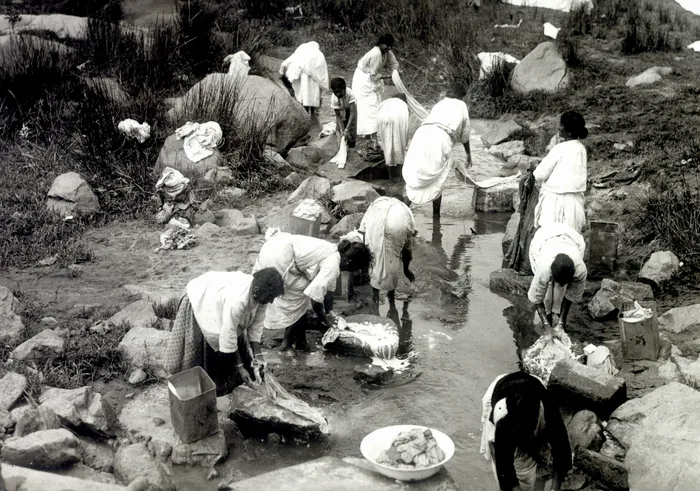
Between 1860 and 1911, 152,184 indentured workers arrived in South Africa aboard 384 ships. These arrivals were predominantly men, comprising 62% of the total, while women accounted for 25% and children made up 13% of the transported individuals. The journey and subsequent labor system often placed these individuals in precarious positions, subjecting them to harsh realities and profound injustices. Women were particularly vulnerable within this system, frequently subjected to sexual violence and exploitation, a widespread issue that showed their precarious standing. The conditions of indenture, from the initial recruitment processes in India to the arduous voyages and the subsequent labor on plantations and in mines in South Africa, created an environment where the women faced significant and constant risks due to their gender and their status as indentured laborers. This reality notes a widespread pattern of abuse and systemic vulnerability embedded within the colonial labor framework, which often disregarded the human rights and dignity of the workers.
Life in the Barracks
From the outset, the female quota of indentured workers was often considered "dead stock" within the system, a dehumanizing label that reflected their perceived lack of direct economic utility in heavy labor roles and their reduced value in the eyes of the colonial administrators and employers. This perception contributed to their marginalization and vulnerability. Many indentured workers described their lives using the term "_narak," signifying "hell on earth," a powerful testament to the extreme suffering and despair they experienced daily. The language used by workers revealed their deep dissatisfaction and profound misery regarding their conditions. The indentured system itself was labeled _narakam_, a term that vividly conveyed its oppressive nature, and the barracks, known as "lines" where workers were housed, were referred to as _vipaccara vituti_ or _kasbighar_, which translates to "brothels." This terminology indicates the highly distasteful and critical view indentured workers held regarding their living and working circumstances, suggesting a profound breakdown of social order and personal safety within these living quarters.
The living conditions in these barracks were often overcrowded and lacked basic amenities, further contributing to the degradation of life. The close quarters and the constant surveillance created an environment devoid of privacy and personal space. The disproportionate number of women within the indentured population, significantly outnumbered by men, contributed to unstable relationships, widespread social ills, and significant difficulties in establishing stable family life among the workers. This gender imbalance, coupled with the harsh living conditions and the constant threat of exploitation, fostered an environment where personal stability was severely undermined, impacting the social fabric and the well-being of the entire indentured community. The lack of opportunities for forming traditional family units or maintaining social structures from their homelands exacerbated feelings of isolation and despair among the laborers.
A System of Exploitation
During the late 19th and early 20th centuries, Indian women occupied the lowest position within the class-race-gender hierarchy in colonial Natal. Jo Beall stated that "during the late 19th and early 20th centuries, Indian women were at the bottom of the class-race-gender hierarchy in colonial Natal. As workers, they were ultra-exploitable, being used for the most arduous and least skilled tasks in a forced labour system. As Indians, they were regarded as unwelcome additions to the already complex social make-up of the colony." This extreme vulnerability meant they were often assigned the most difficult and least skilled tasks within the forced labor system, enduring grueling physical labor with minimal compensation and recognition. Their position at the intersection of multiple forms of oppression—as women, as indentured laborers, and as members of a racialized group—rendered them exceptionally exposed to exploitation from all sides.
The conditions of indenture frequently replicated the actual conditions of slavery, characterized by intense and systemic violence. This included summary physical, psychological, and economic punishments, which were integral to maintaining control over the labor force and enforcing compliance. These brutal methods served as a constant reminder of the workers' subjugated status and the severe consequences of disobedience or perceived insubordination. The historical study, A New System of Slavery: The Export of Indian Labour Overseas 1830-1920, by Hugh Tinker, posited that the legacy of slavery persisted because colonial and imperialist powers showed no genuine interest in dismantling it. Tinker's argument noted that the indenture system effectively continued a form of servitude, merely rebranding it with a different legal framework but retaining many of the coercive and violent aspects of its predecessor. This perspective suggests that the system was not a benevolent attempt at labor migration but rather a calculated mechanism to secure cheap labor under conditions that bordered on chattel slavery.
Indentured workers faced significant restrictions on their movement, a fundamental curtailment of their personal freedom. Even when passes could theoretically be obtained, their freedom to travel was heavily constrained by bureaucratic hurdles, punitive measures, and the constant threat of arrest or further punishment if found without proper documentation. This lack of mobility further entrenched their position within the oppressive labor structure, making it exceedingly difficult for them to escape exploitative conditions, seek better opportunities, or even connect with fellow laborers in different areas. The system's design ensured that workers remained bound to their contracts and employers, with limited recourse against abuse and virtually no avenue for independent action or self-improvement. The absence of genuine freedom of movement was a cornerstone of the indenture system's control mechanism, reinforcing the power imbalance between employer and laborer.
Enduring Violence and Abuse
Women became profoundly vulnerable to sexual exploitation, abuse, and even murder within the indentured labor system, a stark reality that permeated their daily existence. This vulnerability began early, with women subjected to abuse from as early as their time aboard the indenture ships en route to South Africa. The confined spaces, the long voyages, and the inherent power imbalances between the women and the ship's crew or other male passengers created an environment ripe for such abuses, often far from any oversight or accountability. The harsh conditions and power imbalances inherent in the entire system, from recruitment to plantation life, created an environment where such actions were not only prevalent but often went unpunished, further empowering perpetrators and silencing victims.
Instances of physical abuse were also extensively documented, often stemming from work-related disputes or as a means of enforcing labor discipline. These incidents show the brutal reality faced by indentured laborers, particularly women, who were often at the mercy of their masters and overseers. In one illustrative case, a woman named Sornam faced accusations from her master regarding her work pace, an all too common complaint used to justify ill-treatment. When she protested these unfounded accusations, she received a beating from the estate manager, a clear example of the summary physical punishments that were part of the system. Sornam's response to the accusation was to physically resist, with her stating that she "flung down her hoe and also threw herself on the ground" in defiance, a desperate act of resistance against an overwhelming power structure. This incident notes the direct and often violent confrontations that could arise between indentured workers and their overseers over labor expectations, demonstrating the constant struggle for dignity and survival in a system designed to strip them of both.
Legacy and Remembrance
Neither the sugar barons nor their functionaries have been held to account for their direct involvement or complicity in the abuse of both African and Indian workers, a historical injustice that continues to resonate. The lack of accountability for these historical atrocities leaves a lingering shadow over the descendants of the indentured laborers and the broader South African society. Selvan Naidoo, the director of the 1860 Heritage Centre, is actively involved in preserving the history of indentured laborers, ensuring that these stories are not forgotten and that the experiences of those who suffered are brought to light. The 1860 Heritage Centre plays a key role in documenting and disseminating the narratives of these workers, providing a vital platform for remembrance and education. Naidoo's personal connection to this history is significant and deeply rooted; he is the maternal great-grandson of Camachee, who was indentured worker number 3297, a specific identifier that links his family directly to the administrative records of the time. He is the paternal great-grandson of Karpayamma, identified by indentured number 96575, further linking his family directly to the indentured system through multiple ancestral lines. This personal heritage fuels his dedication to ensuring the legacy of these workers is properly acknowledged and understood, contributing to a more complete and nuanced understanding of South Africa's complex past.