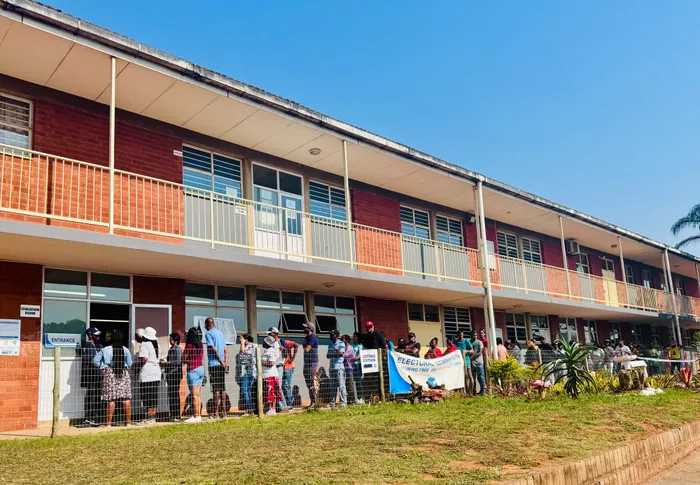
Thabo, a 14-year-old Grade 8 student, lives in Sekoti Phola, a neighborhood within the township of Daveyton in South Africa's Gauteng Province. Sekoti Phola is characterized by a mix of formal RDP housing and burgeoning informal settlements, reflecting a common urban landscape in South Africa. The geography of Daveyton, particularly areas like Sekoti Phola, significantly shapes the opportunities available to its youth, influencing everything from educational attainment to employment prospects. Thabo's personal journey, as a 14-year-old Grade 8 student residing in Sekoti Phola, serves as a poignant example of how local conditions can dictate a young person's trajectory towards adulthood and economic independence.
A Township's Unequal Landscape
Daveyton is located peripherally to the major economic centers of Johannesburg and Pretoria, influencing the local economic landscape. This geographical positioning means that residents often face challenges in accessing the strong job markets and educational institutions concentrated in these larger cities. This positioning contributes to conditions within the broader municipality of Ekurhuleni, which experiences extreme inequality, reflected in its Gini coefficient of 0.633. Such a high Gini coefficient indicates a vast disparity in income distribution, where a small portion of the population controls a disproportionately large share of the wealth, leaving many others in precarious economic situations. The spatial distribution of unemployment within Daveyton itself further illustrates this disparity, painting a stark picture of concentrated hardship. Thabo, for instance, is growing up in an environment where 6,000 to 8,000 unemployed individuals are concentrated per square kilometer. This dense concentration of joblessness is not merely a statistic; it directly impacts the daily lives and future prospects of young residents in the area, creating a widespread atmosphere of economic struggle and limited opportunity. The sheer number of jobless adults surrounding young people like Thabo can normalize unemployment, making it harder for them to envision alternative futures.
The Weight of Spatial Autocorrelation
An analysis of Thabo’s environment, utilizing Global Moran’s I and Local Indicators of Spatial Association (LISA) mapping, identifies his neighborhood as a "High-High cluster" of deprivation and unemployment. This classification indicates that Sekoti Phola not only experiences high levels of deprivation but is also surrounded by areas with similarly high deprivation, creating a contiguous zone of economic disadvantage. Living within such a cluster means that access to resources, quality education, and employment networks is severely limited, reinforcing a cycle of poverty. The concentration of unemployment in such clusters directly impacts the youth, with over 37% of individuals in Thabo’s age group falling into the Not in Employment, Education, or Training (NEET) category. This statistic shows the significant challenge young people face in accessing opportunities within their immediate surroundings, noting a critical point where many young lives diverge from pathways to productive adulthood. The lack of engagement in education, employment, or training can lead to long-term social and economic marginalization, perpetuating the very deprivation observed in these clusters.
The educational attainment of young people also plays a critical role in their employment prospects, yet even this pathway is fraught with difficulty in areas like Daveyton. Data indicates that university graduates encounter an unemployment rate of 23.9%, demonstrating that even higher education does not guarantee a job in South Africa's challenging economic climate. In contrast, individuals without a Matric certificate face a significantly higher unemployment rate, exceeding 51%. These figures highlight a stark divide in the labor market based on educational qualifications, suggesting that while higher education improves job prospects, it does not guarantee employment in areas characterized by high spatial autocorrelation of deprivation and joblessness. The localized economic conditions, coupled with systemic inequalities, further intensify these disparities, making it difficult for even well-educated individuals to escape the gravitational pull of concentrated unemployment.
Interventions for a Brighter Future
Statistics indicate that Thabo faces a one-in-six chance of not progressing to Grade 9 on schedule, noting challenges within the education system that go beyond mere access to schooling. This risk of academic delay can have profound long-term consequences, increasing the likelihood of dropping out and entering the NEET category. Addressing such issues requires spatially targeted education support, focusing resources where they are most needed, particularly in neighborhoods identified as "High-High clusters" of deprivation. Such interventions could include enhanced tutoring programs, mentorship, and support services designed to keep students like Thabo engaged and on track with their education.
The article emphasizes the necessity of multiple interventions to improve youth prospects in places like Daveyton. These include investments in infrastructure designed to bolster the informal economy, which can provide immediate opportunities for residents who might otherwise struggle to find formal employment. Strengthening the informal sector through better market access, training, and micro-financing can create a vital economic lifeline for many families. Additionally, programs aimed at expanding workplace experience are key for equipping young people with practical skills and connections for future employment. These programs can bridge the gap between theoretical knowledge and the demands of the labor market, making young individuals more competitive.
Future interventions must also consider the impact of climate change, which poses an additional layer of threat to vulnerable communities. Climate models project a quadrupling of hot nights by 2050, a change that can severely impact health, agricultural productivity, and overall quality of life. This necessitates the implementation of climate adaptation strategies to protect vulnerable communities and their livelihoods. These strategies would aim to mitigate the environmental challenges that could further exacerbate existing socio-economic disparities, ensuring that efforts to improve economic opportunities are not undermined by environmental degradation. Integrated approaches that combine educational, economic, and environmental strategies are essential for fostering resilience and creating sustainable pathways to opportunity for youth in Daveyton and similar townships.