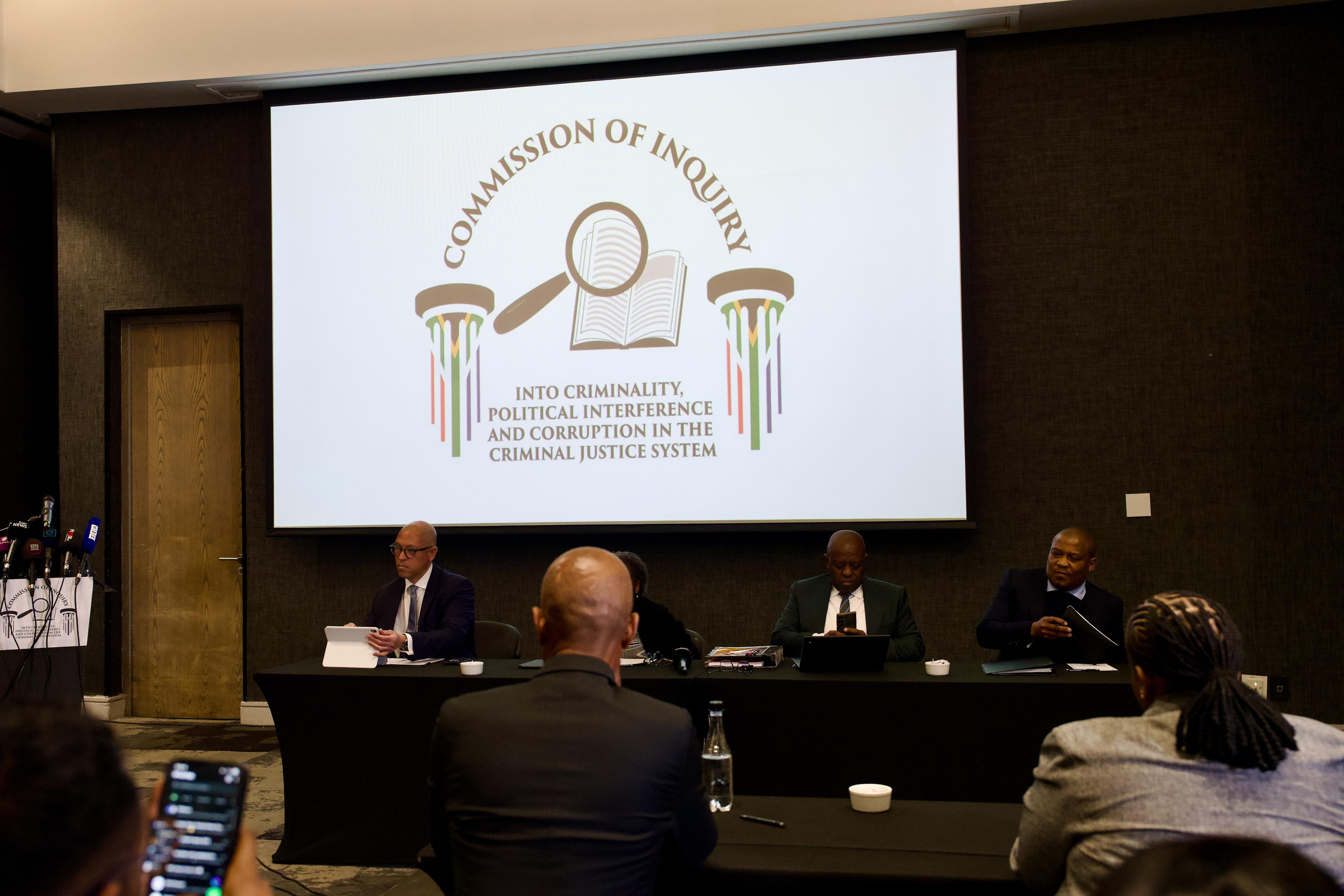
A judicial commission of inquiry investigating corruption within South Africa’s criminal justice system convened a media briefing in Sandton, Johannesburg, on July 28, 2025. The commission’s proceedings aim to shed light on systemic issues, building on previous revelations and showing the persistent challenges within the nation's governance. During the Zondo Commission, the Gupta family compound in Johannesburg became widely associated with the state-capture era in South Africa, symbolising the extent of alleged corruption that permeated public life. The current inquiry continues to examine the mechanisms and locations through which illicit activities permeated state institutions, seeking to understand the evolving nature of such networks.
Msibi's Farm as New Symbol
Jothan “King Mswazi” Msibi’s farm near Pretoria has emerged as a striking symbol of potential shadow state operations, representing a possible new manifestation of illicit power structures. This location has become the most striking symbol of the possibility that the shadow state has adapted its architecture. During his testimony before the Ad Hoc Committee investigating his allegations in March and April 2026, Lieutenant-General Nhlanhla Mkhwanazi described Msibi’s farm as a location where prominent politicians, businesspeople, and other influential figures regularly gathered. Joe “Ferrari” Sibanyoni further characterized Msibi’s farm to the Madlanga Commission in August, stating that it functioned as a “state within a state,” suggesting a significant degree of autonomous and influential operation outside formal governmental structures. Jothan “King Mswazi” Msibi, the late taxi boss, died in 2024. His passing occurred before these detailed testimonies fully brought the alleged activities at his farm into public focus.
Echoes of State Capture
The Zondo Commission revealed how political power, private wealth, and public institutions could be integrated into networks capable of diverting government machinery from its constitutional purpose. This finding illustrated the intricate connections that allowed for the subversion of state functions, noting a sophisticated entanglement of interests. The commission's work detailed how these relationships facilitated a system where private interests could manipulate public institutions for their own benefit, bypassing democratic processes and accountability. The findings showed how such arrangements could undermine the foundational principles of governance, leading to profound concerns about the integrity of state operations and the rule of law. The revelations from the Zondo Commission serve as a key backdrop for understanding the potential implications of the current inquiries.
Parliamentary Warnings
Before the Madlanga Commission began its examination of the alleged “Big Five” criminal network, KwaZulu-Natal police commissioner Lieutenant-General Nhlanhla Mkhwanazi had already raised the alarm in Parliament. Mkhwanazi’s warnings to the legislative body preceded the commission's detailed inquiry into the network's activities, indicating early awareness of the gravity of the situation. His statements to Parliament constituted an early alert regarding the potential scope and influence of the criminal enterprise, signaling issues that would later become a focus of the Madlanga Commission's investigations. The parliamentary intervention by the police commissioner noted the gravity of the situation, drawing attention to a network that would subsequently be scrutinized for its alleged involvement in illicit operations and its potential impact on national security and governance.
Broader Implications
The shadow state reportedly did not vanish with the conclusion of the Gupta era, but rather may have undergone a transformation in its operational structure. It may simply have changed its architecture, adapting to new circumstances and personnel. Allegations concerning Jothan “King Mswazi” Msibi's activities suggest an evolving ecosystem of influence and illicit operations. This new configuration is said to involve the taxi industry, organised crime elements, private security firms, specific political relationships, and certain components within law enforcement. This intricate web of connections points to a complex and resilient network that continues to pose challenges to South Africa’s efforts to strengthen its democratic institutions and combat corruption.