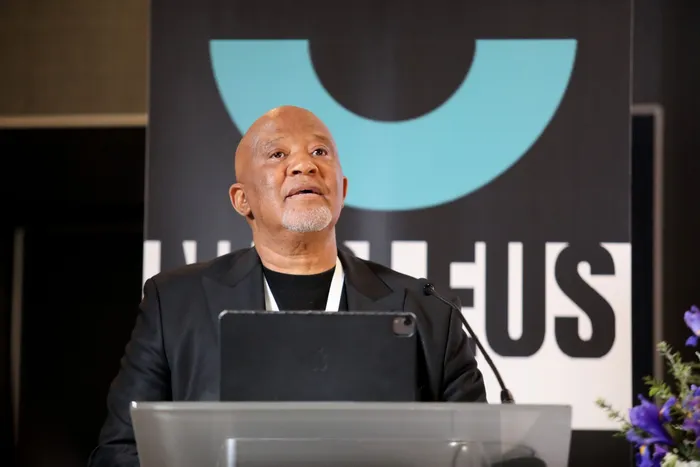
Hans Hawinkels, credited with helping Naspers make one of the most successful investments in corporate history, detailed the Tencent investment and his departure from the company at the 9th BizNews Conference. Hawinkels' employment contract expired about a year after the Tencent deal was completed and was not renewed. He stated, "I came back to South Africa, but I didn’t allow that scar to fester and control my life thereafter. I put it behind me." His address at the 9th BizNews Conference provided a rare glimpse into the strategic thinking and personal implications of such a monumental corporate decision.
Hawinkels described building "guanxi," a relationship of trust, with Tencent's leadership, noting, "We developed what we call guanxi, which is a relationship of trust and work with these people." This cultural understanding and personal connection proved instrumental in navigating the complexities of the Chinese market and securing the deal. He recalled passing on another opportunity, stating, "I had to turn it down. Eventually, Goldman Sachs bought it." The Tencent investment was "a big punt," Hawinkels said, driven by confidence in the leadership. "I liked the management team. I mean, you back the jockey, and those jockeys, those guys were really, really impressive." He added that Pony Ma "actually wanted a partnership. Somebody that could help him monetise that 20 million user base." This desire for a strategic partner rather than just capital was a key element in the successful negotiation. Hawinkels admitted, "There’s no way in our wildest dreams could we have imagined that this little budding company would be so valuable today." The sheer scale of Tencent's eventual growth far exceeded initial projections, even for those intimately involved in the investment. Regarding his contract, he concluded, "Of course, I don’t know. I really don’t know." The ambiguity surrounding his departure has remained a point of discussion, despite the immense success achieved during his tenure.
An Unlikely Beginning
The investment in Tencent eventually grew into a stake worth $200 billion, equivalent to approximately R3 trillion, at its peak. This significant venture marked a new chapter for Naspers, a company whose origins in media and distribution were more modest. Before its strategic pivot towards international internet ventures, Naspers operated South African media entities. The company's transformation from a regional media conglomerate to a global technology investor was largely spearheaded by such strategic moves.
Hans Hawinkels played a role in establishing MultiChoice as M-Net’s distribution arm. At the time of this development, M-Net had about 500,000 subscribers and had only recently achieved financial break-even in 1993. The creation of MultiChoice was a foundational step in building the company's subscriber base and distribution capabilities within the domestic market, laying important groundwork for future expansion. This period of growth and consolidation in South Africa contrasted with the later global expansion efforts. The experience gained in building subscriber bases and managing distribution networks domestically proved valuable when Naspers looked to international markets.
During his tenure, Hawinkels encountered other potential investment opportunities that were ultimately not pursued by Naspers. One such opportunity involved a stake in Alibaba, which he had to pass on. Hawinkels met Alibaba founder Jack Ma and had the opportunity to acquire a 77% stake in the burgeoning e-commerce giant. However, Naspers' requirement for controlling interest in its investments meant that Hawinkels ultimately had to withdraw from that deal. Goldman Sachs eventually acquired that stake, which later proved to be another highly lucrative investment. Separately, Hawinkels also declined an offer to purchase 10% of the Chinese gaming company NetEase. These missed opportunities highlight the strategic parameters and investment philosophy that guided Naspers during that period, which sometimes led to difficult decisions.
The Tencent Gamble
Hans Hawinkels was headhunted by M-Net in 1993, marking a significant point in his career before his involvement with Naspers' international ventures. This move positioned him at the heart of Naspers' evolving strategy. At the time of the Tencent deal, the Chinese company had approximately 20 million users but generated little meaningful revenue. This presented a significant risk, as the company's potential was clear, but its monetization strategy was still nascent. Hawinkels was reportedly persuaded by Tencent’s management team, particularly co-founder Pony Ma, to pursue the investment. His confidence in the leadership team was a critical factor in overcoming the inherent risks associated with investing in a company with limited revenue streams.
The opportunity to invest in Tencent arose when IDG Ventures, which held a 25% stake in the company, indicated its desire to sell its shares. This opening provided Naspers with a key entry point into the promising Chinese internet market. Hawinkels then successfully convinced another significant shareholder, PCCW, to also sell its 25% stake in Tencent. This was a complex negotiation, as securing a substantial stake required convincing multiple parties. PCCW presented Hawinkels with an ultimatum: either acquire their shares at a $66 million valuation without conducting due diligence, or abandon the deal entirely. This high-pressure situation showed the competitive nature of such acquisitions and the need for swift decision-making. Naspers ultimately required approximately $33 million to acquire the combined 50% stake in Tencent. This investment, though substantial at the time, would prove to be one of the most profitable in corporate history.
Building the Future, Then Walking Away
Naspers stands today as South Africa’s most valuable company, a testament to its strategic vision and investment prowess, particularly in Tencent. During a trip to Beijing in the mid-1990s, Hans Hawinkels cultivated relationships with Chinese officials and the state broadcaster CCTV, laying groundwork for future ventures. These early diplomatic and business connections were key for understanding and operating within the Chinese market. Naspers had sent Hans Hawinkels and his family to Hong Kong in 1997 as part of its strategic expansion into Asia, demonstrating the company's commitment to building a presence in the region.
In his final year at Naspers after the Tencent deal, Hawinkels focused on professionalizing Tencent's operations and establishing its initial significant revenue stream. This period was critical for transitioning Tencent from a promising startup into a more structured and financially viable enterprise. A key development involved a partnership with China Mobile, which enabled Tencent users to access its services via mobile phones for approximately $1 per month. This collaboration was a breakthrough, allowing Tencent to tap into the rapidly growing mobile user base in China. China Mobile retained 15% of this subscription revenue, remitting the remaining 85% to Tencent. This revenue-sharing model provided Tencent with its first substantial and recurring income, validating the investment and setting the stage for future growth.
Approximately six years following Naspers’ investment, Tencent launched its widely successful messaging application, WeChat. WeChat transformed the company's trajectory, becoming an indispensable part of daily life for hundreds of millions of users and significantly boosting Tencent's valuation. Later, Naspers chairman Koos Bekker contacted Hawinkels, and they discussed the circumstances surrounding Hawinkels' departure from the company. This conversation suggests a lingering reflection on the events that led to the exit of a key figure behind such a monumental success.
A Legacy and Lingering Questions
At its peak, Naspers’ Tencent stake was valued at approximately $200 billion, or roughly R3 trillion, a staggering return on its initial $33 million investment. Naspers had sent Hans Hawinkels and his family to Hong Kong in 1997 as part of its strategic expansion, showing the long-term vision behind its Asian ventures. Initially, Naspers sought controlling interests in the companies it invested in, a strategy that led the company to miss several potential opportunities, such as the Alibaba deal. This strategic preference evolved over time as the company gained more experience in international markets. The Tencent stake currently retains a value of roughly $100 billion to $120 billion, demonstrating its enduring significance to Naspers' portfolio despite market fluctuations. After his departure from Naspers, Hawinkels assumed the role of CEO at Virgin Active, a prominent health club chain, marking a significant career transition. He later joined the board of Truworths, a major South African fashion retailer, continuing his involvement in the business world. His career trajectory post-Naspers reflects a diverse engagement with different sectors, but his legacy remains firmly tied to the foundational role he played in Naspers' most iconic investment.