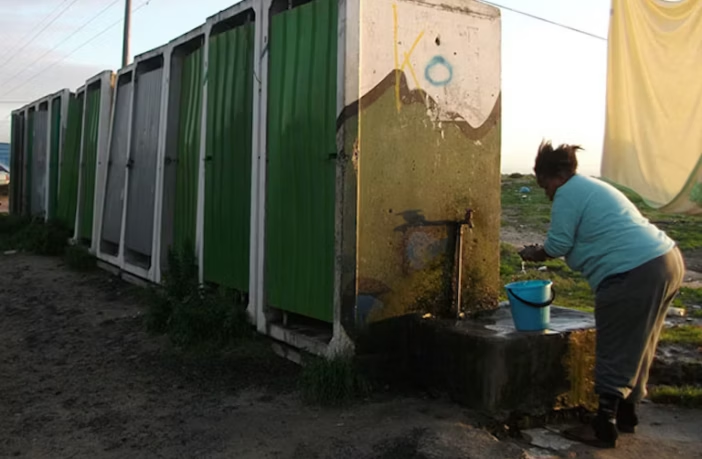
Despite ambitious and progressive post-apartheid water policies promising water for all, millions in South Africa still lack basic access to water and sanitation three decades after the end of apartheid. South Africa's post-apartheid water policy was widely seen as ambitious and progressive because it promised water for all its citizens, aiming to redress historical inequalities. However, this promise of universal water access remains largely unmet. Approximately three million people in the country do not have clean running water, and 14 million people lack flushing toilets, noting the significant gap between policy aspiration and on-the-ground reality. Three decades after the end of apartheid, the vision of water for all remains largely unfulfilled for a substantial portion of the population.
The National Water Act, South Africa's key water law, was passed in 1998, establishing a full framework intended to ensure equitable access and sustainable management of water resources. This legislative cornerstone aimed to transform the water sector from its apartheid-era inequities. By 2018, significant progress had been made in extending infrastructure, with water pipelines and systems having reached 95% of households across the nation. This expansion of physical infrastructure was a major undertaking, reflecting substantial investment in extending basic services. However, the presence of infrastructure did not directly translate into consistent service delivery. By that same year, only 65% of households had reliable water, indicating a significant gap between infrastructure presence and consistent service delivery. This disparity means that while pipes may be present, the water flowing through them is often intermittent or entirely absent. Poorer and rural areas are reported to be the worst affected by these inconsistencies, exacerbating existing socio-economic disparities. These communities often bear the brunt of unreliable services, impacting health, livelihoods, and daily life.
Implementation Hurdles
A critical challenge in South Africa's water sector stems from the funding model for infrastructure. Government funding for new water infrastructure projects is often not extended to cover their subsequent upkeep, placing the burden of maintenance on local municipalities, which must finance these essential repairs from their own revenue. This financial model has contributed to a substantial maintenance deficit across the country's water systems. The backlog for necessary water system maintenance is currently estimated at R400 billion, a figure that shows the immense scale of deferred upkeep required. Despite this significant need, the national budget has allocated only R26 billion specifically for water system maintenance, representing a fraction of the required investment. This disparity between the required investment and the available funds creates ongoing challenges for municipalities, many of which already face severe financial constraints and competing demands on their limited budgets. The lack of sufficient funding for maintenance leads to deteriorating infrastructure, frequent breakdowns, and increased water losses.
A key operational issue further compounding the problem stems from the delayed repair of water leaks, a problem exacerbated by the difficulties municipalities face in recruiting and retaining essential personnel. Water leaks represent a significant loss of treated water, a precious resource in a water-stressed country. Local authorities struggle to attract and keep qualified engineers and other skilled workers necessary for the efficient operation and maintenance of complex water infrastructure. These specialized professionals are key for everything from designing new systems to diagnosing and repairing faults in existing networks. This challenge is particularly acute in remote municipalities, where attracting qualified staff proves even more difficult due to factors such as limited amenities, lower salaries, and professional isolation. The lack of specialized personnel directly impacts the capacity of these municipalities to manage their water resources effectively and respond promptly to infrastructure failures, leading to prolonged service interruptions and further degradation of systems. Without adequate human capital, even well-funded projects can falter.
Beyond these systemic and human resource challenges, external factors further compound South Africa's water availability problems. Climate change, characterized by increasingly unpredictable weather patterns, and recurring droughts are exacerbating the scarcity of water. These environmental shifts place additional strain on already struggling water systems and management capabilities, making the task of ensuring consistent water supply more complex for municipalities nationwide. The increased frequency and intensity of droughts deplete surface and groundwater sources, while extreme weather events can damage infrastructure, further disrupting supply. The combination of insufficient funding for maintenance, a shortage of skilled labor, and the impacts of climate change creates a multifaceted crisis for water delivery across the country, demanding a full and integrated response.
Exclusion and Inequality
The planning and implementation of water projects in South Africa frequently suffer from a lack of inclusivity. Marginalized stakeholders are often excluded from project planning processes, with their involvement frequently occurring only after key decisions have already been made. This practice contributes to disparities in water access and infrastructure development, as the specific needs and concerns of these communities are often overlooked or inadequately addressed. Such exclusion undermines the principle of equitable development and can lead to projects that are not well-suited to local contexts.
A significant imbalance exists in access to water resources and decision-making power. Rural communities and small farmers experience reduced access to essential water infrastructure, information, and decision-making processes when compared to larger agricultural enterprises and mining companies. This disparity means that smaller-scale users often lack the necessary resources and influence to secure reliable water sources for their livelihoods and daily needs. This imbalance can hinder their ability to secure reliable water sources, impacting food security and economic stability in these areas. The voices of these smaller stakeholders are often drowned out by the more powerful interests of large commercial entities.
Commercial users typically possess superior access to financial resources, advanced technology, and established water rights, giving them a considerable advantage in securing water allocations and infrastructure. Their ability to invest in sophisticated water management systems, lobbying efforts, and legal expertise further entrenches existing inequalities in water distribution. This preferential access can leave less powerful users struggling to compete for scarce water resources, perpetuating historical patterns of disadvantage.
Water officials sometimes struggle to meet the specific needs of farmers effectively. This challenge can stem from various factors, including resource constraints within water management bodies, administrative hurdles that complicate responsive action, or a lack of understanding of localized agricultural requirements and practices. This disconnect can significantly impact farming operations, leading to crop failures, reduced yields, and economic hardship for agricultural communities dependent on consistent water supply. Bridging this gap requires improved communication and more tailored approaches from water authorities.
Environmental justice principles dictate that all individuals should have equitable access to environmental benefits and a meaningful voice in decisions that affect them. This concept shows the need for inclusive water governance and resource allocation to address historical disadvantages and ensure fairness in how water resources are managed and distributed. Applying environmental justice means actively seeking out and incorporating the perspectives of all affected communities, particularly those historically marginalized, to ensure that water policies and projects truly serve the common good.
Pathways to Accountability
Addressing South Africa's complex water crisis requires a more integrated approach across government. Water is intrinsically linked to energy, food production, housing, health, and the environment, yet government departments often operate in isolation. "Water is closely connected to energy, food production, housing, health and the environment, but departments can work separately, with separate budgets and priorities. This makes coordinated planning difficult," one interviewee stated. This fragmentation can impede effective policy implementation and resource management, as decisions made in one sector may inadvertently undermine efforts in another, leading to inefficiencies and suboptimal outcomes. A holistic approach is essential for sustainable water management.
Accountability for maintaining infrastructure, enforcing water regulations, and investing in necessary skills is critical for South Africa's government. Without clear lines of responsibility and mechanisms for oversight, performance lags and problems persist. Transparent decision-making regarding water resources is also essential to foster public trust and ensure equitable distribution. When the processes for allocating water rights, awarding infrastructure contracts, or setting tariffs are opaque, public confidence can erode, leading to distrust and resistance to necessary reforms. Without clear processes, public confidence can diminish, making it harder to implement effective water management strategies.
To correct historical imbalances and ensure future equity, rural communities and smaller water users require a meaningful voice in water governance, ensuring their perspectives are considered alongside those of more powerful organizations. This inclusion is vital for addressing historical inequalities and localized needs, as these communities often possess unique insights into local water challenges and potential solutions. Their active participation can lead to more appropriate and sustainable water management strategies. Trust in the water system can diminish when infrastructure fails, rules are applied inconsistently, or decisions are made without community involvement. Such breakdowns in trust can complicate efforts to manage water resources effectively, leading to non-compliance with regulations and resistance to new initiatives. Rebuilding trust is critical for effective governance.
Regular opportunities for collaboration among communities, farmers, industry, non-governmental organizations, researchers, and water providers are necessary for local decision-making. This collaborative approach can lead to more tailored and sustainable solutions for water management challenges, as it brings together diverse expertise and perspectives. Such partnerships can foster shared responsibility and innovative problem-solving, moving beyond top-down directives. Ensuring sustainable development means meeting the current needs of the population without compromising the ability of future generations to meet their own needs. This principle underpins the long-term viability of water resources and equitable access, emphasizing the need for responsible stewardship and intergenerational equity in all water-related policies and practices.