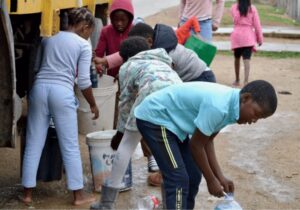
South Africa is grappling with significant water challenges, standing as one of the world's most water-scarce countries. This inherent scarcity is compounded by a complex interplay of historical injustices and contemporary management issues. Addressing this crisis necessitates an approach rooted in fairness, where water equity is understood and implemented based on fundamental human rights, social justice principles, and specific local contexts. This perspective moves beyond mere resource availability to encompass equitable distribution and access for all communities, ensuring that the nation's precious water resources are managed sustainably and justly.
Historical Roots of Inequality
Under apartheid, many Black South Africans were deliberately denied adequate access to water, contributing to historical inequalities that persist to this day. Following 1994, the new democratic government introduced legislation designed to prioritize basic human needs and river health over industrial and agricultural usage. These foundational laws marked a significant shift in water governance, aiming to redress past wrongs. Municipalities now have a legal duty to ensure that all residents receive equal access to water for their basic daily requirements. This commitment forms the foundation of current water management policies aimed at rectifying past injustices and establishing equitable distribution across the country, recognizing water as a fundamental right rather than a privilege.
Defining Equitable Water Distribution
The United Nations formally recognised the human right to water in 2010, showing its universal importance. This recognition extends beyond mere access to potable water, encompassing ecological integrity, which posits that nature itself possesses a legal right to water. This means that healthy ecosystems, key for water purification and supply, must also be protected and sustained. Defining equitable water distribution also integrates principles of social justice. This involves both procedural equity, focusing on how decisions regarding water resources are made and who participates in those decision-making processes, and distributive equity, which addresses how the benefits and burdens associated with water are shared among communities. These principles aim to ensure that all voices are heard and that the outcomes of water management are fair for everyone.
Context is a critical element, requiring consideration of a place's unique history, cultural practices, and socio-political landscape when developing water policies. Understanding these local nuances is essential for crafting effective and accepted solutions. Equitable distribution also mandates that current water usage patterns do not deplete resources, ensuring that present and future generations are not left with diminished access to water. This intergenerational responsibility is key to long-term water security, preventing short-term gains from compromising future well-being. The way water is used today should not leave current or future generations with depleted resources, noting the need for sustainable practices across all sectors.
The Reality of Unfair Sharing
Research indicates that the fundamental challenge in South Africa’s water landscape is not primarily one of scarcity, but rather of inequitable distribution. This perspective suggests that while the country is naturally water-scarce, the existing issues are exacerbated by how available water resources are allocated and managed among different populations and sectors. The research shows that fair sharing mechanisms are critical to addressing the nation's water woes. It notes a systemic problem where access to water is disproportionately skewed, leading to significant disparities between communities, particularly impacting vulnerable populations. The findings point towards the need for policies and practices that prioritize equitable access for all residents, rather than solely focusing on increasing overall water supply, which may not resolve the underlying issues of unequal distribution. This shift in focus is key for achieving genuine water security and social justice across the nation.