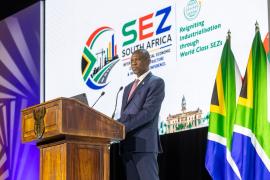
South Africa's Special Economic Zones (SEZ) programme has generated R14.8 billion in revenue and created more than 30,000 jobs across various sectors, including automotive manufacturing, agro-processing, and renewable energy. This significant economic impact and job creation were noted by Deputy President Paul Mashatile while speaking at the Second International Special Economic Zones Conference in Durban on Friday. The Deputy President's address showed the programme's success in stimulating economic growth and industrial development within the country. The SEZ initiative, a cornerstone of South Africa's industrial policy, aims to attract both domestic and foreign investment, fostering a conducive environment for manufacturing and export-oriented industries.
Program History and Milestones
South Africa's government initially introduced the Industrial Development Zone programme in 1997 to foster economic growth and industrialisation. This early initiative laid the groundwork for a more full approach to industrial development. The programme later evolved, becoming the Special Economic Zones (SEZ) programme, which expanded its scope and strategic focus to align with global best practices and enhance competitiveness. This transition marked a significant step in the nation's efforts to create dedicated industrial hubs.
Among the notable projects within the programme are the Tshwane Automotive Special Economic Zone (TASEZ) and the Coega Industrial Development Zone, located in the Eastern Cape. The Coega Industrial Development Zone, a significant early success, demonstrated the potential of such zones to attract substantial investment and generate employment. By 2010, Coega had attracted 21 investments valued at R9.2 billion, showcasing its capacity to draw capital and foster industrial activity. These developments illustrate the programme's long-term trajectory and its impact on attracting capital and creating industrial hubs across the country, contributing to regional economic upliftment and national development goals.
Future Strategy and Goals
The South African Special Economic Zones programme is now entering its third phase, which will be guided by the Spatial Industrial Development Strategy. This strategic shift aims to significantly increase the manufacturing sector's contribution to the nation's Gross Domestic Product. The current contribution stands at 12%, and the new strategy seeks to elevate this figure, thereby strengthening the country's industrial base and reducing reliance on other economic sectors. The ambitious target reflects a commitment to re-industrialisation and the creation of a more diversified economy.
The Spatial Industrial Development Strategy has identified three key economic sectors for focused, manufacturing-led industrialisation. These sectors are Decarbonisation, Diversification, and Digitalisation. These pillars are expected to drive future investment and job creation within the SEZ framework, aligning with broader national economic objectives and global trends. The emphasis on these areas indicates a forward-looking approach to industrial development, seeking to integrate modern economic trends and sustainability goals into the programme's operations. This strategic direction aims to position South Africa's SEZs at the forefront of green and technologically advanced manufacturing. The strategy is designed to build on the successes of previous phases, expanding the programme's impact across various industries and ensuring its relevance in a rapidly changing global economic landscape. By focusing on these critical areas, the government intends to foster innovation, attract high-tech industries, and create sustainable employment opportunities.
Global Context and Vision
The efficacy of Special Economic Zones (SEZs) in promoting economic growth and industrialisation has been documented by a World Bank study, which provides a global perspective on their impact. Globally, there are 5,400 SEZs, all competing for international capital and investment, noting the competitive nature of attracting industrial development. South Africa's government transitioned its industrial development strategy to Special Economic Zones in 2012, formalising the programme under the SEZ Act. This legislative change built upon earlier efforts, such as the Coega Industrial Development Zone, which demonstrated significant early investment and operational success.
The government's commitment to these zones was evident in its substantial financial contributions. By 2010, the government had invested more than R3 billion into Coega alone, showing its dedication to the zone's development and its potential as an economic catalyst. These investments translated directly into job creation, with Coega generating 2,837 operational jobs by 2010, providing livelihoods and skills development opportunities for local communities. The strategic shift to the SEZ Act aimed to further enhance the country's competitiveness in attracting foreign and domestic investment, aligning its industrial policy with international best practices to foster economic expansion. This legislative framework provides stability and clarity for investors, making South Africa a more attractive destination for industrial capital and expertise. The ongoing evolution of the SEZ programme, particularly with the new Spatial Industrial Development Strategy, demonstrates South Africa's continued commitment to leveraging these zones for sustainable economic growth and job creation in the long term.