South Africa's most recent surge in xenophobic mobilization originated not from a political speech or a significant violent incident, but rather from a missing-person campaign. This latest wave of xenophobic mobilisation did not begin with a political speech or a major violent incident; instead, it commenced with a missing-person campaign, setting a distinct tone for its digital propagation. Online activists increasingly deployed the case of Mazwi Kubheka to support broader assertions that connected undocumented migration to issues of crime, corruption, and state failure. The rapid escalation observed around the Mazwi campaign was the result of extensive network-building, audience cultivation, and coordinated digital mobilization efforts that had been established years before Kubheka's disappearance. Indeed, the rapid escalation surrounding the Mazwi campaign was the product of years of network-building, audience cultivation, and coordinated digital mobilization that significantly predated the disappearance itself.
The Mazwi Kubheka Catalyst
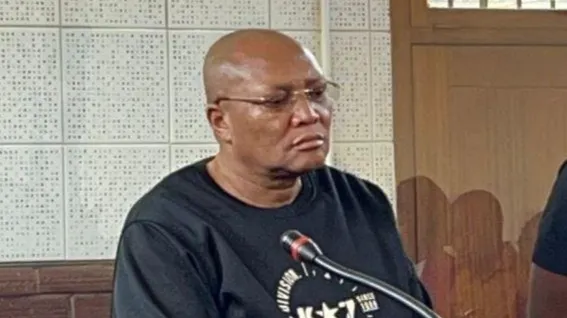
In early 2026, emotional online appeals concerning the disappearance of Mazwi Kubheka gained rapid traction on X, circulating under hashtags such as #BringMazwiBack and #JusticeForMazwi. These emotional online appeals linked to the disappearance of Mazwi Kubheka spread rapidly across X, quickly capturing public attention. The campaign served as a significant catalyst, drawing widespread attention to the case. Authorities indicated that the alleged kidnapping involved both South African and foreign-national suspects, including individuals of Ethiopian origin. Authorities stated that the alleged kidnapping involved both South African and foreign-national suspects, including individuals of Ethiopian origin, but investigators stressed that the case remained open and the full motive had not yet been established. Investigators, however, stressed that the case remained open and the full motive had not yet been established. Online activists increasingly used the Mazwi Kubheka case as evidence for broader claims linking undocumented migration to crime, corruption, and state failure, effectively turning a personal tragedy into a rallying point for a wider anti-immigrant agenda.
X user @radebe_merci, who is affiliated with the alternative media outlet MDN News, played a key role in amplifying the Mazwi Kubheka campaign. This individual's efforts were instrumental in elevating the local disappearance into a national social media cause, significantly broadening its reach and engagement. X user @radebe_merci, who works for alternative media outlet MDN News, was a key early champion of the Mazwi campaign, helping transform it into a national social media cause. Posts linked to Mazwi Kubheka’s kidnapping frequently included explicit calls to action for users, urging them to “make noise” and “make this trend.” These directives aimed to maximize visibility and pressure, often encouraging the amplification of specific influencers and media outlets to maintain momentum for the campaign. Posts linked to Mazwi Kubheka’s kidnapping were often paired with calls to “make noise”, “make this trend”, or amplify specific influencers and media outlets, demonstrating a deliberate strategy to control and accelerate the narrative. The Mazwi campaign ultimately became a gateway issue, with its missing-person appeals gradually merging with existing anti-immigrant hashtags such as #Abahambe ("They must go"), #PutSouthAfricansFirst, and #BanNigeriansInSA. This strategic integration allowed the movement to funnel public sentiment around a specific case into broader anti-immigrant discourse.
Six Years of Digital Mobilization
The groundwork for the 2026 resurgence of xenophobic mobilization in South Africa was established by a movement that has cultivated audiences, networks, and narratives for six years, tracing back to the emergence of #PutSouthAfricansFirst during the Covid lockdown period in 2020. This contemporary xenophobic movement’s modern online form can be specifically traced to April 27, 2020, when the hashtag #PutSouthAfricansFirst first gained significant prominence. The groundwork for the 2026 resurgence was laid by a movement that has spent six years building audiences, networks, and narratives around anti-immigrant mobilization, dating back to the emergence of #PutSouthAfricansFirst during the Covid lockdown period in 2020. South Africa’s contemporary xenophobic movement’s modern online form can be traced to April 27, 2020, when the hashtag #PutSouthAfricansFirst surged into prominence, marking a key moment in its digital evolution. The Mazwi Kubheka campaign served as a gateway issue, with its missing-person appeals gradually integrating with existing anti-immigrant hashtags such as #Abahambe ("They must go"), #PutSouthAfricansFirst, and #BanNigeriansInSA.
In 2025, anti-immigrant networks circulated claims that Vosloorus spaza shop owner Thulani Khumalo had been murdered by a "Somali syndicate." However, subsequent reporting confirmed that Thulani Khumalo was alive. The first generation of this movement was characterized by a digitally coordinated network built around accounts linked to Sifiso Gwala, who operated under aliases including "uLeratoPillay" and "MrHandsome" and frequently used inflammatory and racist content. The first generation of the movement was a digitally coordinated network built around accounts linked to Sifiso Gwala (operating under aliases including “uLeratoPillay” and “MrHandsome”), who used inflammatory and racist content to galvanize support and disseminate their message. This initial phase also saw the development of an offline counterpart in the form of Operation Dudula, led by Nhlanhla “Lux” Dlamini. This development of an offline counterpart in the form of Operation Dudula, led by Nhlanhla “Lux” Dlamini, demonstrated the movement's ambition to translate online fervor into real-world action. The second generation of the movement witnessed the expansion of an alternative media ecosystem, which included platforms such as The Truth Panther, PSAFLive, and MDN News, further solidifying its digital presence and reach. The second generation saw the expansion of an alternative media ecosystem around the movement, including platforms like The Truth Panther, PSAFLive, and MDN News, which provided dedicated channels for disseminating anti-immigrant narratives and coordinating activities.
The Mechanics of the Online Machine
Several cohorts of accounts posted in rapid succession around the same hashtags before engagement abruptly declined, a pattern commonly associated with orchestrated amplification campaigns rather than organic discussion. These patterns, where several cohorts posted in rapid succession around the same hashtags before engagement abruptly declined, are commonly associated with orchestrated amplification campaigns rather than organic discussion, indicating a deliberate, coordinated effort. Missing-person activism, anti-immigrant marches, allegations of Home Affairs corruption, and township crime stories were repeatedly woven together into a single narrative framework. This framework asserted that South Africa is under siege from undocumented foreign nationals and an incapable state. Missing-person activism, anti-immigrant marches, Home Affairs corruption allegations, and township crime stories were repeatedly woven together into a single narrative framework, effectively constructing a full narrative stating South Africa is under siege from undocumented foreigners and an incapable state.
An analysis of almost four million posts on X between January and May 2026 revealed how nationalist influencers, activist networks, and coordinated amplification accounts transformed grief, fear, and outrage into one of the country’s most powerful online anti-foreigner narratives. The largest and most dominant online community identified in the analysis was an Operation Dudula-aligned nationalist cluster built around the account @knick_rsa. This cluster was responsible for 37% of all posts within the dataset despite representing only 15% of the users. The largest and most dominant online community in the analysis was an Operation Dudula-aligned nationalist cluster built around @knick_rsa, responsible for 37% of all posts in the dataset despite representing only 15% of users, noting its disproportionate influence.
Multiple tightly coordinated “buzzer” cohorts were also identified. These networks comprised accounts that single-mindedly reposted the same influencers and hashtags in synchronized bursts, contributing to the rapid spread of specific messages. Multiple tightly coordinated “buzzer” cohorts were identified, which were networks of accounts that single-mindedly reposted the same influencers and hashtags in synchronised bursts, serving to artificially amplify specific messages and create an illusion of widespread organic support.
Political Alignment and Real-World Impact
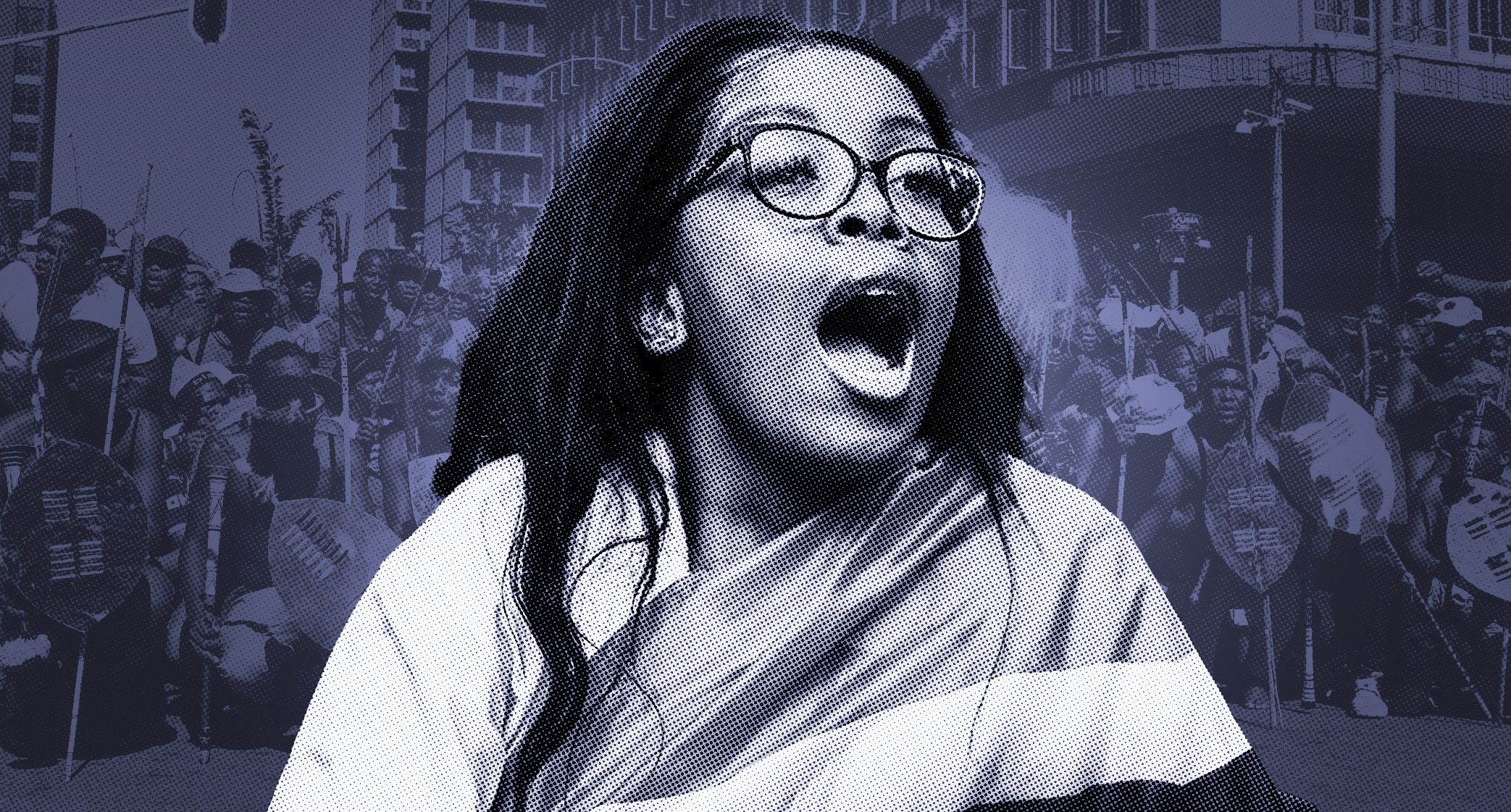
The third generation of the movement is characterized by a more overtly nationalist and politically networked orientation, notably through formations such as March and March and figures like Jacinta Ngobese-Zuma. The third generation of the movement is characterised by a more overtly nationalist and politically networked orientation, particularly through formations such as March and March and figures like Jacinta Ngobese-Zuma, signaling a strategic shift towards greater political integration. Among the most prominent figures amplifying #PutSouthAfricansFirst at its launch were former Johannesburg mayor Herman Mashaba and African Transformation Movement (ATM) leader Vuyo Zungula. By 2026, the boundary between anti-immigrant street movements and formal electoral politics had become increasingly porous, with ActionSA incorporating movement organizers and influencers. Former Operation Dudula leader Zandile Dabula formally joined ActionSA after resigning from the movement.
Former Sizok’thola presenter Xolani Khumalo was unveiled as ActionSA’s Ekurhuleni mayoral candidate after aligning himself with anti-immigration activism. In January 2026, Ngobese-Zuma publicly mobilized March and March supporters to defend Khumalo at Katlehong police station after he faced legal complaints linked to anti-drug and anti-foreigner operations. In January 2026, Ngobese-Zuma publicly mobilised March and March supporters to defend Khumalo at Katlehong police station after he faced legal complaints linked to anti-drug and anti-foreigner operations, showcasing a direct link between online mobilization and real-world political action. Herman Mashaba stated that ActionSA would "celebrate" March and March founder Jacinta Ngobese-Zuma becoming the party's eThekwini mayoral candidate if she made herself available. Analysts accuse ActionSA-aligned figures of blurring the line between patriotism, vigilantism, and xenophobic mobilization, particularly as movements such as March and March adopt more militant rhetoric. Counter-voices exist, particularly among EFF-aligned commentators who criticize xenophobia and accuse nationalist activists of scapegoating migrants for state failure, but these responses are often reactive rather than agenda-setting.