Many migrants in South Africa, often labeled as ‘undocumented,’ are in fact documented individuals who have overstayed their permitted time or are working without proper authorization. This perspective suggests a re-evaluation of how irregular migration is defined and addressed within the country, acknowledging that a significant portion of those deemed 'undocumented' initially entered the country through legal channels. Most migrants labelled ‘undocumented’ in South Africa are in fact documented, often overstaying their permitted time or working without authorization, noting a critical distinction in the discourse surrounding migration status.
A visa regime that allows certain migrants to regularize their stay, either under specific conditions or through quotas, is seen as having the most potential to decrease irregular migration. Such a system could achieve this at a relatively low cost, offering a structured approach to managing migrant populations and reducing the numbers of those considered irregular. This approach is showed by the claim that a visa regime enabling some migrants to regularise their stay, under specific conditions or with quotas, holds the most potential to reduce irregular migration at a relatively low cost, providing a pragmatic alternative to solely enforcement-based strategies.
The Scale of Migration
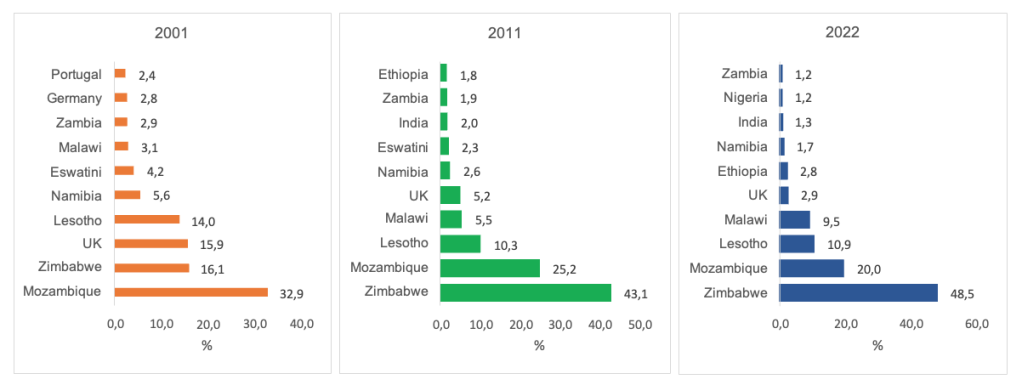
South Africa's migrant density stands at 4%, a figure slightly higher than the global average of 3.6%. This percentage reflects a significant international presence within the nation's borders. The 2022 census data indicates that 83.5% of the country's 2.4-million migrants originate from neighboring and other Southern African Development Community (SADC) countries. This notes a significant regional migration pattern within Southern Africa, showing the interconnectedness of economies and societies in the region.
Zimbabwe represents the largest source country for migrants in South Africa, accounting for 48.5% of the total migrant population. Following Zimbabwe, Mozambique contributes 20% of migrants, Lesotho 10.9%, and Malawi 9.5%. These statistics show the predominant role of immediate geographically proximate nations in South Africa's migration landscape, illustrating the strong pull factors and historical ties that drive movement from these countries. The concentration of migrants from these specific nations points to established migration corridors and networks.
The country facilitates this regional movement by allowing visa-free entry for citizens from 22 African countries, including many of its direct neighbors. This policy enables considerable cross-border mobility within the continent, fostering regional trade and social connections. Such policies, while promoting ease of movement, also contribute to the complexities of managing migration flows, particularly when individuals overstay their permitted duration.
Enforcement and Crackdown
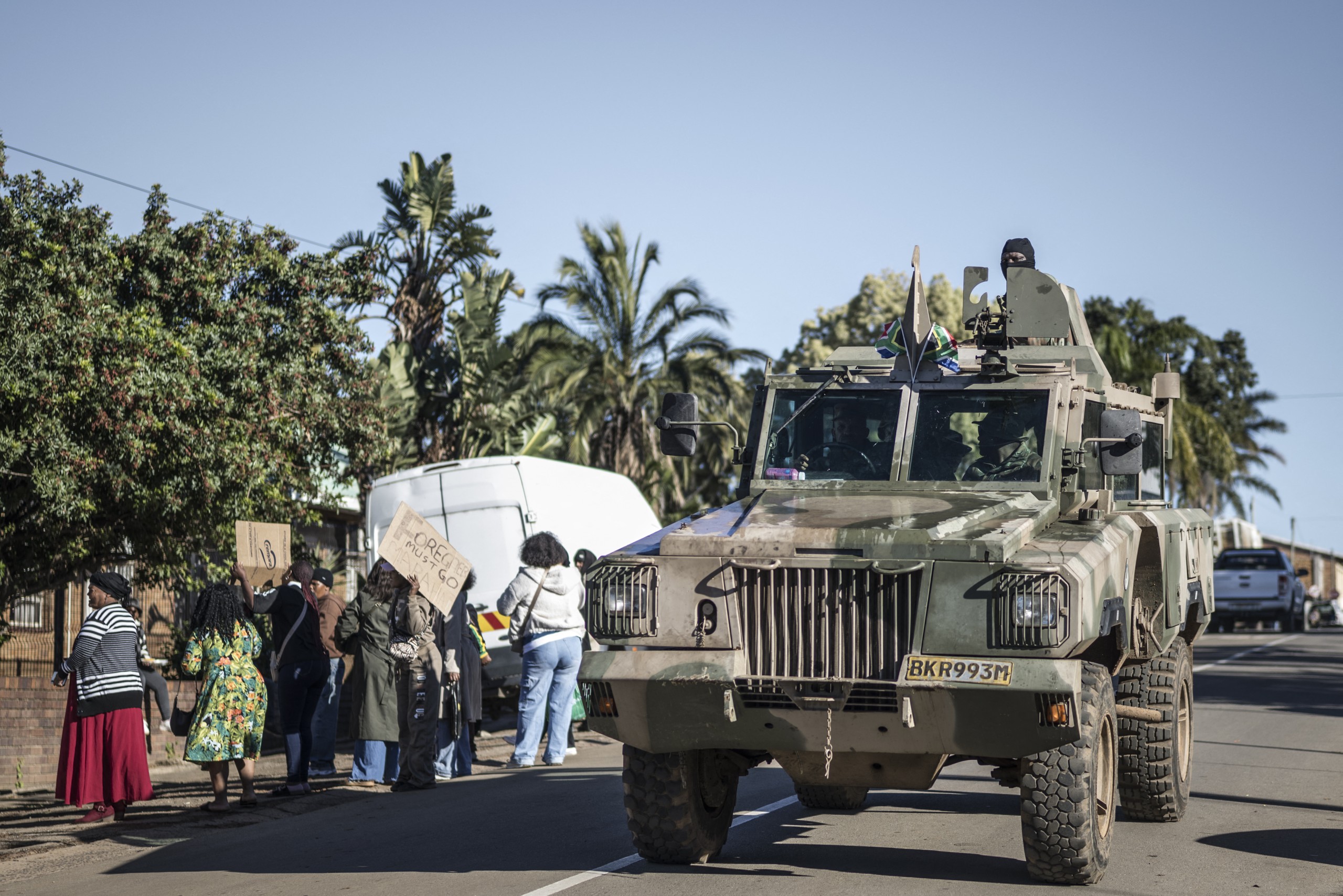
President Cyril Ramaphosa announced a five-point plan to address immigration law violations, secure South Africa's borders, strengthen the immigration system, close existing gaps in migration laws and policies, and foster collaboration with other countries. This full strategy reflects a renewed governmental focus on migration management. Global spending on border security was approximately $US48-billion in 2022 and is projected to reach $US81-billion by 2030, indicating a worldwide trend towards increased investment in border control technologies and personnel. In July, South Africa’s Department of Home Affairs (DHA) detailed a R12.5-billion public-private partnership aimed at strengthening and modernising six land border posts. This ambitious project began in 2023 with a scheduled completion by 2030, signaling a long-term commitment to enhancing border infrastructure and operational efficiency. The initiative seeks to improve surveillance, control, and processing capabilities at key entry points.
The government established an Inter-Ministerial Committee on Migration (IMCM) to coordinate efforts across various departments, ensuring a unified and coherent approach to migration challenges. This committee plays a key role in policy formulation and implementation, bringing together expertise from different sectors. On July 6, the DHA announced a 35% increase in its immigration enforcement capacity, demonstrating a significant scaling up of resources dedicated to upholding immigration laws. This expansion includes additional personnel and operational capabilities designed to identify and address irregular migration more effectively.
Between July 1 and July 9, courts in KwaZulu-Natal finalised 2,640 immigration cases for deportation, showcasing the judicial system's role in processing cases related to irregular status. As of July 11, a total of 53,449 foreign nationals had been processed for deportation and repatriation, indicating a substantial volume of enforcement activity. Malawians comprised over 80% of these returnees, followed by Zimbabweans and Mozambicans, noting the demographic patterns of those subject to repatriation efforts. Beyond the Southern African Development Community (SADC), 2,615 people were repatriated to other countries, including 1,159 to Nigeria, 431 to Kenya, 939 to Uganda, and 86 to the Democratic Republic of the Congo. This broader reach of repatriations indicates South Africa’s engagement with countries across the continent in managing migration flows.
A temporary processing centre was constructed in Musina within four days, demonstrating rapid response capabilities to handle large numbers of individuals. This facility processed over 20,000 individuals between July 1 and July 13, showing the scale of operations and the logistical challenges involved in managing such flows. Historically, South Africa launched the Dispensation of Zimbabweans Project in 2009, an initiative designed to regularize the status of Zimbabwean nationals residing in the country. This initiative later evolved into the Zimbabwean Special Permit in 2014 and subsequently into the Zimbabwe Exemption Permit in 2017, reflecting an ongoing effort to manage this specific migrant population through structured legal frameworks, albeit with periodic reviews and changes. These programs aimed to provide a legal pathway for Zimbabwean nationals, acknowledging the unique historical and economic ties between the two countries.
Rethinking Migration Policy
South Africa's 2017 White Paper on international migration recognized that an absence of clear pathways for legal entry and stay could contribute to irregular migration. This document noted the need for structured approaches to manage migration flows effectively, advocating for policies that prevent individuals from falling into irregular status due to a lack of legal options. The White Paper acknowledged that a lack of pathways could lead to irregular migration, reinforcing the idea that full policy frameworks are essential to address the root causes of irregular migration. This perspective suggests that solely relying on enforcement without providing legal avenues can inadvertently exacerbate the problem.
At a continental level, Africa is in the process of establishing the African Continental Free Trade Area (AfCFTA) and a Free Movement Protocol. These initiatives aim to foster greater economic integration and facilitate the movement of people, goods, and services across African borders. The establishment of the African Continental Free Trade Area and a Free Movement Protocol signals a broader regional commitment to open borders and economic cooperation, which will have significant implications for national migration policies, including South Africa's. These continental efforts are expected to reshape migration dynamics within Africa, potentially increasing both regular and irregular movements if not carefully managed.
The international context also offers insights into potential policy directions. On June 30, Spain closed a regularisation window that had allowed 1.2-million irregular migrants to apply for legal status. This example illustrates how other nations are grappling with similar challenges and exploring various mechanisms, including temporary regularisation programs, to manage large populations of irregular migrants. Such international precedents provide valuable lessons for South Africa as it continues to refine its own migration policies. The ongoing debate in South Africa about balancing enforcement with the creation of legal pathways for migrants remains a central challenge, with implications for social cohesion, economic development, and regional stability.