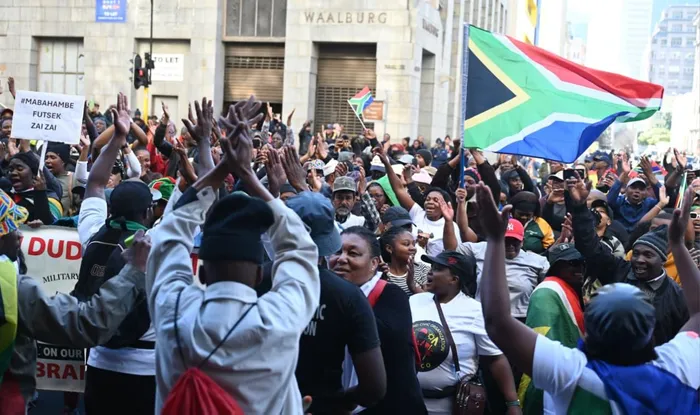
South Africa is contending with the humanitarian impact of recent anti-migrant violence and the subsequent large-scale processing of foreign nationals at the Musina Temporary Repatriation Processing Centre. This situation notes a key aspect of the nation's legal framework regarding healthcare access, particularly for non-citizens. The humanitarian fallout from recent anti-migrant violence, coupled with the mass processing of foreign nationals through the Musina Temporary Repatriation Processing Centre, has brought these issues into sharp focus. Section 27 of the Constitution stipulates that "everyone has the right to have access to healthcare services," a provision that extends beyond citizens to all individuals within the country. The ongoing challenges related to migration and violence are testing the practical application of this constitutional right for foreign nationals.
Constitutional and Legal Guarantees
The Constitution of South Africa guarantees that no individual may be refused emergency medical treatment, a right extended irrespective of nationality or immigration status. This fundamental protection ensures that critical care is accessible to all present in the country, preventing life-threatening situations from escalating due to administrative or legal status. Additionally, Section 28 of the Constitution specifically protects children, ensuring their access to basic healthcare services. This provision shows a commitment to safeguarding the well-being of all minors within South Africa's borders. For recognised refugees, the Refugees Act stipulates that they generally receive the same access to basic public healthcare services as South African citizens. This parity in access is key for integrating refugees into society and upholding their human dignity. This legal framework also extends to asylum seekers whose applications are still being processed; these individuals are entitled to access healthcare as long as they remain lawfully within the country. These provisions collectively establish a broad legal basis for healthcare access for various populations in South Africa, including non-citizens, reflecting a full approach to public health and human rights.
Policy and Public Health Imperatives
Public health policies in South Africa provide for the treatment of communicable diseases like HIV and tuberculosis. These policies recognize that interrupting such treatment carries significant public health risks, not only for the individual patient but also for the broader community. Government HIV and TB programmes are specifically designed to ensure continuity of care, particularly for patients already receiving antiretroviral therapy (ART) or medication for tuberculosis. The objective is to prevent treatment interruptions that could lead to drug resistance and further spread of these diseases. Additionally, national health policies stipulate that pregnant women are entitled to maternal healthcare services, ensuring safe pregnancies and deliveries regardless of their documentation status. The Department of Health has previously instructed public healthcare facilities not to deny essential healthcare solely because a patient lacks official documentation. This directive reinforces the principle that immediate medical needs should supersede administrative hurdles, especially in cases where delays could be detrimental to health. These policies are grounded in the understanding that full healthcare access is vital for maintaining overall public health and upholding human rights.
Enforcement and Court Rulings
The Constitutional Court's judgment on 5 July 2026 clarified that several key provisions within the immigration legislation, upon which the government has relied, are unconstitutional. This landmark ruling has significant implications for how immigration laws are interpreted and applied, particularly concerning the rights of foreign nationals. Healthcare Workers Against The Xenophobia (HCWAX) stated, "The Constitutional Court judgment of 5 July 2026 makes it clear that key provisions of the immigration legislation on which the government relies are unconstitutional." This statement notes the advocacy group's view on the definitive nature of the court's decision. Despite these legal interpretations, the Department of Home Affairs has consistently asserted that its repatriation operations are conducted strictly within legal parameters. The department has also maintained that all humanitarian obligations are being duly observed during these processes, seeking to reassure the public that operations are managed responsibly. These differing perspectives highlight an ongoing tension between legal rulings and governmental actions concerning immigration and healthcare access, creating a complex landscape for policy implementation and enforcement.
Advocacy and Humanitarian Concerns
The constitutional provision that "everyone has the right to have access to healthcare services" is widely interpreted to extend protections to foreign nationals. This broad understanding is central to advocacy efforts aimed at ensuring equitable access. This includes recognized refugees and asylum seekers, who are explicitly covered by specific legal frameworks. Additionally, in specific circumstances, undocumented migrants are also understood to be covered by these constitutional guarantees, particularly in emergency situations or for public health interventions. This broad interpretation shows the inclusive nature of South Africa's constitutional framework regarding health access, reflecting a commitment to human rights that transcends nationality or legal status. Advocacy groups continue to monitor the practical application of these rights, especially in light of mass processing events and anti-migrant sentiment, striving to ensure that the constitutional promise of healthcare for all is upheld in practice.