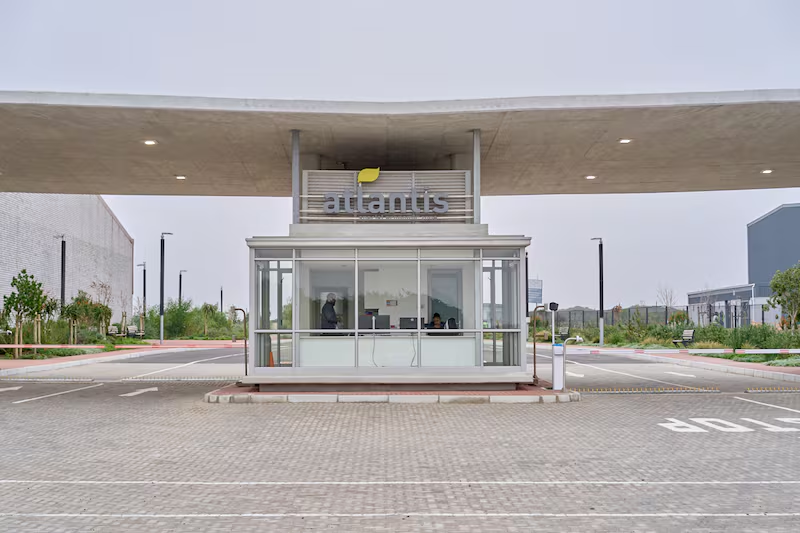
The Atlantis Special Economic Zone (Asez) in the Western Cape, established in 2020, has reported the creation of a significant number of jobs since its inception. Located in South Africa, the Asez is focused on fostering a green economy within the region, aiming to become a beacon for sustainable industrial development. Its strategic location and mandate contribute to the broader national goals of economic growth and environmental stewardship.
According to the Asez, the project has facilitated the creation of more than 800 jobs since its establishment. This employment generation is a key component of the zone's objectives within the broader South African initiative to develop green industrial capabilities. The Asez continues to be a focal point for economic development efforts in the Western Cape, attracting both local and international interest in its green industrial park model. The jobs created span various sectors, from manufacturing to renewable energy, reflecting the diverse portfolio of businesses operating within the zone.
Asez Localisation Efforts
The Atlantis Special Economic Zone (Asez) has attracted over R3 billion in investment, according to its reports. This substantial investment shows the confidence placed in the zone's potential to drive economic growth and innovation in the green sector. The Asez implements specific requirements to ensure local economic participation within its projects. It mandates that 30% of the value of its infrastructure projects be allocated to local small, medium, and micro enterprises (SMMEs). This directive aims to integrate local businesses into the green economy initiatives underway in the region, fostering inclusive growth and skills development within the community. The commitment to local content and procurement is a cornerstone of the Asez's operational philosophy, designed to maximize the socio-economic benefits for the surrounding communities.
The recently completed Zone 1 infrastructure project exemplifies this localisation strategy. For this specific project, 32.02% of the total expenditure was directed to local SMMEs. This figure indicates that the project not only met but exceeded the mandated threshold for local enterprise involvement, demonstrating the Asez's successful implementation of its localisation policies. The Zone 1 project's success in channeling funds to local businesses provides a tangible example of how the Asez is working to build local capacity and create economic opportunities for smaller enterprises. This achievement is seen as a model for future infrastructure developments within the zone, reinforcing the commitment to local economic empowerment.
Broader Green Economy Scrutiny
A 2026 report by the Institute for Economic Justice (IEJ) found that localisation efforts within South Africa's green economy remain fragile. The IEJ's research specifically examined independent power producers contracted under the renewable energy independent power producer procurement programme (REIPPPP). This research involved an accountability audit of REIPPPP’s localisation promises, scrutinizing the extent to which these commitments have been fulfilled across various projects. The report noted areas where improvements are needed to ensure that the benefits of green energy projects are more effectively distributed within local economies.
The audit spanned a significant period, from 2011, corresponding to bid window 1, through to 2024, encompassing bid window 7 of the programme. This extensive timeframe allowed the IEJ to conduct a full analysis of the evolution and effectiveness of localisation policies within the renewable energy sector. The Hopefield Wind Farm, which was contracted under REIPPPP’s bid window 1, stands as one of the programme’s earliest projects. Its inclusion in the IEJ's assessment provides a long-term perspective on the implementation of localisation goals within the renewable energy sector, offering valuable insights into the challenges and successes encountered over more than a decade of the programme's operation. The IEJ's findings serve as a critical reference point for policymakers and industry stakeholders seeking to strengthen localisation outcomes in future green economy initiatives.
Community and Business Voices
Oxpeckers visited the Atlantis Special Economic Zone (Asez) site in May 2026, observing operations firsthand. This visit provided an opportunity to assess the progress and challenges faced by the zone directly. Matthew Cullinan, CEO of the Asez, stated that the Asez is "positioning Atlantis as a leading hub for green manufacturing, advanced manufacturing, renewable energy, industrial technology, construction materials, and other growth sectors." This ambition shows the zone's focus on diversifying the local economy and creating a strong ecosystem for sustainable industries. Cullinan emphasized the strategic importance of the Asez in driving innovation and job creation within the green economy framework.
Despite these efforts, many small businesses in the region reportedly encounter difficulties accessing finance, securing credit facilities, or raising the necessary capital to fulfill contracts. These financial constraints can significantly hinder their participation in larger projects within the green economy, even when localisation mandates are in place. The lack of access to adequate funding mechanisms remains a critical barrier for SMMEs looking to capitalize on the opportunities presented by the Asez and other green initiatives. Addressing these financial challenges is key for ensuring that localisation efforts translate into tangible growth for local entrepreneurs. Separately, the Gouda Wind Facility, contracted under bid window 2, marked a significant development as the first wind farm in South Africa to utilize concrete towers instead of steel, showcasing innovative engineering solutions within the renewable energy landscape. This technological choice demonstrated a commitment to exploring alternative materials and construction methods in large-scale energy projects.