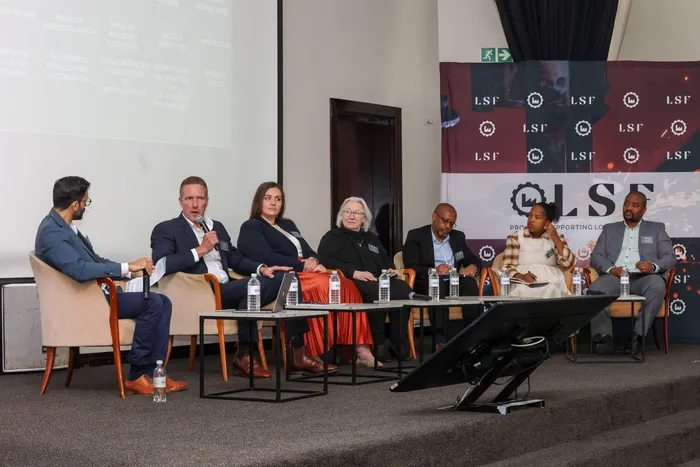
South Africa marked World Telecommunication and Information Society Day on May 17, reflecting on its digital progress and future development needs. This annual observance, held globally on 17 May, serves as a key moment for nations to assess their telecommunications landscape and chart a course for future advancements. The global theme for this year was "Digital Lifelines: Strengthening Resilience in a Connected World," emphasizing the critical role of strong digital infrastructure in an increasingly interconnected world. This theme shows the necessity of building and maintaining resilient digital systems that can withstand disruptions and continue to serve as lifelines for communities and economies.
A study conducted by the Development Bank of Southern Africa indicated that only 2.2% of South African households currently lack access to connectivity. This widespread access shows a shift in perspective, with digital infrastructure now considered essential infrastructure, much like roads, water, and electricity. This reclassification notes its foundational role in modern society and economic development. The next phase of the nation's digital development, according to observers, must focus on transitioning from merely providing access to creating tangible opportunities for its citizens. This means moving beyond the basic provision of internet access to ensuring that individuals and businesses can leverage digital tools for economic growth, education, and social empowerment.
Government's Enabling Role
The Department of Communications and Digital Technologies is tasked with creating an enabling environment for the digital economy to expand. This function requires the government to concentrate on establishing clear and fair regulations for the sector. Such rules should be developed in active collaboration with all relevant stakeholders, ensuring a balanced approach to growth and oversight. The government's role is not to compete with the private sector but to facilitate its growth by setting the "rules of the game" in a transparent and equitable manner. This collaborative approach ensures that regulatory frameworks are practical, forward-looking, and supportive of innovation.
Acknowledging that public resources are limited, a strategic shift in approach is necessary. In light of these constraints, the concept of partial privatisation needs to be integrated into discussions concerning state-owned entities involved in the digital landscape. This consideration aims to explore alternative models for investment and operational efficiency within the sector. Such a move could unlock significant capital and expertise, allowing state-owned entities to modernize and expand their services more effectively. By engaging in these conversations, South Africa can identify innovative ways to fund and manage its digital infrastructure without solely relying on the national fiscus.
Private Sector Contribution
The private sector is essential for contributing capital, innovation, technical capability, and implementation capacity to South Africa's digital future. Its involvement is critical not only for financial investment but also for bringing advanced technologies and efficient operational models. A key recommendation involves extending the Real Estate Investment Trust (REIT) regime to include digital infrastructure assets such as fibre networks, telecommunication towers, and data centres. This approach aims to attract further investment into critical digital components by offering attractive investment vehicles for both local and international investors. Expanding the REIT regime would provide a structured and transparent way for capital to flow into these essential assets, accelerating their development and deployment across the country.
Businesses are urged to move beyond merely identifying challenges and actively participate in developing solutions for the country's digital transformation. The private sector must recognize its responsibility in co-creating a thriving digital ecosystem. South Africa already possesses strong operators within its digital landscape, alongside a sophisticated financial sector and an expanding data centre market, providing a solid foundation for private sector engagement. These existing strengths represent significant assets that can be leveraged to drive further growth and innovation. The presence of strong operators and a mature financial sector means that the country is well-positioned to attract and support further private investment and technological advancements.
Bridging the Digital Divide
Meaningful digital access in South Africa extends beyond simply having a connection, necessitating a multi-faceted approach. This full view of access requires affordability, available devices, relevant skills among users, reliable infrastructure, and the ability for productive use of digital tools. A mere connection, therefore, is insufficient to bridge the existing gaps in digital inclusion, as the true value of digital access lies in its utility and impact on people's lives. Without these additional components, a connection remains an unfulfilled promise, unable to deliver its full potential for empowerment and development.
South Africa faces several significant challenges in achieving this meaningful access, according to observations within the sector. The country is characterized by deep inequalities, which impact who can access and effectively use digital resources. These disparities manifest in varying levels of access to technology, education, and economic opportunities. Weak trust in digital systems and platforms also poses a barrier to wider adoption and engagement, as concerns about privacy and security can deter potential users. The nation contends with uneven distribution of digital skills across its population, creating disparities in capability and limiting the productive use of digital tools for many. Widespread affordability challenges continue to limit access for many individuals and households, showing the complexities involved in fostering a truly inclusive digital environment. Addressing these multifaceted challenges requires concerted efforts from government, the private sector, and civil society to ensure that all South Africans can participate fully in the digital economy.