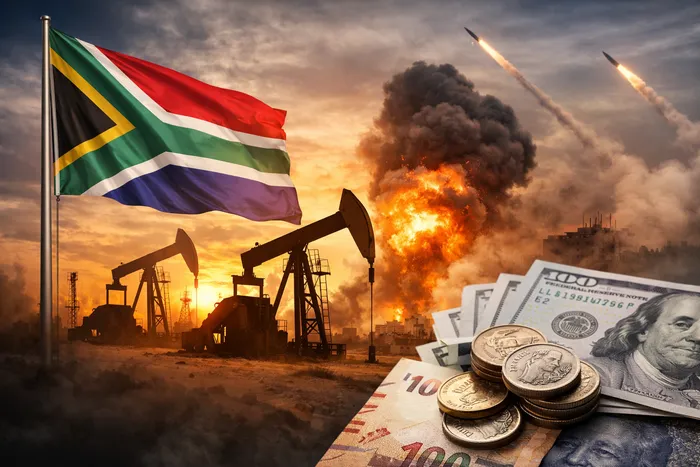
South Africa's economy is facing significant pain from its reliance on diesel, which is projected to have a more severe impact than petrol. Indeed, diesel would inflict even more pain on the South African economy than petrol. Diesel prices increased by almost 60% in the second quarter compared to the first quarter of 2026, while petrol prices rose by approximately 25% over the same period. This substantial discrepancy in price increases shows the disproportionate burden placed on diesel-dependent sectors. Nearly 70% of the additional cost burden impacting the economy is expected to stem from diesel rather than petrol, noting the critical nature of this fuel in the national economic framework. South Africa's increasing dependence on diesel was not a deliberate policy choice, but rather a gradual development, resulting from a series of incremental workarounds. The nation did not consciously choose to become more diesel-dependent; it happened gradually, one workaround at a time, driven by various operational and infrastructural challenges.
Shifting Fuel Landscape
The composition of South Africa’s fuel consumption has undergone a significant transformation over the past two decades. This evolution reflects deeper structural changes within the country's economic and logistical frameworks. In 2005, petrol constituted close to half of the total fuel consumed, while diesel accounted for approximately a third. This historical balance has been decisively altered. Today, diesel comprises almost half of all fuel consumed nationally, and petrol’s share has steadily declined. This dramatic shift is partly attributable to changes in freight logistics and the broader transportation infrastructure.
More freight has transitioned to roads and trucks due to the deterioration of rail capacity provided by the state-owned transport monopoly, Transnet. The decline in Transnet's operational efficiency and infrastructure has forced businesses to seek alternative, more reliable methods for moving goods across the country. This increased reliance on road transport directly correlates with a higher demand for diesel, as heavy-duty trucks are predominantly diesel-powered. The impact is particularly evident in the agricultural sector, a cornerstone of the South African economy. Wandile Sihlobo, chief economist of the Agriculture Business Chamber of South Africa, stated that "roughly 80% of South African grain is transported by road." This notes the extensive dependence on diesel-powered vehicles for critical supply chains within the country, from farm to market. The redirection of goods from rail to road has fundamentally altered the national fuel consumption profile, exacerbating the country's reliance on diesel and making it more vulnerable to fluctuations in diesel prices. This structural shift represents a significant challenge, as reversing the deterioration of rail infrastructure would require substantial investment and time.
Drivers of Diesel Demand
The use of diesel accelerated sharply in South Africa during the severe power-cut years between 2022 and 2024. These periods of intensified load-shedding created an urgent and widespread demand for backup power generation, much of which relies on diesel. During the worst periods of load-shedding in 2023, the state-owned power utility Eskom itself relied heavily on diesel-fired open-cycle gas turbines to maintain electricity supply and prevent complete grid collapse. Eskom’s diesel usage was estimated to account for a significant 20%-30% of national diesel demand during these peak load-shedding periods, illustrating the immense scale of its operational consumption. Beyond Eskom, businesses and households across the country also turned to diesel generators to maintain operations and daily life, further amplifying demand. This surge in demand, driven by the necessity to mitigate the effects of an unreliable power grid, cemented diesel's indispensable role in the economy.
Further complicating the supply side, South Africa imports virtually all of its crude oil, making it highly susceptible to global market fluctuations in both price and availability. This inherent vulnerability is compounded by the nation's diminished capacity to refine crude oil domestically. Domestic refining capacity has declined significantly due to the closure of several domestic refineries between 2020 and 2023. These closures have not only reduced the country's ability to process crude oil into refined products but have also increased its reliance on imported refined diesel products. This means South Africa is not only importing the raw material but also the more expensive, finished product, leaving it doubly exposed to international energy market dynamics and currency exchange rate volatility. The combination of increased internal demand and reduced domestic refining capability creates a precarious situation for the national fuel supply and pricing.
Economic Impact and Relief Efforts
The escalating reliance on diesel, coupled with its rising cost, has profound implications for the South African economy. Higher fuel prices are projected to add approximately R45 billion (US$2.7 billion) in additional fuel costs to the South African economy during the second quarter of 2026 alone. This substantial amount represents just over 2% of the quarterly Gross Domestic Product (GDP) spend, indicating a significant drag on economic activity. The impact is felt across various sectors, from agriculture and manufacturing to logistics and retail, as the cost of transporting goods and powering operations increases. This inflationary pressure can lead to higher consumer prices, reducing purchasing power and potentially stifling economic growth.
Recognizing the severity of these impacts, the government introduced measures to mitigate the financial burden. To mitigate these impacts, the government introduced a temporary fuel levy relief of R3 per litre (or $0.18/litre) in April 2026. This initial intervention aimed to provide immediate relief to consumers and businesses grappling with soaring fuel costs. By May, the diesel levy relief had effectively increased to R3.93 per litre ($0.24/litre), temporarily reducing the general fuel levy on diesel to zero. This targeted approach for diesel showed the government's understanding of its critical role in the economy and the disproportionate impact of its price increases. This intervention, spanning from April to June, is expected to cost the fiscus approximately R17.2 billion in forgone tax revenue, a significant sum that reflects the scale of the government's response. While providing key short-term relief, this measure also notes the fiscal trade-offs involved. The current budget includes a contingency reserve of roughly R10 billion, which could be utilized to offset some of these costs, demonstrating a degree of preparedness for unforeseen expenditures. However, the long-term sustainability of such relief measures, especially without addressing the underlying causes of diesel dependency, remains a key concern for economic planners.