Millions of South Africans are currently facing significant challenges including unemployment, rising living costs, and declining confidence in public institutions. Indeed, millions of South Africans are grappling with the widespread issue of unemployment, which affects a significant portion of the working-age population, alongside the relentless pressure of rising living costs that erode household incomes and diminish purchasing power, further exacerbating a widespread decline in confidence in public institutions. Many within the country express feelings of being unheard, unsafe, and economically trapped, attributing these conditions to the government's perceived failure to protect borders, enforce laws, and create meaningful opportunities. A widespread sentiment among many South Africans is that they feel unheard in their grievances, unsafe in their communities, and economically trapped by circumstances beyond their control. This widespread disillusionment often stems from a belief that the government has failed in its fundamental duties, specifically to protect the nation's borders, to enforce the rule of law effectively, and to generate meaningful opportunities for its citizens to thrive. The rise of mob justice and vigilantism is seen as eroding the foundations of constitutional democracy, which in turn encourages further lawlessness. This alarming trend of mob justice and vigilantism is not merely a symptom of societal unrest but is fundamentally eroding the very foundations of constitutional democracy, fostering an environment where lawlessness is not only tolerated but actively encouraged. Public anger, frequently directed at migrants, contributes to instability and diverts focus from policy failures identified as root causes of the current crisis. This public anger, which is frequently and unfortunately directed at migrants, not only contributes significantly to social instability but also critically diverts attention and focus from the underlying policy failures that are widely identified as the true root causes of the current crisis facing the nation.
Roots of Public Anger
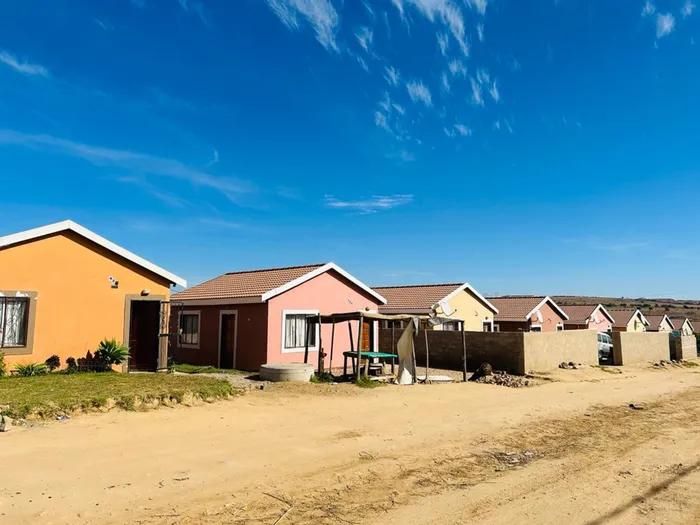
Internal migration from rural areas to South Africa's major cities has placed increasing strain on urban housing, healthcare, education, and municipal services. This significant internal migration, specifically from rural areas to South Africa's major urban centers, has placed an increasingly severe strain on critical public services and infrastructure, including urban housing, healthcare facilities, educational institutions, and essential municipal services. Informal settlements continue to expand in areas already burdened by overcrowding and fragile infrastructure, which deepens frustration among many communities. As a direct consequence, informal settlements continue to expand rapidly in areas already struggling under the weight of overcrowding and fragile, often inadequate infrastructure, a situation which inevitably deepens frustration and resentment among many communities who feel their quality of life is deteriorating. Poor economic policy decisions have contributed significantly to these conditions, according to reports. The current challenging conditions are, according to various reports, significantly exacerbated by a series of poor economic policy decisions. Weak industrial growth, the outsourcing of core state functions, excessive austerity measures, corruption, and poor governance have limited inclusive development and reduced opportunities for stable employment. Specifically, factors such as weak industrial growth, the controversial outsourcing of core state functions, the implementation of excessive austerity measures, rampant corruption, and generally poor governance have collectively served to limit inclusive development across the country and have drastically reduced opportunities for stable and dignified employment for many.
Public resources intended for development and service delivery have too often been diverted through corruption and patronage networks. These critical public resources, which are explicitly intended for national development and the delivery of essential services to the populace, have far too often been illicitly diverted through entrenched corruption and extensive patronage networks, preventing them from reaching their intended beneficiaries. Border management has also suffered from poor policy choices and institutional decline. The critical function of border management has similarly suffered from a combination of poor policy choices and a noticeable institutional decline over time. Corruption among some officials has enabled the movement of undocumented individuals, illicit goods, and organized criminal networks across porous borders. The widespread presence of corruption among certain officials has directly facilitated the unimpeded movement of undocumented individuals, the trafficking of illicit goods, and the operations of organized criminal networks across the nation's often porous borders, posing significant security and economic challenges. Confidence in the criminal justice system declines further when violent offenders avoid prosecution or when corruption shields criminal activity from investigation. This erosion of public trust in the criminal justice system is further deepened when violent offenders manage to avoid prosecution, or when systemic corruption actively shields criminal activity from thorough investigation and accountability. These systemic issues collectively fuel public anger and contribute to the challenges facing the nation. These deeply ingrained and interconnected systemic issues collectively serve to fuel widespread public anger and contribute significantly to the multifaceted challenges currently facing the South African nation.
Escalating Vigilantism and Division
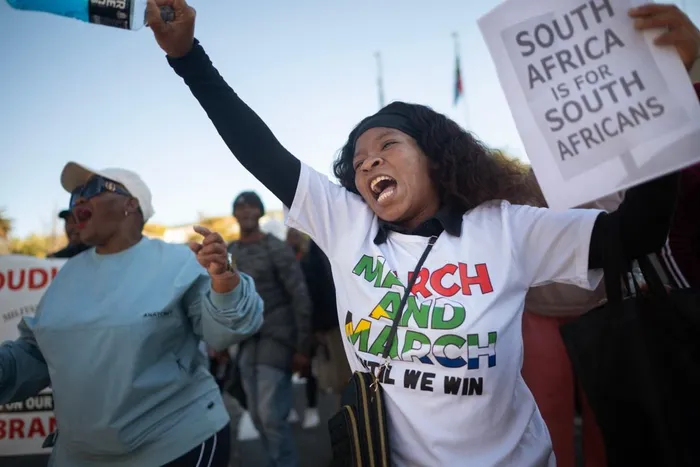
Videos depicting marches against foreigners, angry crowds, some expressing tribal sentiments, and visibly intimidated individuals are circulating widely across digital platforms, contributing to fear, outrage, and division. A disturbing trend of videos circulating widely across digital platforms depicts marches specifically targeting foreigners, angry crowds, some openly expressing tribal sentiments, and visibly intimidated individuals caught in the crossfire, all of which contribute to a palpable sense of fear, outrage, and deepening division within society. The Justice, Crime Prevention and Security (JCPS) Cluster has issued a call for responsible, peaceful protests ahead of an intended national shutdown and march at the end of June. In response to the escalating tensions, the Justice, Crime Prevention and Security (JCPS) Cluster has issued a public call for responsible and peaceful protests, specifically ahead of an intended national shutdown and march slated for the end of June. This call is deemed necessary to prevent violence and to protect lives and property. This urgent call is deemed absolutely necessary by authorities to proactively prevent the outbreak of violence and to ensure the protection of both human lives and private property during these potentially volatile events.
The JCPS Cluster held an emergency meeting on May 25, which has been acknowledged as a welcome, albeit delayed, recognition of the growing crisis. The emergency meeting convened by the JCPS Cluster on May 25th has been widely acknowledged as a welcome, though notably delayed, recognition of the rapidly growing crisis of public unrest and vigilantism. A society that normalises collective punishment is seen as weakening respect for law and human rights across all communities. Fundamentally, a society that permits and normalises the practice of collective punishment is understood to be actively weakening the essential respect for the rule of law and the fundamental principles of human rights across all its communities, regardless of their background.
Undermining Democracy's Foundations
Mobilisation against foreign nationals is understood by some observers as an ineffective approach to addressing South Africa's structural economic problems or institutional weaknesses. The widespread mobilisation against foreign nationals, while perhaps an expression of frustration, is understood by some observers as a fundamentally ineffective and misdirected approach to addressing South Africa's deep-seated structural economic problems or its widespread institutional weaknesses. Violence directed towards foreign nationals cannot restore employment, rebuild infrastructure, or strengthen the rule of law, according to this perspective. From this critical perspective, the application of violence directed towards foreign nationals cannot, by any logical means, restore employment opportunities for citizens, nor can it contribute to the rebuilding of dilapidated infrastructure, or effectively strengthen the rule of law within the country. Such actions also place innocent individuals at risk of intimidation, assault, and collective punishment. Such aggressive actions invariably place innocent people, who are often simply seeking a better life, at severe risk of intimidation, physical assault, and the grave injustice of collective punishment. Instead, analysts suggest that South Africa can confront its challenges through reform, justice, and responsible leadership. Instead, a consensus among analysts suggests that South Africa's most viable path to confronting its complex challenges lies in full reform, the pursuit of genuine justice for all its inhabitants, and the unwavering commitment of responsible leadership. The nation cannot build a stable future through fear directed at vulnerable people, according to this assessment. According to this key assessment, the nation simply cannot hope to build a stable, prosperous, and equitable future through the propagation of fear directed at vulnerable people, as this only serves to perpetuate cycles of instability and injustice. Anti-foreign national mobilisation cannot solve structural economic problems or institutional weaknesses, but instead creates further division and insecurity. Violence against foreign nationals cannot restore employment, rebuild infrastructure or strengthen the rule of law, and instead places innocent people at risk of intimidation, assault and collective punishment. These actions only serve to further destabilize communities and undermine the very fabric of society.