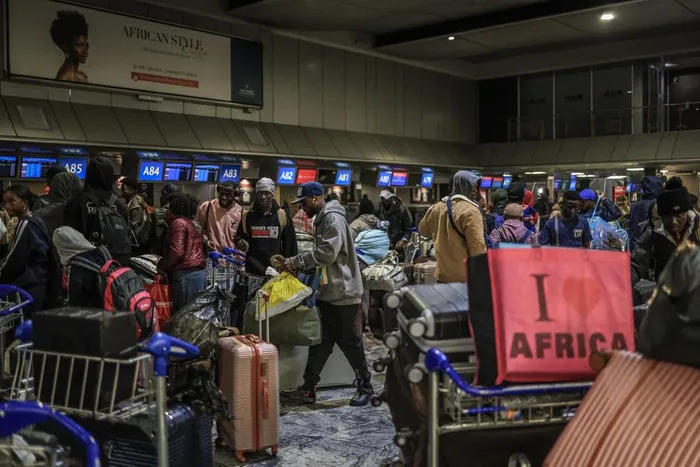
As Africa Month draws to a close, diplomatic missions and community associations have issued warnings to their nationals residing in South Africa following heightened tensions related to the cost of living crisis. Ghana's diplomatic mission and Nigerian community associations specifically cautioned their citizens in the country. These warnings come amidst a backdrop of increasing socio-economic pressures that have fueled public discontent. Reports indicated that the economic climate, marked by a national unemployment rate of 32.7%, has exacerbated these tensions, leading to a complex situation for both residents and foreign nationals. The confluence of economic hardship and social unrest has prompted calls for urgent intervention from international bodies. Human Rights Watch, a prominent international non-governmental organization, has notably urged the South African government to take urgent action regarding the escalating situation, noting concerns over human rights and public safety.
The prevailing economic landscape in South Africa is attributed to a combination of deep-seated structural issues. These include an ongoing energy crisis, which has crippled industrial output and daily life, a significant skills mismatch in the labor market, and the sustained fallout from the COVID-19 pandemic, which collectively have systematically contributed to the current challenges. The pandemic, in particular, disrupted supply chains, reduced economic activity, and led to job losses, the effects of which continue to reverberate through the economy. These systemic problems have created a challenging environment for businesses and individuals alike, intensifying the struggle for economic stability and growth. The persistent unemployment rate shows the severity of the situation, leaving a substantial portion of the population without a stable income and contributing to widespread financial insecurity.
Economic Strain on Households
Households across the nation are experiencing significant economic pressure as increased prices for food ingredients and fertilizers drive up costs for traders, farmers, and ultimately, consumers. This inflationary trend impacts every stage of the supply chain, from agricultural production to retail sales, making everyday necessities more expensive. Steve Reid, owner of The Northampton Cheese Company and The Northampton Charcuterie Company, provided a stark illustration of this reality, stating that some ingredients he relies on have more than doubled in price over a relatively short period. Reid provided specific examples to highlight the dramatic increases he has observed in his business operations. "For example, dried apricots just over 12 months ago were £35 for a 12kg box, now they're £100 a box," Reid said, showing a nearly threefold increase. He added that "Sultanas - they've gone from £23 a 10kg box to about £60, so everything has virtually doubled." These substantial price hikes directly affect the profitability of businesses like Reid's and force them to make difficult decisions regarding pricing and product offerings.
The rising expenses create a difficult situation for businesses, which are caught between increasing input costs and the need to maintain competitive prices for their customers. Reid explained the challenge of passing these costs on to consumers, who are themselves grappling with their own economic strain due to the broader cost-of-living crisis. "If we have to increase our prices the cost-of-living crisis affects everybody and it's even more difficult to sell the products - so it's a very vicious circle," he stated. This cycle illustrates the interconnectedness of economic pressures, where rising costs for businesses translate into higher prices for consumers, further squeezing household budgets. The Bank of England has also weighed in on the issue, projecting a potential 7% increase in food prices by the end of the year, which would further exacerbate the financial burden on households and businesses. This forecast paints a concerning picture for the immediate future of food affordability.
Consumers have also observed substantial price hikes on everyday necessities, directly impacting their purchasing power and quality of life. Maria Agachi, a shopper at Northampton Market, noted the dramatic change in prices for basic items that are essential for daily living. "I came to England five years ago and I remember the salt was around 30p now it's £1 and something, just the normal products we're buying from the shops is increasing," Agachi noted. This personal account shows a broad impact on the purchasing power of individuals and families, illustrating how even the most basic household staples have become significantly more expensive. The increases in essential goods contribute to the overall economic strain on households, making it progressively more challenging for them to manage their budgets and maintain their accustomed standard of living.
Farmers Face Rising Costs
Farmers are expressing profound concerns over escalating operational expenses, with some warning of potential reductions in crop production if current trends continue. This looming threat to agricultural output has significant implications for food security and prices. Philip Weston, a farmer from Hartwell, Northamptonshire, who cultivates a substantial 300 acres (121 hectares) of land, indicated the possibility of further protests among agricultural workers if their concerns are not addressed. Weston's warning reflects a growing frustration within the farming community. "If we go out again and protest it will prove to the British public that we are still there," he asserted, signaling a readiness to take direct action to highlight their plight and demand government support.
The rising cost of inputs, particularly fertiliser, is a primary driver of these profound concerns within the agricultural sector. The price of fertiliser, a critical component for crop yield, has seen unprecedented increases, directly impacting farmers' ability to maintain production levels without incurring significant losses. Weston specifically noted the critical threshold that farmers are facing, stating, "If the cost of fertiliser doesn't come down we are seriously looking at drawing back on arable crop production." This potential reduction in arable farming would have broad consequences for the domestic food supply. He also reflected on past policy decisions, specifically mentioning a missed opportunity: "The Labour government did have an option to draw back on the planned fertilizer tax that they were proposing. They chose not too. Change needs to be brought about now." This historical reference notes a long-standing tension between government policy and agricultural sustainability.
A spokesperson for the government affirmed its commitment to the agricultural sector, saying it was working closely with farmers to ensure "the sector gets the backing it needs." This statement aims to reassure the farming community that their concerns are being heard at the highest levels. In a tangible move to address the transparency of input costs, the government has also requested the Agricultural and Horticulture Development Board to increase the frequency of its fertiliser price reporting, with this data now published weekly. This initiative is intended to provide farmers with more timely and accurate information to help them make informed decisions regarding their purchasing and planning. Additionally, the government spokesperson stated that they have extended the 5p fuel duty cut until September, a measure designed to alleviate some of the financial pressure on businesses. They also noted that red diesel, commonly used in agriculture, benefits from an 80% tax discount, which saves farmers approximately £300 million annually, showing the existing support mechanisms in place.
Weston further emphasized the urgent need for a re-evaluation of domestic produce value, noting the competitive disadvantages faced by British farmers compared to international producers. "We need to put a higher value on the produce that we actually have here in this country," Weston said, advocating for policies that recognize the true cost and quality of local goods. He added, "We're seeing meat being imported into this country in huge numbers and we simply aren't competitive with their cost of productions, we can't cope with that." These pressures contribute to a broader economic strain on agricultural producers and the entire food supply chain, raising questions about the long-term viability of domestic farming without significant policy adjustments.
Divergent Perspectives on Crisis
The economic pressures have not only impacted households and farmers but have also fueled social unrest, particularly in South Africa. Protests targeting migration have occurred in several South African cities, including Johannesburg, Tshwane, and Durban, amidst escalating cost-of-living pressures and high unemployment. These demonstrations reflect a complex interplay of economic frustration and social tensions, with some segments of the population linking their economic woes to the presence of foreign nationals. The involvement of Human Rights Watch, calling for urgent action from the South African government, shows the severity of these tensions and the need for a full response that addresses both the economic roots of the crisis and the protection of human rights.
The financial strain on South African households is evident in recent data, which indicates that 75% of South Africans who borrowed money last year did so primarily to cover essential food expenses. This statistic paints a stark picture of the widespread financial precarity and the extent to which basic needs are becoming increasingly unaffordable for a majority of the population. The reliance on debt for food notes a deepening crisis that goes beyond mere inconvenience, touching upon the fundamental ability of families to sustain themselves. The Bank of England has projected a potential 7% increase in food prices by the end of the year, a forecast that would further exacerbate these challenges for consumers both in the UK and potentially influence global food markets, indirectly affecting countries like South Africa.
A government spokesperson affirmed its support for the agricultural sector, stating, "This government is working closely with farming stakeholders, including the NFU, to make sure the sector gets the backing it needs." This collaborative approach is intended to ensure that agricultural policies are responsive to the real-world challenges faced by farmers. The spokesperson added that the government has extended the 5p fuel duty cut until September, a measure aimed at providing some relief from rising operational costs for various sectors, including agriculture. They further noted that red diesel benefits from an 80% tax discount, which saves farmers approximately £300 million annually, illustrating the significant financial support already in place for the farming community. They also mentioned the government's request to the Agricultural and Horticulture Development Board to increase the frequency of its fertilizer price reporting, with data now published weekly, providing more timely information for farmers to manage their input costs effectively. These measures collectively represent the government's efforts to mitigate the impact of rising costs on vital sectors of the economy.