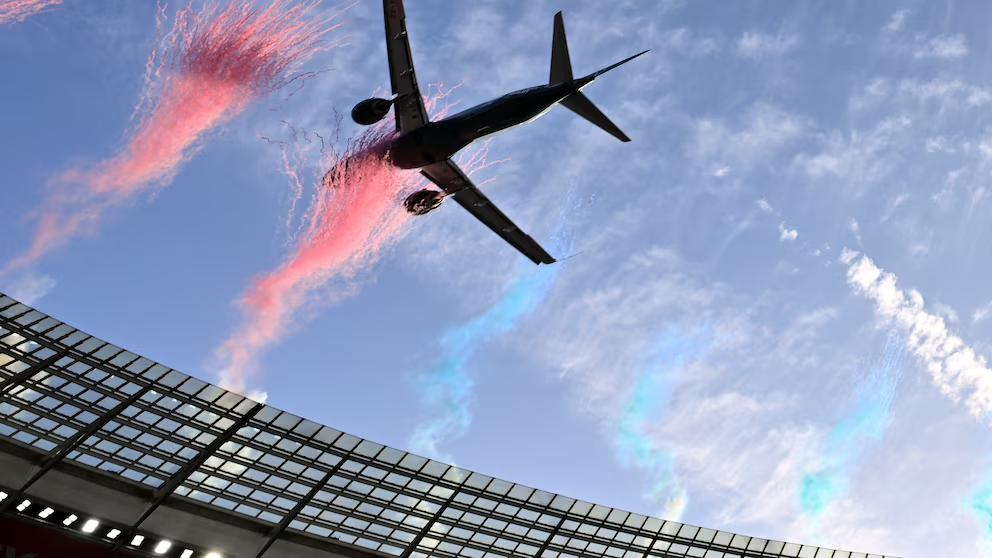
South Africa’s aviation authority is currently reviewing a dramatic flypast by a passenger jet over Cape Town's DHL Stadium. The incident, which occurred last Saturday, involved an Airlink aircraft performing an unusually low and dramatic flyby during a sporting event, attracting significant international attention. The South African Civil Aviation Authority (SACAA) confirmed it is investigating the circumstances surrounding the manoeuvre, specifically focusing on adherence to aviation safety regulations. The review comes after the dramatic aerial display drew widespread public discussion and scrutiny regarding the altitude and proximity of the aircraft to the stadium.
Review and Data Collection
The South African Civil Aviation Authority (SACAA) confirmed it has obtained flight data recordings and requested further information from regional carrier Airlink as part of its ongoing assessment into the stadium flypast. This data is key for the regulator to accurately reconstruct the flight path and parameters of the aircraft during the controversial manoeuvre. The SACAA's investigation aims to determine whether all safety protocols and airspace regulations were strictly followed by the airline and its flight crew. The regulator stated that Airlink had previously submitted applications for three separate flyovers, indicating a pattern of planned aerial displays. These applications would have detailed the proposed flight paths, altitudes, and safety measures for each event.
In light of the current investigation into the Cape Town incident, Airlink has withdrawn its plans for an additional flyover scheduled for an upcoming rugby match in Soweto, according to the SACAA. This withdrawal suggests a cautious approach by the airline while the regulatory body conducts its review. The authority continues to gather evidence to determine compliance with aviation safety regulations regarding the low-altitude manoeuvre in Cape Town. The outcome of this investigation could have significant implications for future aerial displays over populated areas in South Africa. The SACAA's thorough examination shows its commitment to maintaining stringent aviation safety standards across the country's airspace.
Context and Tradition
The flyover ahead of the Springboks-All Blacks rugby match on August 29 in Cape Town generated significant public enthusiasm, drawing huge cheers from an estimated crowd of about 56,000 spectators. The spectacle was a prominent feature of the pre-match entertainment, adding to the atmosphere of the high-profile sporting event. This type of aerial display holds a deep-rooted significance in South African rugby culture, with stadium flybys being a long-standing tradition at major matches. The practice dates back prominently to the 1995 Rugby World Cup final held in Johannesburg, an event often cited for its memorable pre-match aerial spectacle that has since become an iconic part of the nation's sporting heritage. These flyovers are typically seen as a way to enhance the celebratory mood and national pride associated with major rugby fixtures.
The recent incident in Cape Town marked the second flyover performed by Airlink in a short period; the first of these low-altitude manoeuvres occurred in Johannesburg on August 22, preceding another major rugby fixture. Both events involved passenger jets flying at what appeared to be unusually low altitudes, sparking both admiration and concern. The continuity of these displays notes the cultural importance placed on them within South African sports. However, the intensity of the recent flybys has prompted the aviation authority to scrutinize the operational aspects more closely, ensuring that tradition does not compromise safety.
Pilot and Airline Perspective
Airlink stated that each aircraft involved in the flypast carried three senior captains, with the combined flight crews possessing more than 75,000 flight hours. This detail was provided by the airline to emphasize the extensive experience and qualifications of the personnel operating the aircraft during the display. The regional carrier maintained that the manoeuvre had been meticulously planned and rehearsed, asserting that safety remained "the first consideration at every stage of the process." This statement shows Airlink's position that all necessary precautions were taken and that the operation was executed within established safety parameters, despite public perception or regulatory concerns. The planning process would have involved detailed flight path calculations, weather assessments, and coordination with air traffic control.
Following the ongoing investigation by the South African Civil Aviation Authority (SACAA), Airlink withdrew its application for a flyover that had been scheduled for September 1, over Johannesburg’s FNB Stadium. This decision reflects the airline's acknowledgement of the serious nature of the SACAA's inquiry and its commitment to cooperating with the regulatory body. Deandra Peters, a 25-year-old pilot and aviation enthusiast, commented on the technical aspects of such displays, offering insights into the precision and skill required for low-altitude aerial manoeuvres. Her perspective, as someone with professional insight into aviation, contributes to the broader understanding of the complexities involved in executing such flybys safely. The industry will be closely watching the SACAA's findings, which are expected to clarify the acceptable boundaries for such displays in the future.