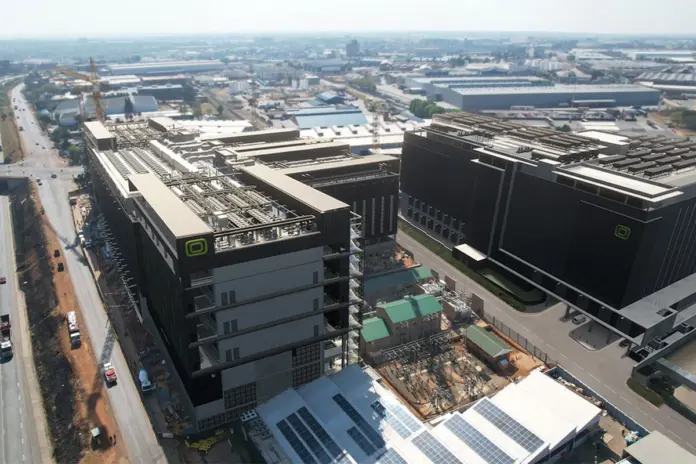
An AI implementation expert has advised South Africa against competing to host large artificial intelligence data centres. This perspective emerges as Cape Town's strategic value for digital infrastructure is noted by its numerous submarine cable connections. Six key cables, including ACE, Equiano, SAT-3, SAFE, WACS, and 2Africa, connect through or near the Western Cape, showing the region's importance as a digital gateway.
The expert's caution comes at a time when global tech giants are increasing their footprint in the country. Microsoft, a major player in the tech sector, has committed R5.4 billion by the end of 2027 to its South African operations. This significant investment builds on approximately R20.4 billion Microsoft had already spent in the country over the preceding four years, demonstrating a sustained interest in the nation's digital economy.
Resource Constraints Loom Large Amidst Expansion
Major data centre operators in South Africa are significantly expanding their capacity, which brings a sharpened focus on resource demands, particularly for power and water. Equinix is scaling its Johannesburg 1 facility towards 24 megawatts (MW) of power capacity, reflecting the growing need for strong digital infrastructure. Concurrently, Teraco is bringing its 30MW JB5 facility online, specifically designed to host its initial large-scale artificial intelligence workloads. This move signifies a direct response to the increasing computational demands of AI. Further substantial expansion is planned by Teraco with the development of JB7, a hyperscale facility at its Isando campus in Ekurhuleni, which is set to provide an additional 40MW of critical power. These expansions collectively indicate a rapid growth trajectory for data centre capacity within the country.
The expansion of such facilities raises considerable concerns about the strain on existing national resources. Dr Francois du Plessis, an AI implementation expert, specifically noted the Vaal and Orange rivers as critical water sources that simultaneously support urban, industrial, and irrigated agricultural demands. The continuous operation of AI servers generates substantial thermal output, which requires uninterrupted cooling to prevent overheating and maintain functionality. This makes water an indispensable resource for cooling systems. Hyperscale data centres, by their very nature, require a continuous and highly reliable power supply, a characteristic that differentiates them from many other industrial users whose power needs might be more flexible or intermittent. This constant, high-demand power requirement places unique pressures on the national grid.
Despite the significant power and cooling demands of data centres, some operators are actively working to mitigate their environmental footprint. Teraco, for instance, reported a substantial reduction in its water usage effectiveness (WUE), which declined from 0.10 litres per IT kilowatt-hour in 2023 to 0.04 litres in 2024. This notable improvement represents a 60% reduction in water consumption over a two-year period, indicating proactive efforts within the industry to improve resource efficiency and sustainability. Such advancements are key in a water-stressed country like South Africa.
Expert's Alternative Vision Amidst Global Competition
Regions with reliable energy infrastructure are actively competing aggressively for investments in artificial intelligence infrastructure, recognizing the economic and technological advantages these facilities bring. In South Africa, there is a clear drive to foster AI development. The South African Artificial Intelligence Association and the Western Cape Government have jointly launched the Western Cape AI Cluster, an initiative specifically designed to expand provincial opportunities in artificial intelligence and position the region as a hub for AI innovation.
Despite these positive developments and strategic initiatives, South Africa continues to face significant resource constraints that could impact its competitiveness in hosting large-scale AI infrastructure. The nation remains water-scarce, with its major water systems already heavily allocated to various competing uses, making large-scale industrial water consumption a sensitive issue. The national electricity grid is under considerable pressure in several areas, particularly due to transmission and distribution infrastructure not keeping pace with new demand. This situation presents a challenge for hyperscale data centres that require uninterrupted, high-quality power. The continuous operation of AI servers generates substantial thermal output, which necessitates uninterrupted cooling to prevent overheating and maintain optimal functionality, further stressing both water and electricity supplies.
The intensive demands of AI infrastructure highlight the critical need for efficient resource management and innovative technological solutions. A life-cycle assessment conducted by Schneider Electric and Microsoft indicated that transitioning from traditional air cooling to advanced liquid cooling technologies can reduce blue water consumption by as much as 82%. This significant finding suggests potential pathways for mitigating the environmental impact of AI data centres, particularly in water-stressed regions like South Africa, offering a more sustainable approach to managing these facilities.
Strategic Focus on AI-Augmented Industries and Local Infrastructure Growth
Even with expert advice cautioning against direct competition for large AI data centre hosting, local development continues. Cape Town approved two hyperscale facilities in July, which together are projected to total approximately 174MW of power capacity, signaling strong local intent to expand digital infrastructure. MTN has also identified South Africa as a priority market for its data centre platform, indicating strategic interest in the country's digital infrastructure growth and its potential as a regional hub.
The expansion plans of major operators are substantial. Once fully incorporated, Teraco’s stated critical power capacity is expected to reach approximately 228MW across its operations, solidifying its position as a leading data centre provider in the region. Vantage Data Centres' Johannesburg II facility exemplifies advanced infrastructure design, featuring multiple power feeds, a strong 35 MVA on-site substation, and N+1 redundancy in its design to ensure maximum uptime and reliability.
Specific facilities are also seeing significant upgrades. Teraco’s CT1 data centre, located in Cape Town, currently offers around 2,500 square meters of data hall space and 3MW of critical IT capacity. An expansion for CT1 is planned to add approximately 1,000 square meters of data hall space and 2MW of critical IT capacity, with completion anticipated by early 2027. This continuous investment in local capacity shows the ongoing demand for secure and high-performance data infrastructure within South Africa, even as broader strategic discussions about the nation's role in the global AI landscape continue. The focus, as suggested by experts, may need to shift towards leveraging AI for augmentation within existing industries, rather than solely aiming to host the largest foundational AI infrastructure.