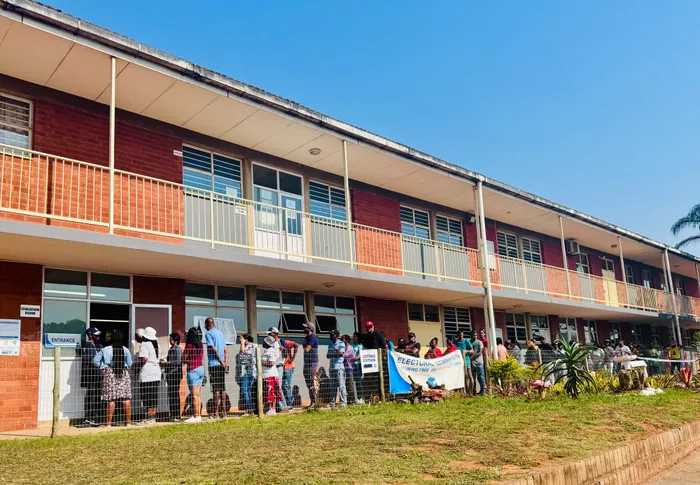
South Africa faces significant socio-economic challenges, including an unemployment rate that hovers above 31%. These issues contribute to the nation being described as the most unequal society on Earth. The widespread nature of these challenges shows the urgency with which South Africa must navigate its future, particularly in the rapidly evolving landscape of artificial intelligence. The decisions made today regarding AI policy and infrastructure will have profound implications for the country's economic stability, social equity, and technological sovereignty.
The Peril of Complacency
South Africa's economic landscape is marked by profound inequality, with its Gini coefficient recorded at approximately 0.63. This stark disparity is further exacerbated by high unemployment rates, particularly among the youth, where joblessness exceeds 43%. These figures paint a challenging picture for a nation striving for inclusive growth and development. The potential impact of artificial intelligence technologies on the nation's workforce adds another layer of concern. A McKinsey analysis indicates that as much as 39% of jobs in South Africa could be at risk of automation by 2030, posing a significant challenge to employment stability and potentially widening existing inequalities if not managed proactively. The prospect of widespread job displacement necessitates a strong and forward-thinking strategy to reskill the workforce and create new opportunities in an AI-driven economy.
The country's reliance on external technology infrastructure also presents a strategic vulnerability. South Africa's current hardware dependence on the U.S. And China has prompted calls for new strategies to reduce this reliance. This recommendation emerges amidst ongoing geopolitical rivalry between the United States and China, noting the need for South Africa to develop its own technological capabilities to safeguard its digital sovereignty and economic future. The dependence on foreign hardware not only raises questions about data security but also limits South Africa's ability to innovate and control its technological destiny. Reducing this dependence is seen as critical for fostering local innovation, creating domestic jobs in the tech sector, and ensuring that the benefits of AI development are retained within the country.
Policy Framework and Infrastructure Needs
South Africa has initiated frameworks to guide its engagement with artificial intelligence, demonstrating a recognition of the technology's transformative potential. These foundational efforts include a National AI Policy Framework and the establishment of a Fourth Industrial Revolution Commission. These initiatives aim to provide a structured approach to integrating AI into the national development agenda. The draft policy outlines proposals for new institutional structures to manage AI development and adoption within the country. These proposed institutions include a National AI Commission, an AI Ethics Board, and an AI Regulatory Authority, designed to oversee various aspects of AI governance, from ethical considerations to market regulation. The establishment of such bodies is key for ensuring that AI development aligns with South Africa's values and socio-economic goals, promoting responsible innovation while mitigating potential risks.
Reports indicate that a significant concern within this policy development is the potential vulnerability arising from reliance on foreign infrastructure. This dependence could compromise the security of sensitive South African data, prompting calls for greater self-sufficiency in digital infrastructure. The draft framework also advocates for strategic investments in digital infrastructure. This includes exploring partnerships with international cloud providers to enhance data storage and processing capabilities, while simultaneously building domestic capacity. The policy encourages the development of regional supercomputing hubs to foster advanced computational research and innovation across the continent. These hubs would not only serve South Africa's needs but also position the country as a leader in AI research and development within Africa, promoting regional collaboration and shared technological advancement. The emphasis on both domestic capacity building and strategic international partnerships reflects a nuanced approach to securing South Africa's digital future.
Harnessing AI for Liberation
South Africa's approach to AI policy development includes plans for strategic investments and incentives, alongside concerns about the pace of its regulatory framework. The government intends to create incentives such as tax breaks, grants, and subsidies to encourage private-sector collaboration, particularly for local startups and small businesses. These incentives are designed to stimulate a vibrant domestic AI ecosystem, fostering innovation and job creation. A key pillar of the policy is also investment in strong and cost-effective supercomputing infrastructure to support AI research and development. Such infrastructure is indispensable for processing the vast datasets required for advanced AI applications and for enabling advanced scientific research. By providing these resources, South Africa aims to empower its researchers and entrepreneurs to compete on a global scale.
However, debates surrounding AI regulation in South Africa lag far behind frameworks like Europe’s AI Act or emerging strategies in countries such as Brazil and India. This delay could leave South Africa vulnerable to the challenges posed by unregulated AI development, including ethical dilemmas, data privacy breaches, and exacerbation of social inequalities. The urgency of establishing a full and adaptable regulatory framework cannot be overstated. A balanced approach that fosters innovation while ensuring accountability and ethical deployment of AI is essential for South Africa to harness this powerful technology for liberation rather than inadvertently deepening existing societal divides. The nation's journey towards an AI-powered future is a delicate balance between leveraging technological potential and safeguarding its people and sovereignty.