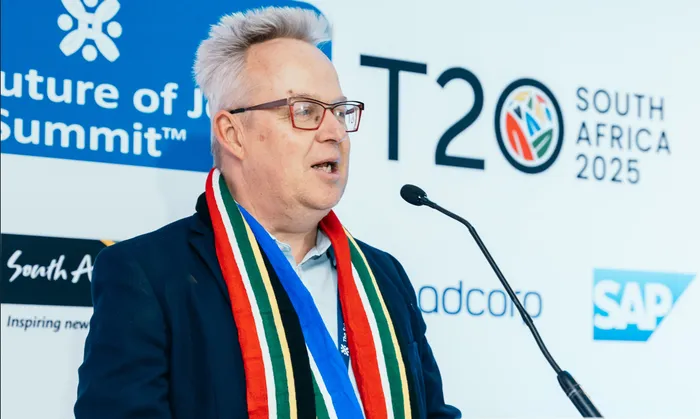
Agriculture Minister John Steenhuisen addressed the Agbiz Congress 2026 Gala Dinner on Thursday, where he emphasized the critical need for government and private sector collaboration to drive agricultural growth in South Africa. The dinner's theme was "Embracing Collaboration," reflecting the minister's call for unified efforts. Minister Steenhuisen stated that South African agriculture has consistently demonstrated resilience amid global uncertainty and domestic challenges. He noted the sector's inherent ability to overcome significant hurdles, showcasing its strategic importance to the national economy.
"We have seen how quickly tariffs can alter global trade flows and how fragile supply chains remain in an increasingly fractured world. Yet despite all of this, South African agriculture continues to grow," Steenhuisen said, adding that the sector "has learned how to adapt faster than the obstacles confronting it." He stressed that the next phase of agricultural growth will be built through practical partnerships, not by government or private sector alone. The Minister showed that the challenges facing the sector are complex and multifaceted, requiring a shared vision and concerted effort from all stakeholders. "Once we have done that, we must have the confidence to get out of the way and allow farmers, exporters, agribusinesses and investors to do what they do best," Steenhuisen noted, confirming that interdepartmental engagements have begun to establish a coordinated pathway forward involving agriculture, energy, trade, and industrial policy stakeholders. This integrated approach is designed to ensure that policies are coherent and mutually supportive, fostering an environment conducive to sustained agricultural expansion.
Key Collaboration Pillars Identified
Minister John Steenhuisen identified four priority areas requiring greater collaboration between government and the private sector. These areas include biosecurity, infrastructure and logistics, access to finance, and technology and extension services. These pillars are considered fundamental to unlocking the full potential of the agricultural sector and ensuring its long-term sustainability. According to Steenhuisen, biosecurity is central to maintaining trade relationships, fostering investment confidence, and ensuring food security. This focus comes particularly in the wake of recent outbreaks of Foot and Mouth Disease (FMD) in South Africa, which have showed the vulnerability of the sector to disease and the critical need for strong protective measures.
The government is pursuing an aggressive risk-based disease management strategy specifically for FMD. This strategy involves concerted efforts to achieve FMD-free status through vaccination programs. Steenhuisen noted that these measures are vital for protecting the agricultural sector's economic viability and its ability to contribute to national food supplies. Effective biosecurity protocols are not only about disease control but also about safeguarding market access for South African produce, which is key for export-oriented agricultural businesses. The emphasis on these pillars is intended to create a more resilient and growth-oriented agricultural landscape in the country, leveraging combined resources and expertise from both public and private entities.
Addressing Infrastructure and Finance Gaps
Progress in biofuels necessitates policy certainty, investment, and coordinated action across multiple government departments and industry stakeholders. This emerging sector holds significant promise for agricultural diversification and economic growth. Producers in the agricultural sector have consistently absorbed the costs associated with inefficiencies in ports, rail, and freight systems. These infrastructural challenges impact the sector's competitiveness and ability to deliver produce to markets efficiently, often leading to increased operational expenses and reduced profitability for farmers. The Minister acknowledged that these logistical bottlenecks represent a substantial drain on resources that could otherwise be invested in growth and innovation.
Addressing these issues requires closer collaboration between the government, financial institutions, and agribusinesses. Such cooperation is deemed essential to expand support for emerging farmers and facilitate their integration into established commercial value chains. Providing access to appropriate financing and market linkages is critical for these farmers to grow their operations and contribute more significantly to the agricultural economy. This unified approach aims to mitigate the financial burdens faced by producers due to logistical bottlenecks and to foster a more inclusive agricultural economy. It also seeks to ensure that financial products are tailored to the specific needs of the agricultural sector, promoting investment and sustainable practices.
Minister's Call for Coordinated Action
Future agricultural growth in South Africa depends on stronger cooperation between government, the private sector, farmers, agribusinesses, exporters, and commodity organisations. This collaborative approach is seen as essential for navigating the sector's challenges and opportunities, ensuring that all voices are heard and integrated into strategic planning. Biofuels are identified as a potential growth frontier, offering new opportunities for grain, sugar, and oilseed producers. This area could expand market access and diversify income streams for agricultural stakeholders, providing a new avenue for crop utilization and value addition. Additionally, traditional agricultural extension models are no longer considered sufficient for modern farming demands. The evolving landscape of agriculture necessitates updated and more dynamic support systems to equip farmers with the knowledge and tools required for contemporary practices and increased productivity, including the adoption of new technologies and sustainable methods. The Minister's call for unity shows the urgency and importance of a collective effort to secure a prosperous future for South African agriculture.