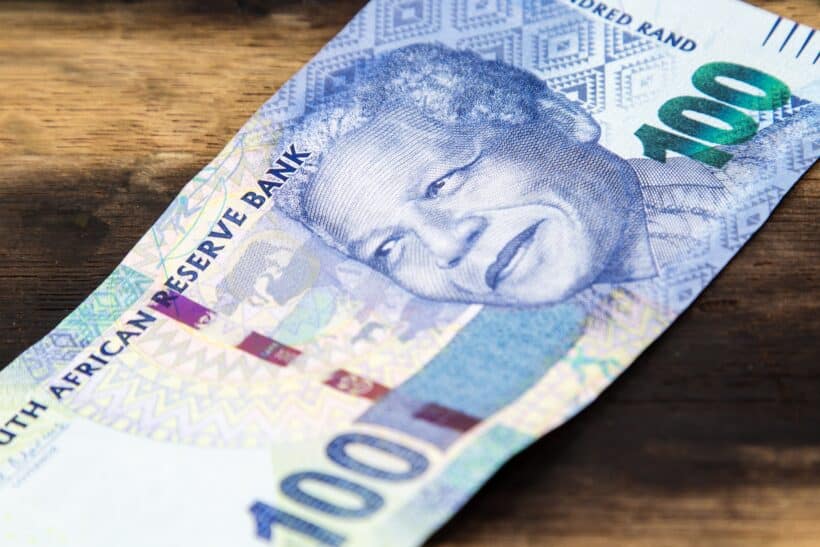
The South African rand is approaching a critical price level that could determine its future direction against the U.S. Dollar, potentially resuming a year-long strengthening trend or initiating a period of weakening. This key price level is poised to decide whether the rand resumes a year-long strengthening trend or begins to weaken against the U.S. Dollar. Analyst observations indicate the currency's outlook hinges on its performance around this specific technical threshold. The 100-month moving average, currently positioned at 16.3496, has emerged as a key technical indicator for the South African currency, with its position at 16.3496 now central to the currency's outlook. This level is key for market participants assessing whether the rand will maintain its prior trajectory or reverse course, influencing investment decisions and economic projections for South Africa. The coming period will therefore be closely watched by investors and economists alike, as the currency navigates this key moment.
Long-Term Strengthening Trend
The South African rand had been strengthening against the U.S. Dollar since May 2025. This upward trend was observed in foreign exchange charts, which typically express the currency pair as rand per dollar. A decrease in this price indicates a gain for the South African currency. The rand's consistent performance pushed the dollar below its 100-month moving average during January and February. This period of steady gains for the rand was interrupted before the Iran conflict began on February 28. The strengthening trend, which had been in motion since May 2025, halted abruptly following the start of the Iran war, when the dollar began to rise against the rand.
Technical Indicators and Key Levels
The 100-month moving average, a significant technical indicator, currently stands at 16.3496. Technical analysts frequently employ moving averages to assess the underlying strength and direction of financial trends. These analytical tools provide a smoothed representation of price data over a specific period, helping to filter out short-term fluctuations and highlight the prevailing direction of the market. Monthly charts, in particular, are considered a valuable tool for discerning long-term price tendencies in currency markets. Their broader timeframe allows for a clearer view of sustained trends, making them indispensable for strategic decision-making in foreign exchange. The current position of the 100-month moving average at 16.3496 is therefore not merely a number, but a critical benchmark that market participants are closely monitoring. Its significance stems from its ability to signal potential shifts in the currency's long-term trajectory, offering insights into whether the rand is likely to continue its previous path or embark on a new one.
Following a period of rand strengthening, the dollar reversed course in March, pulling back above its 100-month moving average, where it has largely stayed since. Despite this, the rand has made several brief forays below the 100-month average, indicating continued pressure but no sustained breach. The strengthening trend observed in the rand earlier this year halted abruptly after the commencement of the Iran war, which led to a notable appreciation of the dollar against the South African currency. This shift shows the sensitivity of currency markets to geopolitical developments and their potential to rapidly alter established trends. The dollar's ability to remain above this key technical level for an extended period has introduced a new dynamic into the rand's valuation, creating uncertainty about its immediate future.
Geopolitical Shocks and Market Reactions
The rand experienced a losing streak against the U.S. Dollar following the commencement of the Iran war. This geopolitical event prompted investors to seek the U.S. Dollar as a safe haven asset. The flight to safety impacted emerging market currencies, including the South African rand, as global risk aversion increased. Investors, reacting to the heightened uncertainty and potential for broader conflict, typically reallocate their capital towards assets perceived as more stable and liquid, such as the U.S. Dollar. This phenomenon often leads to a depreciation of currencies in developing economies, which are generally considered higher risk during times of global instability.
Concurrently, high oil prices were perceived as a detrimental factor for South Africa’s currency. As an oil-importing nation, South Africa's economy is particularly sensitive to fluctuations in crude oil costs, which can exert downward pressure on the rand due to increased import bills. When global oil prices rise, South Africa must spend more of its foreign currency reserves to purchase the necessary crude, which can lead to a weakening of the rand. This dual impact of increased geopolitical tension driving safe-haven flows to the dollar and rising commodity prices exacerbating import costs created a challenging environment for the South African currency. The combined effect of heightened geopolitical tensions and rising commodity prices contributed to the currency's depreciation against the dollar during this period. These market reactions illustrate the sensitivity of the rand to global events that influence investor sentiment and trade balances, noting the interconnectedness of international finance and geopolitical stability.
Outlook and Potential Scenarios
Should the U.S. Dollar close the month of May above its 100-month moving average, analysts indicate this would negatively impact the rand's outlook. Such a development would damage the rand’s outlook and heighten expectations for further weakening of South Africa’s currency. In this scenario, the rand could potentially depreciate towards 17.2525 against the dollar, a level last observed as the March high. This outcome would signal a significant shift in market sentiment, potentially reinforcing a bearish outlook for the rand and prompting further capital outflows from South Africa. The inability of the rand to pull the dollar below this critical resistance level would be interpreted as a sign of underlying weakness, suggesting that the factors currently supporting the dollar's strength are likely to persist.
Conversely, if the rand manages to pull the dollar below the 100-month average, traders anticipate a continuation of the South African currency's strengthening trend. Under these conditions, the rand could appreciate, possibly reaching 15.6525 against the dollar. This level corresponds to the dollar's low point recorded in January. A successful breach of the 100-month moving average by the rand would be a strong technical signal, indicating renewed momentum for the South African currency. Such a move would likely attract renewed investor interest, as it would suggest that the rand has overcome the recent headwinds and is poised for further gains. The currency's performance relative to this key technical indicator in May will be key in determining its near-term trajectory, offering a clear signal to market participants about the prevailing forces at play in the rand-dollar exchange rate. The outcome of this technical battle will shape investment strategies and economic forecasts for the foreseeable future.