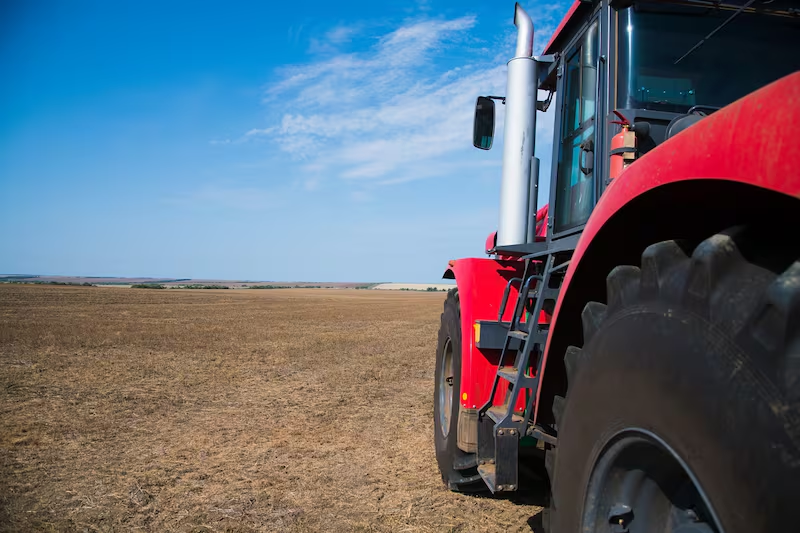
South Africa saw a notable increase in agricultural machinery sales during April 2026, with tractor sales reaching 548 units. This surge also included combine harvesters, which recorded sales of 52 units for the same month. The figures indicate a period of heightened purchasing activity within the sector, providing a snapshot of investment trends among agricultural producers. These sales volumes represent a significant uptick in the acquisition of essential equipment key for planting, cultivation, and harvesting operations across the country's diverse farming regions.
April Sales Figures Detailed
Tractor sales in April 2026 rose by 4% compared to the same month in the previous year. Specifically, tractor sales totalled 548 units in April 2026, marking a clear increase from the 527 units sold in April 2025. This percentage increase reflects a positive shift in farmer confidence or necessity for equipment upgrades. Combine harvester sales also increased significantly, showing a 13% gain over April 2025 figures, with sales hitting 52 units in April 2026 compared to 46 units in the corresponding month of the prior year. This marked uptick in April 2026 sales followed a slight decline in machinery purchases recorded during March 2026, where sales had experienced a temporary slump. The increase suggests a rebound in farmer purchasing decisions after a momentary slowdown, potentially driven by seasonal demands, improved cash flow, or strategic investments ahead of upcoming agricultural cycles. The strong performance in April indicates that despite broader economic conditions, a segment of the agricultural community is committing to capital expenditure.
Past Harvests Bolster Finances
The agricultural sector's financial health received a substantial boost from the ample harvest during the 2024/2025 season. This successful harvest was largely attributed to the beneficial La Niña rains experienced across South Africa, which supported strong crop yields and led to improved output across various agricultural commodities. The improved financial standing from the past season's agricultural output contributes significantly to farmers' capacity to invest in new equipment, such as the tractors and combine harvesters seen in the April 2026 sales figures. This positive financial cycle, stemming from favorable weather conditions and subsequent good harvests, provides a foundation for agricultural businesses to consider capital expenditures such as machinery upgrades or expansions. The increased liquidity allows for strategic investments despite broader economic pressures, enabling farmers to replace aging machinery or expand their operational capacity. The strong yields from the 2024/2025 season have thus played a critical role in providing the necessary capital for these recent equipment acquisitions.
Current Sector Challenges Emerge
Recent agricultural machinery sales should not be interpreted as a definitive indication of sector-wide health, as the industry continues to grapple with significant underlying challenges. The sector has been profoundly affected by escalating input costs, which include rising prices for fuel, fertilisers, pesticides, and other essential farming materials, thereby squeezing profit margins for farmers. Concurrently, agricultural commodity prices have experienced a decline in the global market, further impacting the financial viability of farming operations and reducing the returns on investment for producers. Adding to these economic pressures is the persistent uncertainty surrounding the weather outlook for the upcoming 2026/2027 season. This meteorological unpredictability poses a substantial risk to future crop yields and overall agricultural stability, creating an environment of caution among producers. These factors collectively suggest that while April's sales figures show a temporary uplift in equipment purchases, they do not alleviate the underlying economic and environmental strains facing South Africa's agricultural sector, which continues to navigate a complex and challenging operational landscape. The short-term boost in sales may mask deeper, systemic issues that require sustained attention and strategic solutions.