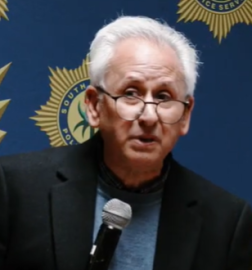
Pretoria, South Africa – Acting Police Minister Professor Firoz Cachalia announced notable decreases in several of the country's most serious contact crimes, including carjacking, residential robberies, business robberies, and cash-in-transit robberies. Professor Cachalia stated, "Murder has declined, marking yet another consecutive quarter in which this crime has shown a downward trajectory." This positive trend in key contact crime categories offers a glimmer of hope amidst ongoing challenges in the nation's fight against crime.
Professor Cachalia noted that these reductions address crimes that "create fear in our communities," many of which are perpetrated by "organised, heavily armed criminal groups." He added that other crimes are "interpersonal, perpetrated by people known to their victims, reflecting deeper challenges within our social fabric and the breakdown of trust and relationships in communities." Despite the positive trends, Professor Cachalia emphasized, "While percentage decreases are encouraging, they do not erase the reality that far too many South Africans continue to lose their lives through violent crime. Every murder remains one too many. Every victim deserves justice." He also noted ongoing concerns about increases in "crime categories that have increased during the reporting period, particularly those affecting women, children and other vulnerable members of society." The Minister stressed that while the statistics show progress in certain areas, the overall safety and security of all South Africans remain a critical concern for the government and law enforcement agencies.
Key Crime Trends Detailed
The latest crime statistics reveal a significant shift in several categories. Murder cases decreased by 5.9%, falling from 5,770 to 5,427. This represents 343 fewer murders compared to the same period last year, indicating a sustained effort to curb violent crime. Carjacking incidents also saw a substantial decline, dropping from 4,657 to 3,811, a reduction of 846 cases. This particular decrease is significant, as carjackings are often associated with sophisticated criminal networks and pose a direct threat to public safety. Robbery at non-residential premises, which includes businesses and other commercial establishments, decreased from 3,099 to 2,733, marking a decline of 366 cases. This reduction suggests that measures targeting commercial crime may be yielding positive results.
Further data presented by the minister indicated significant reductions in other key contact crimes. Robbery at residential premises, a crime that deeply impacts the sense of security within communities, decreased from 5,360 to 4,416 incidents, representing a decline of 944 cases. This substantial drop is a welcome development for homeowners and residents across the country. Robbery with aggravating circumstances, a broad category that encompasses various forms of violent theft, also saw a substantial reduction, dropping from 31,475 to 26,839 cases, which translates to 4,636 fewer incidents. These figures were part of the broader crime statistics released, which aimed to provide an overview of the country's safety landscape and highlight areas of both progress and persistent concern.
Sexual offences recorded a slight decline, decreasing from 11,630 to 11,532, a reduction of 98 cases. While any decrease is positive, the Minister acknowledged that this category still requires intensive focus and full interventions. South African Police Service (SAPS) data indicates that crime is highly concentrated, with a relatively small number of policing precincts accounting for a disproportionate amount of violent crime. This concentration has informed strategic responses by law enforcement agencies, allowing for more targeted and efficient deployment of resources. The analysis of these crime patterns is key for developing effective prevention and response strategies.
Strategic Interventions and Focus Areas
In response to this geographical concentration of crime, a resolution from the recent MinMEC meeting established a priority to implement interventions in 140 high-crime police station precincts across the country. These targeted efforts aim to address the areas most affected by criminal activity, focusing resources where they are most needed to disrupt criminal operations and enhance public safety. Senior leadership within the SAPS regularly scrutinizes crime patterns. Every Monday, the senior leadership of the SAPS interrogates the crime picture, specifically looking for shifts and emerging trends to inform ongoing operational strategies and resource deployment. This rigorous approach ensures that law enforcement remains agile and responsive to the evolving nature of crime. The MinMEC resolution shows a commitment to localized solutions, recognizing that a one-size-fits-all approach is not effective in combating the complex challenges posed by crime across diverse communities.
Minister's Perspective and Call to Action
Acting Police Minister Professor Firoz Cachalia noted a continued positive trend, stating, "Murder has declined, marking yet another consecutive quarter in which this crime has shown a downward trajectory." This sustained reduction in murder rates is a testament to the dedicated efforts of law enforcement and community-based initiatives. Despite this progress in certain crime categories, Professor Cachalia emphasized that gender-based violence and femicide continues to demand urgent attention from every sector of society. The minister showed the ongoing need for full societal interventions to address these persistent challenges, calling for a collective effort from government, civil society, and communities to protect vulnerable individuals. He reiterated that while statistics provide a snapshot, the lived experience of safety for every South African remains the ultimate measure of success. The fight against crime, according to Professor Cachalia, requires not only strong policing but also a concerted societal effort to tackle the root causes of violence and insecurity.