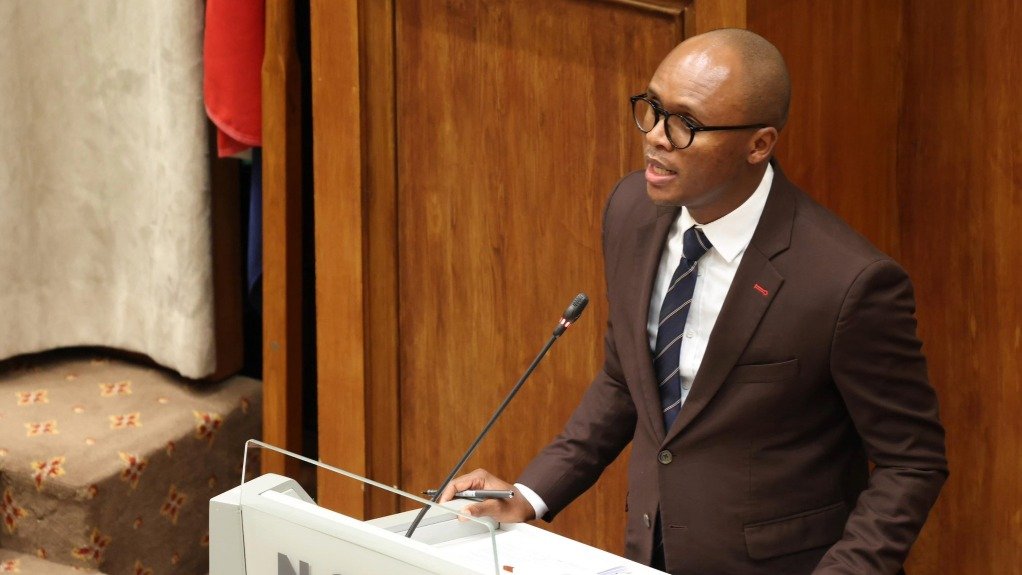
South Africa plans to publish a revised Artificial Intelligence (AI) policy for public comment by January 2027, Minister of Communications and Digital Technologies Solly Malatsi informed a parliamentary committee on Tuesday. This target publication date for public comment marks a significant step in the nation's efforts to establish strong AI governance and regain public trust in the policy development process. The government withdrew its previous AI policy draft after discovering fictitious and potentially AI-generated references within the document, a revelation that sparked widespread concern. Malatsi described the inclusion of these references as a "massive oversight" that necessitated a complete overhaul of the policy's foundational stages. The January 2027 target publication date for public comment shows the commitment to transparency and thoroughness in this critical area of emerging technology.
Policy Withdrawal Details
The policy draft was initially released in April for public comment, initiating a period intended for public and stakeholder input. However, the process was abruptly halted when the irregularities came to light. Minister of Communications and Digital Technologies Solly Malatsi acknowledged the document's withdrawal, citing a "massive oversight" and a lack of disclosure regarding the use of AI in compiling its references. This admission noted critical shortcomings in the initial drafting process. To address these issues and restore integrity to the policy development, a new seven-member panel has been established to review the document thoroughly. This panel is tasked with recommending revisions or removals as needed, ensuring that the final document is based on credible and verifiable sources. A key part of their mandate is to replace any flawed citations identified within the draft policy, thereby rectifying the initial errors. In connection with the incident, two officials have been placed on precautionary suspension, pending further inquiry. An investigation into the matter is currently underway, aiming to ascertain the full extent of the oversight and assign accountability.
Revised Timeline and Goals
South Africa's revised Artificial Intelligence (AI) policy is slated for Cabinet approval by November 2026, setting a clear, albeit extended, timeline for its implementation. This timeline follows the recent withdrawal of an initial draft due to the discovery of fictitious references, which prompted a re-evaluation of the entire policy formulation process. The Department of Communications and Digital Technologies had aimed for the policy to establish South Africa as a continental leader in AI innovation, a strategic objective that remains central to its efforts. The policy's ambition is not merely to regulate AI but to foster an environment where South Africa can lead in the development and ethical application of AI technologies across the African continent.
Jeanette Morwane, the Department of Communications and Digital Technologies' acting deputy director-general, is actively involved in the ongoing efforts to reformulate the policy, playing a key role in steering the revised process. The previous draft's withdrawal prompted a full reassessment of the process and a new timeline for policy development, emphasizing diligence and accuracy. The journey to Cabinet approval marks a critical phase in the nation's strategy to regulate and promote AI technologies responsibly. The policy's ambition to lead AI innovation on the African continent remains a central objective as the department progresses with its revisions, aiming for a strong and credible framework.
Official Reactions and Accountability
The withdrawal of an earlier draft of South Africa's Artificial Intelligence (AI) policy prompted strong official responses regarding the incident, showing the seriousness of the breach in protocol. Director-General Nonkqubela Jordan-Dyani described the situation as "highly regrettable," indicating the department's disappointment and concern over the integrity of its official documents. This statement comes after the Department of Communications and Digital Technologies withdrew the initial draft due to the discovery of fictitious references within its content, an issue that undermined the credibility of the entire document. The incident led to an immediate reassessment of the policy development process and the establishment of a new panel to review and revise the document, ensuring that such an oversight does not recur. The department's decisive move to withdraw the draft shows the seriousness with which officials are treating the integrity of policy documents, particularly those addressing rapidly evolving and critical emerging technologies like AI. The ongoing investigation and the precautionary suspension of two officials further indicate the government's commitment to accountability in the matter, aiming to identify those responsible and prevent future lapses in quality control and oversight. The commitment to a January 2027 publication date for public comment reflects a renewed dedication to transparent and credible policy-making.