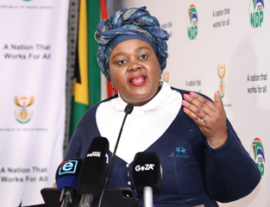
South Africa's government is implementing a rationalisation of its courts to enhance access to justice for all citizens. This strategic initiative aims to address historical imbalances and ensure that the judicial system effectively serves the needs of a democratic society. Justice and Constitutional Development Minister Mmamoloko Kubayi briefed the media on Tuesday regarding the department’s full plans to ensure courts better serve communities across the nation. Cabinet has officially approved the committee’s report and its two-phase implementation, signalling a firm commitment to this transformative process. "An independent judiciary and a well-functioning court system that gives full effect to the right to justice for all is the cornerstone of our democracy," Minister Kubayi stated, showing the fundamental importance of these reforms.
Minister Kubayi noted that while significant progress has been made since 1994, the court system largely retained its pre-democratic configuration, which perpetuated spatial injustices. The government's move to improve access to justice for all citizens through the rationalisation of the courts is a direct response to this enduring challenge. "The legacy of colonialism and apartheid continues to plague South Africa with spatial injustices and to impede access to courts for communities that reside in the areas that formed part of the defunct homelands and self-governing territories," she said, noting the deep-seated issues that the rationalisation seeks to rectify. To bolster the capacity of the judiciary, a key process has been initiated with National Treasury and the Office of the Chief Justice to effect a 20% increase in judicial posts. This increase is deemed essential for handling an expanded court system and ensuring efficient justice delivery. Minister Kubayi added that, as the country celebrates the 30-year anniversary of the Constitution's adoption, efforts must intensify to achieve its imperative regarding court rationalisation, aligning the justice system with the foundational principles of the democratic era.
Addressing Historical Injustices and Systemic Challenges
South Africa's court system largely remained intact following the democratic transition, perpetuating historical inequities that were deeply entrenched by the previous regimes. The court system that existed in South Africa prior to the democratic transition was left largely intact, contributing to the current challenges. This legacy of colonialism and apartheid continues to affect the country through spatial injustices, hindering access to courts for communities located in areas that were once defunct homelands, self-governing territories, and remote rural villages. These areas often lack adequate judicial infrastructure and are geographically isolated, making it difficult for residents to access legal services and court proceedings. Legislative efforts to address these issues began with the Interim Rationalisation of Jurisdiction of the High Court’s Act of 2001, which introduced minimum changes to the existing structure, laying some groundwork for future, more extensive reforms.
Further significant steps towards rationalisation were initiated in 2014 when the Department of Justice and Constitutional Development commenced with the implementation of the rationalisation of Magisterial Districts across the provinces. This initial phase of rationalisation aimed to reorganise the boundaries and jurisdictions of lower courts to better align them with current population distributions and administrative areas. In a more significant move to comprehensively address the system's configuration, then Justice Minister Ronald Lamola established a dedicated Committee in 2021. This body, formally tasked with the Rationalisation of the Areas under the Jurisdiction and Judicial Establishments of the Divisions of the High Court of South Africa, was chaired by the esteemed retired Deputy Chief Justice Dikgang Moseneke. The committee's mandate was to conduct a thorough review of the high court divisions and propose reforms to ensure equitable access and efficient operation. One of the committee's key recommendations, to relocate the seat of the Eastern Cape Division from Makhanda to Bhisho, is currently undergoing consultation with relevant stakeholders, ensuring that all perspectives are considered before a final decision is made. This particular recommendation notes the complex nature of rationalisation, often involving historical ties and community sentiments.
Phased Implementation Plan for Full Reform
Cabinet's approval of the committee’s report and its implementation, which will be done in two distinct phases, shows the government's commitment to a structured and systematic approach. Phase 1 of the implementation plan will incorporate the immediate recommendations from the Rationalisation Committee regarding Magisterial Districts and Sub-Districts. This initial phase involves the official gazetting of these changes and the utilisation of existing court infrastructure, meaning that adjustments will primarily involve administrative and jurisdictional realignments rather than extensive new construction. These adjustments are projected to take effect by July 1, 2026, providing a clear timeline for the initial set of reforms.
As part of these planned changes, steps have been initiated to establish a new court facility in Kempton Park, located adjacent to OR Tambo airport. This development aims to enhance access to justice in the area, particularly for the high volume of cases associated with a major transport hub and its surrounding communities. This new facility represents a tangible expansion of judicial infrastructure where it is most needed. The implementation of Phase 1 will entail gazetting and the usage of courts where infrastructure is already available, ensuring that resources are maximised and delays are minimised. This pragmatic approach allows for immediate improvements in court accessibility and efficiency.
Judicial Capacity and Future Steps
Phase two of the implementation plan involves a phased-in approach for establishing additional local seats, which will entail building new courts or expanding existing magistrates’ courts, according to Justice and Constitutional Development Minister Mmamoloko Kubayi. This phase represents a more substantial investment in physical infrastructure and aims to bring justice services closer to communities that are currently underserved. "Phase two of the implementation includes: A phased-in approach for implementation of the recommendations of the Rationalisation Committee regarding the establishment of additional local seats which entails the establishment of additional local seats through the building of new courts or expansion of the existing magistrates’ courts," Minister Kubayi elaborated.
The expansion in Phase 2 will be strategically implemented across several key divisions to address regional disparities. This includes the Gauteng Division at Palm Ridge, the Free State Division at Welkom, the North West Division at Rustenburg, the Northern Cape Division at Upington, and the Western Cape Division at Thembalethu. These locations have been identified as critical areas for enhancing judicial presence and improving access to justice for their respective populations. The establishment of these additional local seats will significantly reduce travel burdens for litigants and legal professionals, fostering a more accessible and equitable justice system.
In parallel with the court rationalisation efforts, the Department of Justice and Constitutional Development has also focused on strengthening judicial capacity. The review of the guidelines for the appointment of Acting Judges has been completed, a key step in ensuring that temporary judicial appointments are made transparently and effectively. The final draft of the guidelines for Acting Judges has been signed off by the Chief Justice and will be gazetted for implementation, coming into effect from July 1, 2026. These revised guidelines are expected to streamline the appointment process, ensuring that qualified individuals can fill temporary judicial vacancies efficiently, thereby maintaining the smooth operation of the courts. This full approach, encompassing both structural reforms and capacity building, is designed to create a more strong, accessible, and just legal system for all South Africans.