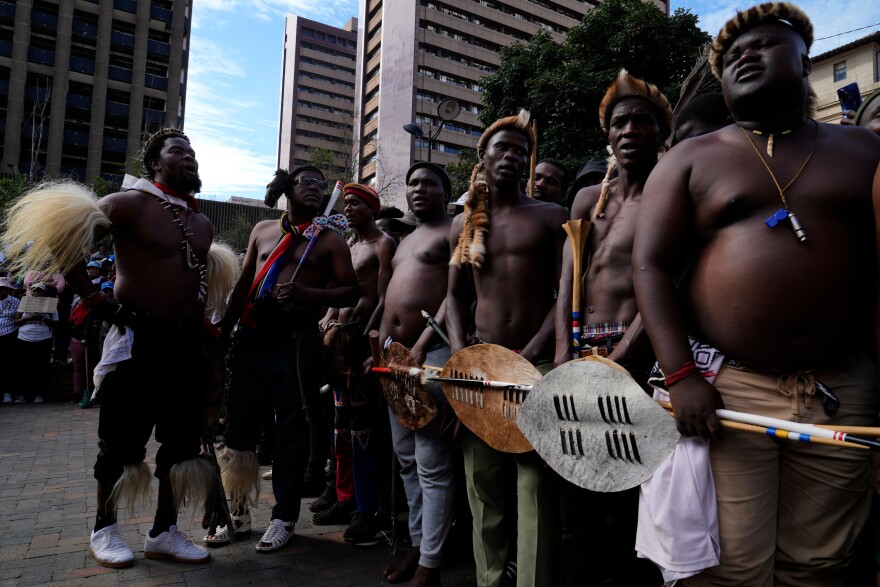
South Africa is preparing for planned anti-immigration demonstrations on June 30, 2026, which stem from the anti-immigration movement March and March's ultimatum for undocumented foreigners to depart the country. These demonstrations are anchored in the movement's demand for all undocumented foreigners to leave the country by the specified date. Security operations will primarily focus on identified hotspots in KwaZulu-Natal, Gauteng, and the Western Cape. These extensive security measures are being implemented in a country where migrants constitute fewer than four million of South Africa's 63 million people, a demographic detail that often features in discussions surrounding immigration policy. The government's proactive stance aims to prevent widespread disruption and ensure public order amidst rising tensions.
Movement's Demands and Origins
The anti-immigration movement March and March has established a deadline of June 30, 2026, for undocumented immigrants to depart South Africa. This firm ultimatum forms the core of the movement's agenda and has been a central point of contention. March and March was founded by Jacinta Ngobese-Zuma in 2025, quickly gaining traction through its vocal advocacy for stricter immigration controls. The movement's origins are rooted in calls for stricter immigration enforcement and a more defined approach to managing foreign nationals within South African borders.
In May, an AI-generated poster circulated on social media, falsely implying government endorsement of the June 30 deadline. This piece of misinformation led to significant public confusion and prompted official clarification from authorities regarding the authenticity of the message and the government's official position. The incident noted the challenges of managing public perception surrounding the impending demonstrations and the movement's demands, particularly in an era where digital disinformation can rapidly spread and influence public sentiment. The government had to issue statements to counter the false narrative, emphasizing that the deadline was not state-sanctioned.
Security Preparations and Funding
In a significant financial commitment, South Africa has diverted R600 million from existing government budgets to finance a special security operation in anticipation of the upcoming anti-immigration protests. This substantial allocation shows the gravity with which authorities are approaching the potential for widespread disruption and unrest. Fidelity Business Intelligence, a reputable analytical firm, has identified KwaZulu-Natal and Gauteng as the primary hotspots for potential anti-illegal immigration unrest leading up to June 30. These provinces are expected to be focal points for both demonstrations and potential security challenges.
Hundreds of thousands of private security officers are currently deployed across communities, business districts, shopping centers, and residential areas throughout the country. This widespread deployment signifies a full approach to maintaining public safety and order. Security companies are pooling their resources and sharing intelligence to support the operations of the South African Police Service (SAPS). This coordinated effort aims to enhance overall security measures, improve response times, and ensure a unified front against any potential unrest or criminal activity. The collaboration between public and private security entities is a key component of the overall strategy to manage the demonstrations effectively. The unprecedented scale of this security mobilization reflects the government's determination to prevent a recurrence of past civil disturbances.
Echoes of Past Unrest
The planned anti-immigration demonstrations have prompted the most visible display of security mobilization in South Africa since the July 2021 unrest. That period of intense civil disturbance, sparked by the imprisonment of former president Jacob Zuma, resulted in the tragic deaths of more than 350 people. The South African Human Rights Commission estimated the economic damage from the July 2021 unrest at approximately R50 billion, noting the severe consequences of widespread public disorder. The memory of this unrest weighs heavily on authorities, informing their current proactive security stance. The current preparations are designed to prevent a similar escalation of violence and destruction, drawing lessons from the challenges faced during that period.
In anticipation of potential developments, several countries have facilitated the repatriation of their citizens. Malawi, Ghana, Mozambique, Nigeria, and Zimbabwe have collectively assisted more than 3,000 of their citizens in returning home. This pre-emptive measure reflects growing concerns among foreign governments about what may unfold during the upcoming demonstrations, indicating a regional and international awareness of the potential for instability. The decision by these nations to evacuate their citizens shows the perceived risk associated with the planned protests and the broader anti-immigration sentiment in South Africa. This further emphasizes the seriousness with which the June 30, 2026 deadline and associated demonstrations are being viewed both domestically and internationally.