South Africa is observing a significant confluence of four historic milestones this year, which collectively contributed to the nation’s freedom and established the groundwork for its democratic future. An event commemorating these milestones was held at the University of Limpopo on Tuesday. This gathering follows the launch of the Milestones of Freedom campaign earlier this year by President Cyril Ramaphosa. President Ramaphosa initiated the campaign at the Union Buildings, setting the stage for nationwide commemorations of these key moments in South African history. The campaign aims to highlight the journey towards democracy and the foundational events that shaped the country.
Four Decades of Freedom
South Africa is marking 30 years since the adoption of its democratic Constitution, a foundational document in the nation's post-apartheid era. The country also commemorates 50 years since the 1976 youth uprising, a key moment in the struggle against the apartheid regime. These milestones are part of a broader reflection on the journey towards democracy, which also includes earlier acts of resistance and intellectual development.
On August 9, 1956, approximately 20,000 women from across South Africa marched on the Union Buildings in Pretoria to protest against the apartheid pass laws, demonstrating significant organized resistance. This historic event noted the role of women in the anti-apartheid movement. Earlier, Charlotte Maxeke, who graduated with a Bachelor of Science from Wilberforce University in Ohio, USA, in the early 1900s, became the first Black South African woman to earn a university degree. Her achievement predated and contributed to a legacy of educational advancement and activism. At the institution then known as the University of the North, also called Turfloop and now the University of Limpopo, a generation of Black Consciousness activists shaped ideas that significantly contributed to igniting a national movement for liberation.
Campaign Notes and Local Impact
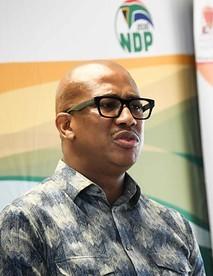
Deputy Minister in The Presidency Kenny Morolong delivered remarks at the Limpopo leg of the Milestones of Freedom campaign, stating that the nation marks "30 years since the adoption of our democratic Constitution, 50 years since the 1976 youth uprising, 70 years since the historic Women’s March of 1956 and 60 years since the forced removals from District Six." Deputy Minister Morolong characterized these as "milestones in the long journey of our people from oppression under apartheid, to a society founded on equality, dignity and human rights." He also lit the Torch of Freedom at the University of Limpopo’s square as part of the commemorations.
Morolong emphasized the campaign's objectives, noting, "This Milestones of Freedom campaign challenges all of us to protect the hard-won rights of our people and to work together to build the just, equitable and prosperous South Africa envisioned in our Constitution." He added that it serves as "a call to action to strengthen service delivery, deepen social cohesion, expand opportunity and ensure that the tangible gains of our democracy reach every community. Today, we proudly bring this national movement to Limpopo." The Deputy Minister noted Limpopo's historical significance, stating, "The road to South Africa’s freedom runs deep through this province. Its women, its youth, its traditional leaders, its workers and its rural communities have helped write some of the most important chapters of our national story."
The commemoration acknowledged the 70 years since the historic Women’s March of 1956. Morolong reflected on Women’s Month in August, urging South Africans "to reflect on how far the country has come in the journey towards freedom and equality, describing the 1956 Women’s March as one of the most powerful acts of courage in our history." He further connected this historical event to the present context of Limpopo, explaining, "When Limpopo speaks of the Women’s March of 1956, it does not speak of distant historical figures. It speaks of mothers, grandmothers and freedom fighters, whose courage and sacrifice helped shape the democratic South Africa we know today." He added that their struggle "laid the foundation for a nation in which women enjoy rights that were denied to generations before them, including the right to vote, equality before the law and the right to equal treatment in the workplace."
Morolong referenced the economic contributions of women in the region, noting that Limpopo recorded 289,860 female-headed agricultural households in 2022, compared with 230,272 male-headed agricultural households. He stated, "These figures show the indispensable role of women in food production, rural livelihoods and the local economy."
Reflections on Progress and Future
The national Milestones of Freedom campaign operates under the theme, "Honouring the Past. Delivering the Future." This initiative encompasses reflections on various historical events, including the 60 years since the forced removals from District Six. The campaign also acknowledges the life of Charlotte Maxeke, who was born in 1874 in Ga-Ramokgopa, Limpopo. Her early life in the region precedes her later achievements as a pioneering Black South African woman to earn a university degree.
Further historical context provided by the campaign notes that the events of June 1976 did not emerge in isolation. This perspective frames the 1976 youth uprising as part of a broader continuum of resistance and intellectual development that shaped the struggle against apartheid. The campaign aims to connect these historical threads to contemporary efforts in nation-building.