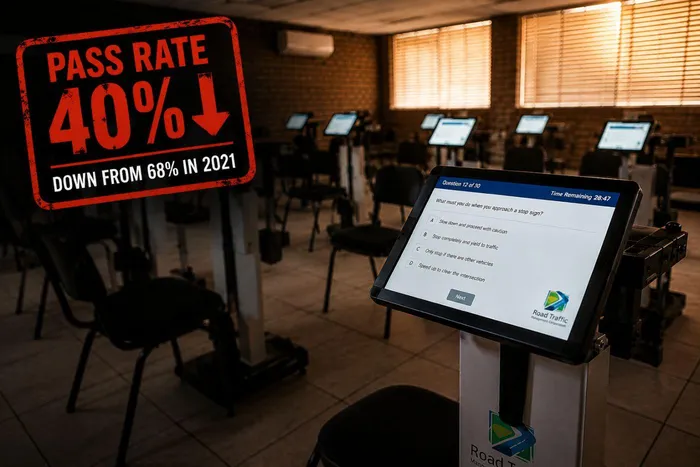
South Africa's pass rate for the computerised learner’s licence test has fallen significantly, dropping from 68% in 2021 to 40% currently. This substantial decline indicates a growing challenge for aspiring drivers across the country, raising questions about the effectiveness of the testing system and the preparedness of candidates. The sharp drop in successful attempts has left many applicants frustrated and facing repeated attempts to secure their permits to drive.
Applicant Struggles and Frustration
The digital learner's licence system was implemented nationwide in 2021, and its introduction has coincided with increased difficulties for applicants. This shift to a computerised format was intended to streamline the process, but for many, it has introduced new hurdles. One individual shared on Reddit their experience of failing the learner's test five times, often missing the required pass mark by only a few points, noting the significant challenges faced by test-takers. This user's experience shows a broader sentiment of frustration among those attempting to navigate the updated system.
Anika Cox, 34, from George, is also among those currently attempting to obtain her learner's licence. Her journey reflects the pressures many adults face in acquiring this essential document. Cox described the pressure she faces, stating, "I had put it off for years because I never really needed to drive before, but now it is company policy, so I have no choice." This external pressure adds another layer of stress to an already demanding process. She noted the unexpected complexity of the assessment, adding, "I thought if you know road signs and basic rules, you’ll be OK, but the test is more detailed than people think." Cox further explained how anxiety can impact performance: "Once you get nervous on one question, it throws off your concentration for the rest of the test." Her comments suggest that the test not only assesses knowledge but also the ability to perform under pressure, a factor that can be detrimental to many candidates.
Official Explanation for Decline
The Road Traffic Management Corporation (RTMC) attributed the decline in the learner's licence pass rate to a concerted effort to combat illicit activities within the testing system. According to the RTMC, the reduced pass rates followed a significant crackdown on the issuance of fraudulent learner’s licences. This initiative aimed to enhance the integrity of the licensing process and ensure that only qualified candidates obtain their permits. The RTMC's statement suggests that the previous higher pass rates may have been artificially inflated by irregularities, and the current figures reflect a more accurate assessment of candidates' knowledge under stricter controls. The corporation has been implementing measures to identify and eliminate corruption, which it indicates is now yielding results in the form of a more rigorous and less compromised testing environment. This crackdown is part of a broader strategy to professionalise the driver licensing system and improve road safety by ensuring all drivers meet the required standards.
Candidate Concerns on Question Phrasing
Liyema Mxenge, 19, from Khayalethu in Knysna, has failed the learner's licence test three times, attributing her difficulties to the examination's structure. Mxenge stated, "The questions are confusing sometimes." She elaborated on the discrepancy between preparation and the actual test, noting, "You study the book and think you know everything, then the questions come [differently] at the testing centre." This disconnect between study materials and the actual examination format is a common complaint among disheartened applicants. Mxenge described the pressure this creates during the assessment, explaining, "I was panicking [because] I realised I was second-guessing answers I actually knew." The repeated failures also carry a significant financial and time burden for applicants. Mxenge added, "Every time I fail, I have to wait again and pay again, so it’s frustrating." This cycle of re-booking and re-paying for tests adds considerable stress and expense, particularly for younger applicants or those with limited financial resources.