South Africa's Minister of Justice and Constitutional Development and Inter-Ministerial Committee (IMC) Chairperson, Mmamoloko Kubayi, announced on Sunday, July 12, 2026, that exactly 53,449 foreign nationals had been processed as of the close of business on July 11, 2026, as the nation intensifies its migration enforcement. This significant number notes the government's escalated efforts to manage and regulate the presence of foreign nationals within its borders. Kubayi stated that the government's plan aims for "an orderly and regular migration which is mindful and sensitive to the concerns raised by our people while observing human rights and dignity of all people in our country, irrespective of their citizenship and immigration status." This statement shows a dual commitment to both national interests and international human rights standards.
Minister Kubayi also addressed ongoing concerns regarding community actions, noting, "Media reports both domestically and internationally indicate that there are still groups of protesters who conduct searches around homes and businesses that are suspected to house undocumented immigrants. This is illegal, and members of the community who are part of these activities are warned to refrain from such conduct." She emphasized that "No individual or group has the authority to take the law into their own hands or to intimidate, threaten, or unlawfully remove any person from any community." Such unauthorized actions, the Minister stressed, undermine the rule of law and can lead to further instability. Kubayi added that law enforcement authorities would act against those conducting unlawful searches and identity checks, and commended the South African Police Service (SAPS) and Interpol for the arrest of Mr. Mkhanyisi Ndodana Tshuma. The Minister's remarks serve as a stern warning against vigilantism. "South Africa remains committed to enforcing its immigration laws, strengthening border management, protecting communities, combating crime, and upholding the dignity and rights of all people," Kubayi concluded, reiterating the government's full approach to migration and security.
Government's Enforcement Strategy
The Inter-Ministerial Committee (IMC) on Migration is strengthening immigration enforcement, tightening border security, and enhancing migration management systems in South Africa. This concerted effort reflects a strategic shift towards more rigorous control and oversight of immigration processes. The government is implementing President Cyril Ramaphosa's five-point plan on migration management, which was first announced on June 7, 2026. This full strategy includes a crackdown on immigration law violations, securing the nation's borders, streamlining the immigration system, closing existing policy gaps, and strengthening cooperation with neighboring countries. Each point of this plan is designed to address specific challenges within the migration landscape, from preventing illegal entry to ensuring efficient processing for legal migrants and fostering regional partnerships.
A key component of this enforcement strategy involves legal action against those who violate immigration laws or incite violence. Authorities have registered 205 cases and arrested 350 individuals for migration-related unlawful conduct, including intimidation and incitement to violence. These figures highlight the proactive measures being taken by law enforcement to curb illegal activities associated with migration concerns. Sixty-nine of these cases remain under active investigation, indicating ongoing efforts to gather evidence and pursue justice. Additionally, 112 cases are currently before the courts, demonstrating the judicial system's engagement in addressing these issues. The government reported a total of 15,398 deportations between April 1 and June 30, 2026, signifying a substantial increase in removals of undocumented individuals. Specifically, 4,898 deportations occurred in June 2026 alone, marking a concentrated period of enforcement. A further breakdown indicates that 2,801 deportations were carried out between June 14 and July 8, 2026, showcasing the continuous nature of these operations.
Nationality Breakdown and Repatriations
The demographic breakdown of the processed individuals offers insight into the primary origins of foreign nationals entering or residing in South Africa. Malawian nationals constituted over 80% of the 53,449 individuals processed by South African authorities, making them the largest group subject to these enforcement measures. This significant percentage points to specific migratory patterns and potentially notes areas for targeted diplomatic engagement. Citizens of Zimbabwe and Mozambique were also processed in significant numbers, though specific figures for these nationalities were not provided. The prevalence of individuals from these Southern African Development Community (SADC) countries shows the regional dynamics of migration within Southern Africa, driven by various economic and social factors.
Beyond the Southern African Development Community (SADC) region, repatriations to non-SADC nations accounted for a total of 2,615 individuals. This figure demonstrates the broader scope of South Africa's migration enforcement, extending beyond its immediate neighbors. Among these, 1,159 individuals were repatriated to Nigeria, representing the largest group from outside the SADC region. The data further indicates that 939 individuals were sent back to Uganda, making it the second-highest non-SADC country for repatriations. Additionally, 431 individuals were repatriated to Kenya, reflecting ongoing efforts to manage migration flows from East Africa. The Republic of Congo received 86 repatriated individuals, rounding out the reported figures for non-SADC countries. These statistics collectively illustrate the diverse origins of foreign nationals being processed and repatriated by South African authorities, and the logistical complexities involved in such operations.
Context and Related Incidents
Anti-illegal immigration protests have taken place across several South African provinces, contributing to the broader context of intensified migration enforcement. These demonstrations show community concerns surrounding undocumented immigrants and the government's response. The protests often highlight frustrations among local populations regarding perceived impacts on employment, social services, and public safety. These public expressions of discontent have undoubtedly added pressure on the government to demonstrate firm action on immigration matters.
In a related development that exemplifies the government's commitment to law enforcement and international cooperation, Mkhanyisi Ndodana Tshuma, a fugitive sought in the United Kingdom for alleged murder, was arrested by South African authorities. The arrest notes inter-agency cooperation in addressing criminal elements linked to migration and broader law enforcement efforts, demonstrating that the intensified enforcement is not solely focused on undocumented immigration but also on combating serious crime.
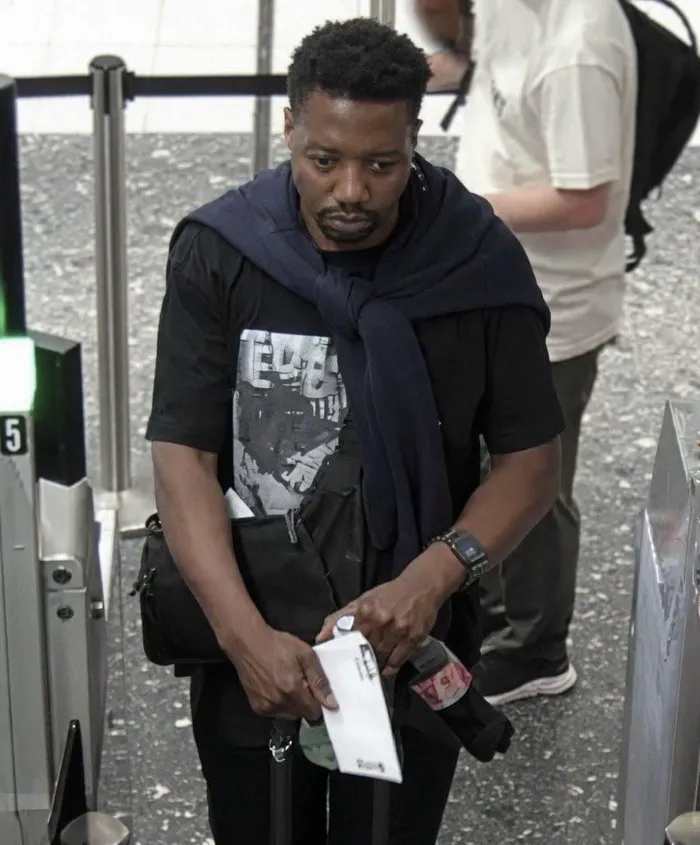
Tshuma arrived at OR Tambo International Airport from Britain on July 5, 2026. His arrival prompted immediate action by law enforcement officials, showcasing the effectiveness of intelligence sharing and border monitoring systems. Authorities subsequently apprehended Tshuma in Kensington, a suburb of Johannesburg, a few days after his arrival. This arrest further demonstrates the government's stated commitment to strengthening border management and combating crime within its borders, as outlined by the Inter-Ministerial Committee on Migration. The successful apprehension of an international fugitive reinforces the message that South Africa is not a safe haven for criminals, aligning with the broader strategy of ensuring national security and upholding the rule of law. The ongoing efforts are a clear indication of the government's resolve to create a more secure and regulated environment for all residents.