South Africa is currently grappling with significant fuel price hikes, a situation that is placing considerable strain on both consumers and businesses across the nation. Petrol and diesel costs have seen sharp increases, primarily driven by international market pressures, despite the government's implementation of temporary tax cuts aimed at alleviating some of the burden. These increases are part of a broader economic challenge facing the country, impacting various sectors from transportation to household budgets.
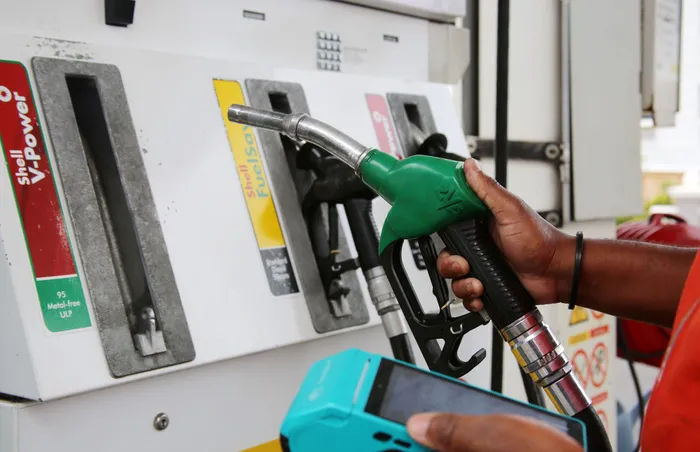
Petrol prices, for instance, rose by R3.27 per litre, a change primarily influenced by international market pressures that contributed approximately $0.12 (R2.04) to each litre. While the rand's relative stability played a minor role in this calculation, adding less than $0.01 per litre to the overall cost, the government did approve temporary tax cuts of $0.18 (R3.00) per litre on petrol. This intervention was designed to mitigate the immediate impact of the rising international costs on the end consumer, offering a brief respite from an otherwise steep increase.
Diesel prices are also set for a substantial increase, reflecting the continued volatility in global energy markets. Initially, the announced increase for diesel was R6.19 per litre. However, this figure was later corrected to R5.27 per litre by the Department of Petroleum and Mineral Resources. Despite this correction, diesel prices are still projected to jump sharply by $0.37 (R6.19) per litre, showing the significant pressures on this key fuel type, which is vital for the country's logistics and industrial sectors.
Global Pressures Drive Price Hikes
The surge in fuel prices is largely attributable to a confluence of global factors. A slate levy of R1.23 per litre, equivalent to $0.07, was introduced in South Africa as a mechanism to recover an under-recovery in the fuel pricing system. This levy adds another layer to the overall cost drivers for consumers, directly impacting the final price at the pump. This measure notes the financial mechanisms in place to balance the fluctuating costs of fuel imports against domestic pricing structures.
A primary driver of these increases has been the international oil market, where prices have surged above $100 per barrel. This significant development occurred amid escalating tensions in the Middle East, a region critical for global oil supply. Specifically, Brent crude, a key international benchmark, climbed above $100 per barrel, marking a notable increase from an earlier price of $93.67. This upward trend in international crude oil benchmarks directly impacts the cost of imported fuel for South Africa, a country that is a net importer of refined petroleum products. The country adjusts its fuel prices monthly, a process based on a combination of global oil prices, prevailing exchange rates, and various domestic costs, including taxes and levies. This system means that international market shifts, such as those seen with crude oil, quickly translate to changes at the pump for South African consumers, making them highly susceptible to global geopolitical and economic developments.
The surge in oil prices, as indicated by experts, is driven by supply disruptions linked to ongoing tensions between the United States and Iran. These geopolitical dynamics, particularly concerns surrounding potential disruptions to shipping lanes, have created an environment of uncertainty in the global oil market. Constraints along the Strait of Hormuz, a critical chokepoint for oil transport, have contributed to the apprehension regarding supply stability. These factors collectively contribute to a tighter global supply outlook, pushing crude oil prices upwards and subsequently impacting fuel costs in importing nations like South Africa.
Domestic Factors and Government Response
South Africa will significantly increase fuel prices starting Wednesday, May 6, 2026. In response to the escalating costs, temporary tax cuts were implemented between May 6 and June 2, providing a temporary buffer for consumers. The Department of Petroleum and Mineral Resources was compelled to correct an error in its diesel price calculations for May 2026, according to reports. This error, which caused considerable confusion, occurred because only 0.93 cents was applied as fuel levy relief instead of the intended 93 cents. This discrepancy led to an incorrect initial announcement regarding diesel price increases, which subsequently required an official correction. Officials have indicated that the temporary fuel levy relief, introduced to cushion the impact of rising prices, is anticipated to be phased out starting in July. This phasing out suggests that consumers should prepare for potentially higher prices in the latter half of the year, as government support is withdrawn.
The government's intervention, despite its temporary nature, played a key role in preventing even more drastic price hikes. Without this intervention, reports indicated that petrol prices could have seen increases ranging from R5 to R6 per litre, while diesel prices might have surged by an alarming R10 to R14 per litre. These figures show the severity of the international market pressures and the extent to which the temporary tax cuts absorbed a significant portion of the potential increase. The refinery gate price for Liquefied Petroleum Gas (LPG) imports through Saldanha Bay was set at $1,093 (R18,375.72) per metric ton, indicating the base cost for this alternative fuel source.
Economic Strain and Crime Implications
The rising fuel costs are not isolated but form part of a broader spectrum of economic pressures affecting South African consumers and businesses. LPG prices, for instance, are also expected to increase by approximately $0.30 (R5.07) per kilogram in Gauteng. This additional cost further tightens household budgets, especially for those who rely on LPG for cooking and heating. The cumulative effect of these various price hikes creates a challenging financial landscape for many South Africans, impacting their disposable income and overall cost of living.
Compounding these financial strains, the Eskom tariff increased by 9% in April. This rise in electricity costs adds another layer of pressure on households and businesses already struggling with higher fuel prices. The combination of increased energy costs across the board creates a significant inflationary environment, pushing up the prices of goods and services throughout the economy.
The economic strain has also coincided with incidents of alleged fuel theft, a concerning trend that notes the desperation some individuals may be experiencing. One such incident, which went viral, involved a motorist in a black Ford Fiesta who reportedly filled up at a Cape Town petrol station before speeding off without payment. Such occurrences show the societal impact of escalating costs, potentially leading to an increase in petty crime related to essential goods.
Further impacting household budgets and daily commutes, taxi associations announced fare hikes at the beginning of the week. These increases affect a significant portion of the population that relies heavily on public transport, particularly minibus taxis, for their daily movements. For many South Africans, particularly those in lower-income brackets, these fare increases can significantly impact their ability to afford transportation to work, school, or essential services. The economic impact of fuel costs is amplified by the country's transportation infrastructure, as more than 70% of goods in South Africa are transported by road. This heavy reliance on road transport makes the entire supply chain particularly vulnerable to fuel price volatility, leading to higher costs for everything from food to manufactured goods, ultimately passed on to the consumer.
Expert and Stakeholder Reactions
The financial implications of the current fuel pricing system are substantial, with the under-recovery in South Africa's fuel pricing system having reached a staggering $842 million (R14.17 billion). This under-recovery represents the gap between the actual cost of fuel and the regulated price at which it is sold, indicating the financial strain on the system. Experts indicate that the surge in global oil prices stems from supply disruptions connected to tensions between the United States and Iran, as well as constraints along the Strait of Hormuz. These geopolitical factors create an environment of uncertainty and contribute significantly to the upward trajectory of crude oil prices on the international market.
Diesel and paraffin experienced steeper price increases compared to petrol, a phenomenon attributed to tighter global supply and stronger demand for these specific products. Diesel, being key for commercial transport and industrial machinery, sees consistent demand, while paraffin is widely used for heating and lighting in many South African households, particularly in rural and lower-income areas. The increased demand, coupled with constrained supply, naturally leads to higher prices for these essential fuels. Additionally, illuminating paraffin, a vital energy source for many, will see an increase of $0.25 (R4.22) per litre at the wholesale level, further impacting vulnerable communities.
The ongoing challenges of rising fuel prices, coupled with increases in electricity tariffs and public transport fares, paint a complex picture for South Africa's economy and its citizens. The government's temporary interventions offer some relief, but the underlying global and domestic pressures suggest that sustained efforts will be needed to navigate this period of economic strain. As the country moves forward, the interplay between international market dynamics, domestic policy, and consumer resilience will continue to shape the economic landscape.