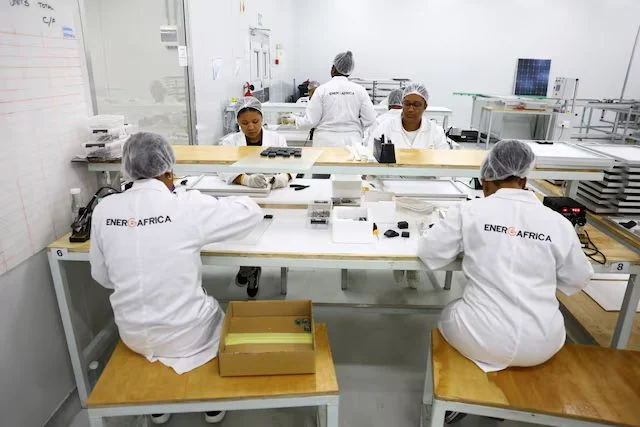
South Africa's factory sentiment eased in May, according to an article published on Monday, June 1, 2026. Despite the moderation, the manufacturing sector maintained an expansion in business activity. A reading above 50 on the sentiment index indicates growth in business activity, suggesting the sector continues to contribute positively to the South African economy. This sustained expansion, even at a slower pace, notes the resilience of manufacturers amidst various economic pressures. The overall index performance provides a vital snapshot of the health and direction of South Africa's industrial production landscape.
Activity and Demand Soften
The seasonally adjusted Purchasing Managers' Index (PMI) sponsored by South African bank Absa decreased to 50.8 in May, down from 52.6 in April. This decline, while notable, still kept the index above the critical 50-point threshold, signifying ongoing expansion. Absa noted that "In April, manufacturers benefitted from demand being brought forward in anticipation of further cost increases, but this effect faded in May." This forward-buying behavior had temporarily buoyed the sector, but its dissipation led to a more subdued performance in the subsequent month. Production subsequently slipped into contraction, with the business activity index falling significantly to 43.5 from 52.8 the previous month. This sharp drop in production signals a notable slowdown in factory output compared to April.
New sales orders also retreated, dropping to 44.6 from 52.9. The decrease in new orders is a key indicator of weakening demand within the manufacturing sector, impacting future production schedules. Absa stated that "both activity and demand softened, while input costs which have been pushed higher by a weaker rand and higher international oil prices continued to pose challenges for manufacturers." This softening in demand raised concerns among some producers. The confluence of these factors created a more challenging operational environment for businesses. "Some respondents warned that the recent weakness in demand could persist in the coming months," Absa added in its report, indicating a cautious outlook among industry players regarding near-term market conditions. This sentiment shows the uncertainty facing manufacturers as they navigate fluctuating economic forces.
Persistent Cost Pressures
Input costs continue to present difficulties for manufacturers in South Africa, according to Absa. The bank noted that "both activity and demand softened, while input costs which have been pushed higher by a weaker rand and higher international oil prices continued to pose challenges for manufacturers." This persistent pressure on costs comes despite a general easing in factory sentiment observed in May. The weaker domestic currency, the rand, has made imported raw materials more expensive for businesses, directly impacting their procurement budgets. Concurrently, elevated international oil prices have directly impacted operational expenses, including transportation and energy costs for factory operations. These factors collectively contribute to a challenging environment for manufacturers, who are simultaneously experiencing a decline in new sales orders and overall business activity. The combination of softer demand and rising input costs places a squeeze on profit margins and operational viability within the sector. Manufacturers are thus faced with the dual challenge of managing reduced revenue streams while contending with increased expenditure on essential inputs. This situation necessitates strategic adjustments to maintain profitability and competitiveness.
Future Outlook and Warnings
Despite easing sentiment, manufacturers expressed concerns regarding future demand. Absa reported that "Some respondents warned that the recent weakness in demand could persist in the coming months." This suggests a cautious outlook among some producers regarding the immediate term, following a period where both activity and demand softened. Such warnings highlight the need for businesses to remain agile and adapt to potentially prolonged periods of subdued market activity. The immediate future appears to be one of careful navigation for many in the industry.
However, the longer-term outlook showed a more optimistic trend. An index tracking expected business conditions in six months rose to 52.9 from 47.4 in the previous period. The increase above the 50-point threshold indicates that, despite immediate concerns about demand persistence, a majority of manufacturers anticipate an improvement in business conditions over the next half-year. This rebound in expectations contrasts with the more immediate challenges faced in May, suggesting a belief that current headwinds may eventually dissipate. This forward-looking optimism provides a glimmer of hope for the sector, indicating that manufacturers foresee a recovery or stabilization further down the line, potentially driven by anticipated economic improvements or policy changes.