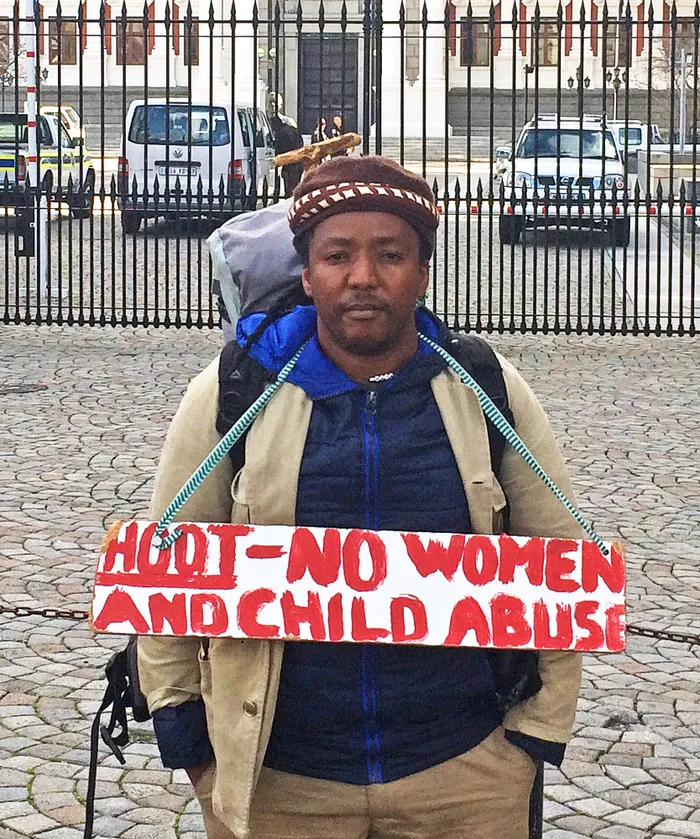
Amnesty International South Africa is set to hold its second nonviolent protest in support of human rights advocates on Friday, taking place outside the GCIS — Ronnie Mamoepa Media Center in Pretoria. This demonstration is strategically timed to coincide with the presentation of quarterly crime figures by Police Minister Firoz Cachalia and other police officials at the very same location. The organization's choice of venue and timing shows its urgent call for governmental action. Amnesty International South Africa is actively pressing the government to address the critical lack of specific protections for human rights defenders across the nation. "Amnesty International South Africa is urging the government to consider developing and adopting domestic legislation for the protection of human rights defenders in South Africa," the organization explicitly stated in a recent communication. The statement further emphasized the current legislative void: "South Africa currently has no legal or policy framework that recognises and protects human rights defenders. This gap must urgently be addressed." The protest serves as a powerful visual and vocal plea for the establishment of such a framework, noting the ongoing vulnerability of those who speak truth to power.
Grim Toll on Activists
The challenges faced by human rights defenders are starkly illustrated by a series of targeted killings that have cast a shadow over civil society in South Africa. Abahlali base Mjondolo, a prominent housing rights movement, has tragically experienced the killings of 26 of its dedicated activists over time, a grim statistic that shows the severe risks associated with their advocacy. An investigation is currently underway regarding the killing of Zweli, a case that has drawn significant attention and concern from human rights organizations.
The wave of assassinations extends beyond a single movement, impacting various sectors and individuals committed to justice and accountability. Babita Deokaran, a dedicated public servant, was brutally assassinated outside her Johannesburg home in August 2021. Her murder sent shockwaves through the country, particularly given her role in exposing corruption. While six hitmen were subsequently convicted for Deokaran's murder, a critical element of justice remains elusive: the orchestrators behind the killing continue to be at large, raising questions about accountability at higher levels. This pattern of targeted violence is not confined to urban centers. Cloete Murray and his son, Thomas Murray, became victims of a targeted hit, shot on the N1 highway in Midrand in March 2023, an incident that further noted the widespread nature of such attacks. More recently, in the Eastern Cape, Pamela Mabini was tragically shot outside her Gqeberha home in March 2025, adding another name to the growing list of human rights defenders and whistleblowers who have paid the ultimate price for their commitment.
Earlier incidents also paint a disturbing picture of politically motivated violence. Jimmy Mohlala, who served as the speaker of the Mbombela Municipality, was gunned down at his home in January 2009. His death occurred under suspicious circumstances, widely believed to be linked to his efforts to expose corruption. In the same year, Moss Phakoe, an ANC municipal councillor, was also shot and killed in front of his home, another case that pointed to the dangers faced by those challenging the status quo within local governance. These historical cases serve as a sobering reminder that the current wave of targeted killings is part of a longer, troubling trend in South Africa.
Government Response and Reforms
Despite the alarming frequency and nature of this violence, convictions for targeted killings remain exceptionally rare, contributing to a perceived culture of impunity. In the case of Abahlali base Mjondolo, for instance, a movement that has lost 26 activists, there have been only two convictions in connection with these killings, a statistic that human rights groups find deeply concerning and indicative of systemic failures in the justice system. The difficulty in securing convictions, particularly against the masterminds behind these assassinations, perpetuates a climate of fear and discourages others from coming forward.
Recognizing the urgent need for action, the government recently unveiled sweeping reforms last month, specifically aiming to strengthen protections for whistleblowers. The Protected Disclosures Bill, a key piece of proposed legislation, was made available for public comment by Mmamaloko Kubayi, the Minister of Justice and Constitutional Development. Minister Kubayi described the bill as a key intervention, specifically designed to protect individuals who come forward with information about wrongdoing within both public and private sectors. The government's reforms are explicitly intended to improve whistleblower protection, acknowledging a significant deterrent to exposing corruption. The official statement noted that "many people have been discouraged from exposing corruption due to fear of retaliation, financial ruin, or even death," thereby showing the critical need for strong legal safeguards. This legislative effort represents a step towards addressing the systemic vulnerabilities that human rights defenders and whistleblowers currently face.
Calls for Stronger Protections and Unmasking Corruption
The timing of Amnesty International South Africa's protests is deeply significant, directly linked to recent tragedies. The organization's first protest occurred one month after the death of Zweli "Khabazela" Mhize, an event that galvanized their advocacy efforts. The upcoming second protest is scheduled to take place just two days after the death of activist Thato Molosankwe in the North West province, ensuring that the call for protection remains fresh and urgent in the public consciousness. These protests serve as a continuous reminder of the human cost of the absence of adequate protective measures.
A closer examination of the targeted killings reveals a recurring pattern: many victims were individuals actively involved in exposing corruption. Babita Deokaran, whose assassination outside her Johannesburg home shocked the nation, had exposed a staggering R850 million in suspicious and irregular payments linked to Tembisa Hospital. Her courageous whistleblowing efforts noted deep-seated corruption within the healthcare system. While six hitmen were convicted for her murder, the fact that the orchestrators behind her killing remain at large continues to be a major point of contention and a symbol of incomplete justice.
Similar patterns are evident in earlier, high-profile cases. Jimmy Mohlala, the speaker of the Mbombela Municipality, was gunned down at his home after he was reportedly set to expose massive tender corruption and forged contracts related to the 2010 World Cup Mbombela Stadium. His death effectively silenced a key voice that could have brought critical information to light regarding significant public funds. Similarly, Moss Phakoe, an ANC municipal councillor, was killed in front of his home in 2009. Phakoe had been a vocal critic, actively exposing tender corruption and nepotism within the Bojanala Platinum District Municipality. These cases collectively illustrate a dangerous trend where those who dare to challenge corruption face extreme and often fatal consequences.
Amidst these escalating incidents and the ongoing threat to human rights defenders, Amnesty International South Africa continues to press the government for decisive legislative action. The organization reiterates its core demand: "Amnesty International South Africa is urging the government to consider developing and adopting domestic legislation for the protection of human rights defenders in South Africa." The consistent message shows the urgency of the situation. "South Africa currently has no legal or policy framework that recognises and protects human rights defenders. This gap must urgently be addressed," the organization asserts, emphasizing that without such a framework, the lives and work of those fighting for justice and human rights will remain perilously exposed. The call for action is clear: the government must move beyond reforms for whistleblowers to establish full protections for all human rights defenders.