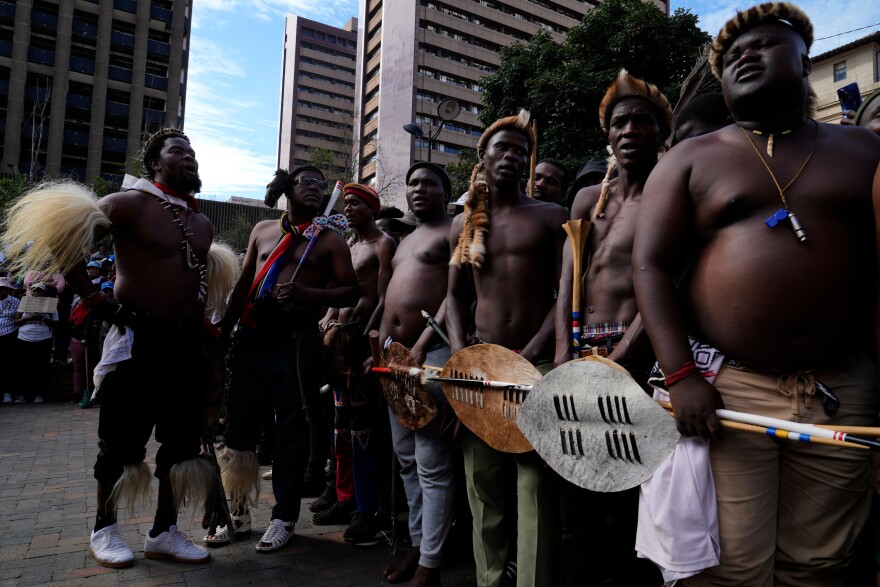
Foreign-owned businesses have been attacked in South Africa as xenophobic violence escalates across the nation, creating a climate of fear and uncertainty for migrant communities. The main movement leading these actions is called March and March, according to local reports, which has become increasingly vocal in its anti-immigrant stance. These incidents occur amidst broader concerns about persistent economic hardship and alarmingly high unemployment rates in the country, factors often cited as primary drivers of social unrest and anti-foreigner sentiment. The current wave of violence has once again brought to the forefront the deep-seated challenges South Africa faces in integrating its diverse population and addressing socio-economic inequalities.
Migrants Fleeing Violence and Seeking Repatriation
Across South Africa, migrants have been driven from their homes amid the ongoing violence, forced to abandon their livelihoods and seek refuge. The scale of displacement has been significant, with thousands of individuals uprooted from their communities. For instance, thousands of Malawians fled their homes in Durban, a major coastal city, to escape the escalating attacks. These displaced individuals established temporary camps, noting the immediate and dire need for shelter and security. Similarly, hundreds of Zimbabweans, facing similar threats and displacement, camped outside their consulate in Cape Town, desperately seeking assistance and protection from their home government. The situation has prompted international concern and action, with several African nations stepping in to aid their citizens. Nigeria, Ghana, and Mozambique have officially repatriated citizens who expressed a strong desire to leave South Africa, showing the severity of the threats faced by foreign nationals and the urgent need for safe passage out of affected areas.
The escalating situation has instilled profound fear and anxiety among those affected, many of whom have lived and worked in South Africa for years, if not decades. Sandile Mbuyazi, an 18-year-old Zimbabwean who works in a workshop, described his precarious situation with palpable apprehension. "They can kill you," Mbuyazi stated, expressing his deep fear for his safety. He further elaborated on his vulnerability, saying, "I'm scared because I don't have a choice. They can kill you. I'm scared of these people." His words reflect the constant threat of violence perceived by many migrants, who often feel unprotected and without recourse in the face of targeted aggression.
Bona Mapezi Bahati, 33, a woman whose life has been marked by profound trauma, now faces renewed terror in South Africa. She fled the Democratic Republic of Congo 15 years ago after being gang-raped by militia members, seeking safety and a new beginning in South Africa. Now, she recounts the xenophobic threats she has received, which echo the violence she experienced in her home country. "They tell me to go back to my country. I can't. I still remember what happened to me," Bahati said, her voice heavy with the weight of her past. The threats are not only personal but also extend to her family, causing immense distress. "My kids are scared. I've told them if the protesters come, you must run away and hide because there's nothing I can do," she explained, noting the impossible choices parents are forced to make to protect their children. Bahati, who is pregnant, expressed profound distress over the unfolding events, fearing for both her own life and that of her unborn child. "I feel so sad, especially as I'm pregnant, I'm scared they'll kill me," she explained, drawing a chilling parallel to her past. "It's like I'm in Congo. I feel like it's a war zone here," she concluded, emphasizing the psychological toll of living under constant threat.
Historical Context and Root Causes of Persistent Unrest
The current surge in xenophobic violence is deeply intertwined with South Africa’s challenging socio-economic landscape. The nation’s official unemployment rate stands at over 30%, a figure that significantly contributes to the widespread socio-economic pressures felt across the country, particularly among its large youth population. Youth unemployment further exacerbates these challenges, with more than 60% of young people currently without jobs. This severe lack of economic opportunity creates a volatile environment where competition for scarce resources and jobs can easily be manipulated into resentment against foreign nationals, who are often scapegoated for the country's economic woes. These economic strains are frequently cited as underlying factors in the recurring outbreaks of anti-foreigner sentiment and violence, providing fertile ground for populist movements that target migrants.
The nation has a painful and well-documented history of xenophobic incidents, with significant unrest recorded in previous years, indicating a persistent and unresolved societal issue. In 2008, xenophobic riots swept through South Africa with devastating consequences, resulting in the deaths of more than 60 individuals and displacing tens of thousands of people from their homes. These events marked a stark and brutal period of violence specifically targeting foreign nationals, leaving a lasting scar on the country's social fabric and international reputation. The memory of these riots continues to haunt migrant communities and serves as a grim reminder of the potential for widespread violence.
Another wave of deadly xenophobic riots occurred in South Africa again in 2019, showing the persistent and cyclical nature of such conflicts. The violence in 2019 led to further casualties and widespread displacement, particularly affecting foreign business owners and migrant workers who saw their livelihoods destroyed. These recurrent outbreaks demonstrate that the underlying issues fueling xenophobia remain largely unaddressed, leading to repeated cycles of violence. More recently, in 2026, reports indicate that a Malawian national and several Mozambicans have been killed in South Africa, adding to the growing concerns about the safety and security of foreign residents. These tragic incidents reflect a continuing pattern of violence against migrants amidst the country's enduring economic difficulties and social tensions, noting an urgent need for effective intervention and long-term solutions.
Voices of Fear and Frustration Amidst Directives
Amidst the ongoing unrest, several migrants have tragically lost their lives in South Africa, a stark testament to the severity of the violence. The group March and March, which has emerged as a prominent voice in the anti-immigrant movement, has issued a highly provocative directive, giving all undocumented immigrants in South Africa until June 30 to leave the country. This ultimatum has significantly heightened tensions and intensified fears among migrant communities, creating an atmosphere of impending crisis and forcing many to consider drastic measures.
In Jeppestown, a bustling suburb east of Johannesburg's city center, immigrants work diligently in carpentry and upholstery workshops, but now face an overwhelming sense of uncertainty about their future. Among them is Guy, a Malawian carpenter who arrived in South Africa three years ago seeking better economic opportunities. Like many others, he now finds his hopes and plans jeopardized by the escalating violence. Another resident, Victor Sithole, a 55-year-old Zimbabwean upholsterer, came to South Africa decades ago, establishing a life and a family in the country. He now expresses deep concern and fear for himself and his community. "We're all scared," Sithole stated, his voice reflecting the collective anxiety. "I've got quite a lot of friends who've been affected. Their homes have been destroyed, their businesses, so we don't know what tomorrow brings to us." His testimony paints a vivid picture of the widespread destruction and disruption caused by the attacks.
Sithole noted the indiscriminate nature of the violence, emphasizing that it spares no one. "Remember that when there's war, they don't choose who are you. War is war, so you have to just be careful no matter what," he explained, showing the widespread danger. He noted that the threats are directed broadly at foreign individuals, irrespective of their legal status or contributions to society. "They're not talking about papers, they're talking about the foreign people … they say go back to your country," Sithole clarified, pointing to the xenophobic rhetoric that targets identity rather than legality. For Sithole, South Africa has become his cherished home, a place where he has built his life. "I came here when I was 22 years, so part of my life it's here, it's part of my country," he said, articulating the deep sense of belonging that many long-term migrants feel, only to have it threatened by the current unrest.
Official Response and Future Outlook for Stability
In response to the escalating crisis, President Cyril Ramaphosa has committed to taking decisive action to address both the immediate violence and its underlying causes. He has promised to tighten border controls significantly, aiming to regulate the influx of people into the country more effectively. His administration plans to implement stricter measures against undocumented immigrants and, crucially, against those employers who hire them, seeking to deter illegal employment practices. President Ramaphosa's administration also indicated a strong focus on addressing the underlying economic challenges contributing to social tensions, recognizing that sustainable peace requires tackling the root causes of discontent. This includes initiatives aimed at job creation and poverty reduction, particularly for the youth, to alleviate the economic pressures that often fuel anti-foreigner sentiment.
The government's response is key in restoring order and protecting vulnerable communities. However, the effectiveness of these measures will depend on full implementation and a concerted effort to address the deep-seated issues of xenophobia and economic inequality. The ongoing violence not only poses a humanitarian crisis but also threatens South Africa's social cohesion and its standing as a democratic nation committed to human rights. The international community continues to watch closely, urging South Africa to uphold its commitments to protecting all residents within its borders. The path forward remains challenging, requiring sustained political will, community engagement, and effective policy interventions to ensure the safety and dignity of all individuals living in South Africa, regardless of their origin.