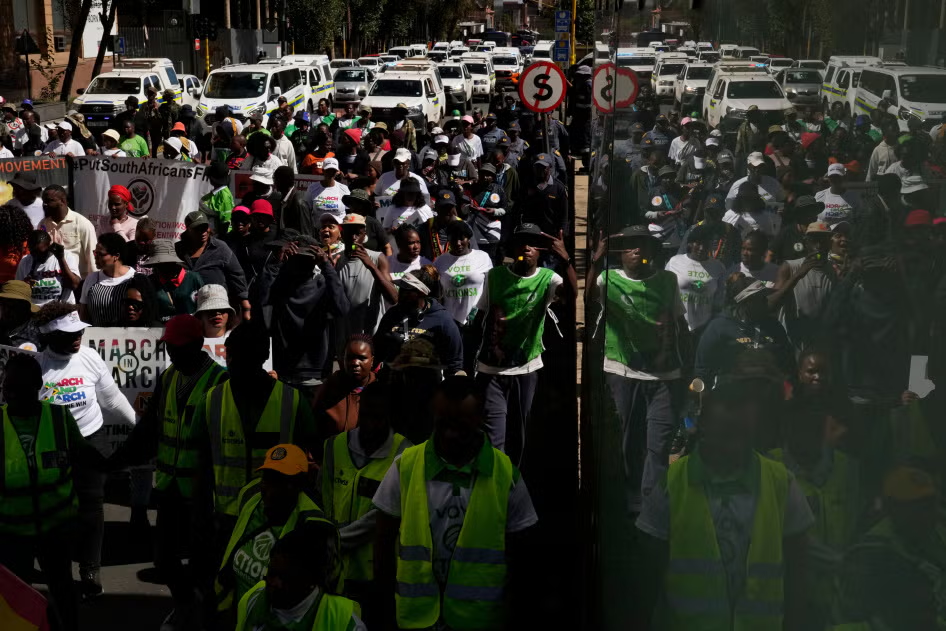
A citizen-led movement named March and March organized demonstrations against undocumented migrants in Pretoria, Johannesburg, and Durban during April and May 2026, which led to violent and sometimes fatal outcomes. These activities coincided with deteriorating socioeconomic conditions across South Africa since 2024. The country's unemployment rate, exceeding 43 percent, has been linked to a rise in anti-immigrant activism and the emergence of vigilante groups such as March and March. These groups often capitalize on public discontent, channeling frustration over economic hardship into animosity towards foreign nationals. The demonstrations by March and March specifically targeted areas with high concentrations of migrant populations, aiming to disrupt their livelihoods and pressure them to leave. The explicit goal of these protests was to confront and remove undocumented individuals, a stance that frequently escalated into physical altercations and property damage.
Recent Attacks and Historical Context
Waves of violence targeting foreign nationals have occurred repeatedly in South Africa, notably in 2015, 2019, and throughout 2021-2022. The 2019 incidents primarily targeted Nigerian nationals, leading to significant diplomatic tensions and calls for protection from international bodies. These recurring outbreaks highlight a persistent underlying issue of xenophobia within certain segments of South African society, often exacerbated by economic pressures and political rhetoric. The pattern of violence suggests that while specific triggers may vary, the vulnerability of foreign nationals remains a constant concern.
More recently, a 43-year-old Cameroonian shop owner in Durban reported an attack on April 17, 2026, by individuals believed to be affiliated with March and March. This incident serves as a stark reminder of the immediate dangers faced by foreign nationals during periods of heightened anti-immigrant sentiment.
The shop owner described a brutal assault, stating, "They whipped me and my three colleagues who are not South African with golf sticks and _sjamboks_ [heavy whips], and sprayed pepper spray on us. They also used stun guns on us." He recounted that approximately ten men were involved in the attack, demonstrating a coordinated and aggressive approach. The shop owner further detailed the incident, adding, "We ran outside the shop, while unable to see clearly. They followed us outside and whipped us … no one came to assist us." This event shows the ongoing challenges faced by foreign nationals in the country, who often find themselves isolated and unprotected during such assaults. The lack of intervention from bystanders further illustrates the climate of fear and indifference that can prevail during these xenophobic acts.
Official Response and Legal Challenges
The South Gauteng High Court issued an injunction in November 2025, preventing Operation Dudula supporters from obstructing migrants' access to healthcare facilities. This legal action aimed to protect the rights of foreign nationals seeking medical services, recognizing healthcare as a fundamental human right regardless of immigration status. The injunction was a significant legal victory for migrant rights advocates, pushing back against attempts by vigilante groups to deny essential services. However, the need for such an injunction noted the systemic challenges faced by migrants in accessing public services.
Days before the April 2026 protests, a credible source reported an incident involving a Malawian national. Police officers allegedly beat, tortured, and confined the individual to the trunk of a car after he failed to produce proper documentation. The Malawian national subsequently died. This account notes profound concerns about law enforcement conduct in relation to undocumented migrants, suggesting potential abuses of power and a disregard for human life. Such incidents erode public trust in institutions meant to uphold the law and protect all individuals within the country's borders. The alleged actions of the police raise serious questions about accountability and the treatment of vulnerable populations.
The Cameroonian shop owner attacked in Durban has not initiated an assault case with authorities. His decision stems from a stated lack of faith in South Africa's criminal justice system, indicating a perceived deficiency in the state's capacity or willingness to address crimes against foreign nationals effectively. This sentiment is unfortunately common among victims of xenophobic violence, who often feel that reporting incidents will not lead to justice or protection, and may even expose them to further risks. The reluctance to report shows a broader crisis of confidence in the state's ability to ensure rule of law for all residents.
International and Civil Society Concerns
South Africa has experienced intermittent but widespread xenophobic harassment and violence against African and Asian foreign nationals since 2008. Vigilante groups frequently scapegoat foreign nationals for the country's economic woes, poor service delivery, and high crime rates, despite studies disproving these claims. These groups often spread misinformation, portraying migrants as job stealer or criminals, which fuels prejudice and hostility. The economic challenges, including the high unemployment rate, are complex and multi-faceted, and attributing them solely to foreign nationals diverts attention from structural issues and systemic failures. Since 2008, 62 people have been killed in xenophobic attacks, including 21 South Africans, 11 Mozambicans, 5 Zimbabweans, and 3 Somalis, illustrating the deadly consequences of this prejudice. The fact that South African citizens also become victims in these attacks notes the indiscriminate nature of the violence once it erupts.
On April 27, 2026, United Nations Secretary General António Guterres expressed concerns over xenophobic harassment, discrimination, and attacks in South Africa. His statement showed the international community's alarm regarding the escalating situation and the need for urgent action. The African Commission on Human and Peoples’ Rights called on the South African government to investigate violence against foreign nationals and ensure accountability for these incidents, emphasizing the country's obligations under regional and international human rights frameworks. In December 2023, the UN Committee on the Elimination of All Forms of Racial Discrimination specifically called on South Africa to combat organized vigilante groups, provide redress to victims, ensure protection for those affected, and end impunity for perpetrators. These repeated calls from international bodies highlight a consistent pattern of concern and a perceived lack of adequate response from South African authorities to effectively address and prevent xenophobic violence. The international community continues to monitor the situation closely, urging concrete measures to protect foreign nationals and uphold human rights.