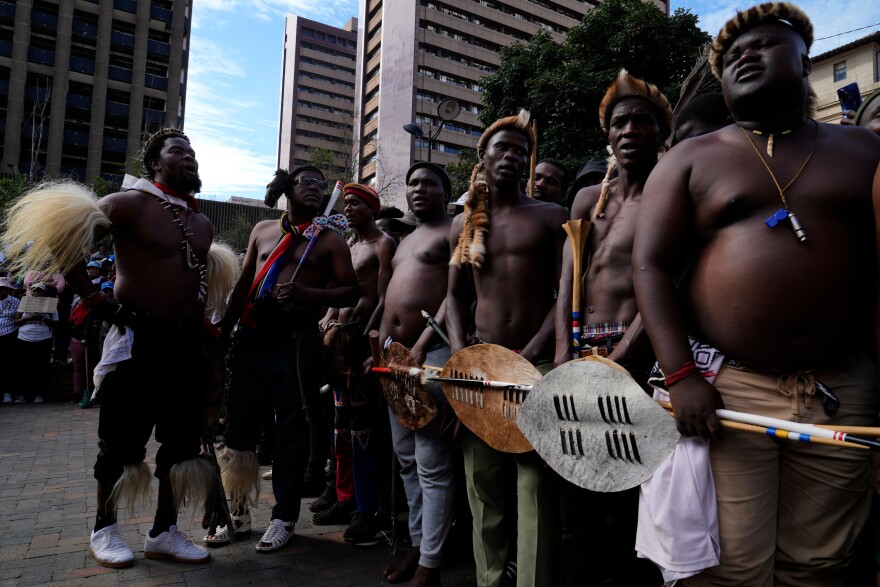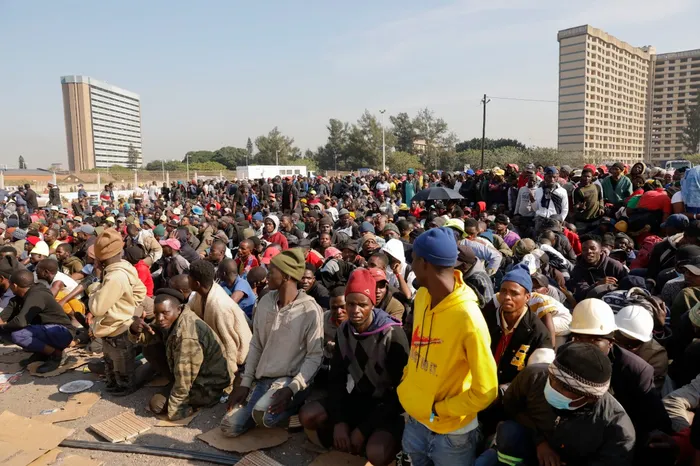
Civil society groups Kopanang Africa Against Xenophobia (KAAX) and Siyafana Sonke Action Campaign accuse the South African government of ignoring a humanitarian crisis and failing to protect refugees and migrants from forced evictions and vigilantism. This accusation comes amidst a wave of mass displacements of foreign nationals that began over the weekend of May 30, 2026. These efforts escalated into violence by early June, forcing hundreds to seek refuge in community halls, mosques, mountains, and bush across various provinces. The situation has been described by activists as a rapidly unfolding crisis, with vulnerable populations left exposed to severe risks.
The displacements and evictions are tied to an anti-illegal migration movement demanding all undocumented foreigners leave the country by June 30, 2026. Thousands have been affected, with displacements reported particularly in the Overberg region of the Western Cape, including Gansbaai, Kleinmond, and Bredasdorp, as well as parts of KwaZulu-Natal. KAAX and Siyafana Sonke Action Campaign assert that authorities have not adequately intervened to safeguard those targeted, leaving a vacuum where state protection should be.
Activists Demand Government Intervention
Kopanang Africa Against Xenophobia (KAAX) stated that the government's failure to act has placed hundreds of migrants and asylum seekers at risk of xenophobic violence, displacement, and a humanitarian crisis. The coalition emphasized that the lack of decisive government intervention has exacerbated the precarious conditions faced by these vulnerable groups, pushing them further into insecurity. Siyafana Sonke has requested a meeting with the Presidency and the Justice, Crime Prevention and Security Clusters (JCPS), demanding an immediate end to violence, illegal evictions, and forced deportations targeting immigrant groups. These demands highlight the urgency with which civil society believes the government must address the escalating situation and restore order.
KAAX is a coalition comprising over 60 organizations, including prominent groups such as Abahlali baseMjondolo, African Diaspora Forum, Treatment Action Campaign, and Equal Education Law Centre. These organizations collectively advocate for human rights and social justice, bringing significant experience and reach to the campaign. Siyafana Sonke is an even larger coalition, consisting of more than 160 civil society organizations, trade unions, civic structures, and social justice activists. Its extensive membership includes the South African Federation of Trade Unions (SAFTU), Lawyers for Human Rights (LHR), Global South Against Xenophobia (GSAX), and Botshabelo Unemployed Movement, indicating a broad-based concern across various sectors of society regarding the treatment of migrants.
KAAX reported a drastic and terrifying rise in people being uprooted, unlawfully evicted, and left stranded due to vigilante attacks and xenophobic violence. The coalition noted that women, pregnant individuals, children, and older persons are bearing the greatest burden of these crises, particularly during the winter months. The displacement during this period compounds the suffering, exposing individuals to harsh weather conditions and a lack of basic shelter. Siyafana Sonke has called for the government to provide shelters, security, and basic necessities for displaced individuals, arguing that these immediate measures are critical to prevent further loss of life and mitigate the humanitarian impact.
Siyafana Sonke further demanded the arrest of leaders associated with the March and March movement and Operation Dudula, along with others who led recent anti-immigrant protests. The coalition stated that these leaders have incited xenophobic and tribalistic violence, directly contributing to the current unrest and displacement. They also accused them of committing specific crimes including assault, intimidation, prevention of medical care, unlawful searches, and unlawfully demanding documents from foreign nationals. The coalition added that the South African Police Service (SAPS) must be held accountable wherever they have failed to arrest the ringleaders of vigilante groups, suggesting a perceived dereliction of duty by law enforcement in certain instances. This call for accountability extends to ensuring that those who instigate violence are brought to justice, thereby upholding the rule of law.
Government Response and Official Silence
Presidency spokesperson Vincent Magwenya did not respond to inquiries regarding the government's stance on the escalating migrant hostility and calls for intervention. This lack of comment from the highest office has been noted by activists as contributing to the perception of government inaction. Similarly, Nomonde Mnukwa, spokesperson for the Government Communication and Information System (GCIS), indicated that questions should be directed to Mr. Magwenya and Mava Scott, the chief director for the Justice, Crime Prevention and Security (JCPS) cluster. Neither official provided comment on the specific allegations made by civil society organizations concerning government inaction or the humanitarian situation, maintaining a public silence on the direct accusations. Home Affairs spokesperson Thulani Mavuso also referred inquiries about the migrant situation to the Government Communication and Information System (GCIS), further centralizing, yet ultimately silencing, official communication on the matter.
Despite the silence from the Presidency and GCIS regarding migrant protection, acting police commissioner Lieutenant-General Puleng Dimpane outlined a security plan for upcoming demonstrations. The plan, which carries a budget of R600-million, is intended to manage potential unrest associated with planned protests. Lieutenant-General Dimpane specified that the security measures include cancelling operational and support leave for police personnel, ensuring maximum deployment capacity. The plan involves strategic deployments to identified high-risk hotspots across the country, aiming to preempt and contain potential violence. The police will also utilize drones for surveillance and engage in social media monitoring to track and anticipate potential disruptions, leveraging technology to enhance situational awareness. This full approach aims to maintain public order during periods of heightened tension, though it does not explicitly address the protection of migrants from vigilante actions. Mava Scott, chief director for the Justice, Crime Prevention and Security (JCPS) cluster, stated that the cluster cannot discuss or share operational plans with third parties, citing security and strategic reasons. Mr. Scott added that the government is engaging with continental counterparts to manage repatriations in an orderly and lawful manner, indicating a focus on diplomatic solutions for the long-term management of migration flows.
Roots of the Crisis
Professor Theo Neethling identified the escalating hostility as a long-standing governance challenge, specifically citing South Africa's inability to effectively manage and secure its borders. Professor Neethling stated, "For many years, South Africa's borders have remained highly porous, enabling hundreds of thousands of migrants to enter the country, both legally and illegally, since 1994." He elaborated that this persistent porosity has created an environment where the presence of undocumented migrants becomes a source of tension. He added that this has led to increased scrutiny, particularly because many undocumented migrants originate from African states that supported the anti-apartheid struggle, creating a complex dynamic between historical solidarity and contemporary challenges.
Neethling also pointed to adverse economic conditions and ongoing conflict in several Southern African Development Community (SADC) member states and other African countries as factors encouraging migration to South Africa. These push factors, combined with South Africa's perceived economic opportunities, create a strong incentive for individuals to seek refuge or better livelihoods within its borders. He observed a growing perception among Africans that migrants in South Africa are viewed with suspicion or hostility. Professor Neethling elaborated, "At the same time, a growing perception has emerged among many Africans across the continent that migrants in South Africa are increasingly viewed with suspicion or hostility. This perception has been reinforced by periodic outbreaks of anti-immigrant violence and heated public debates over immigration policy." He concluded that migration has thus become both a domestic and foreign policy dilemma for South Africa, creating tensions between internal political imperatives and diplomatic relations with other African states. This intricate interplay of internal pressures and external relationships shows the complexity of finding a sustainable solution to the migration challenge.
Accusations and Counter-Blame
Mava Scott, chief director for the Justice, Crime Prevention and Security (JCPS) cluster, stated that the cluster cannot discuss or share operational plans with third parties. Mr. Scott added that the government is engaging with continental counterparts to manage repatriations in an orderly and lawful manner, indicating a focus on diplomatic solutions for the long-term management of migration flows. Meanwhile, the March and March Movement leader, Jacinta Ngobese-Zuma, rejected calls for her arrest, instead attributing responsibility for the situation to the South African government. Ms. Ngobese-Zuma argued, "if anyone must shoulder blame, it is the South African government for failing to manage the illegal immigration crisis." This statement reflects a counter-blame narrative amidst accusations of incitement to violence, shifting the focus from the actions of anti-immigrant groups to perceived governmental shortcomings. The ongoing exchanges between civil society, government officials, and leaders of anti-immigrant movements highlight the deep divisions and lack of consensus on how to address the escalating crisis of migrant hostility in South Africa.