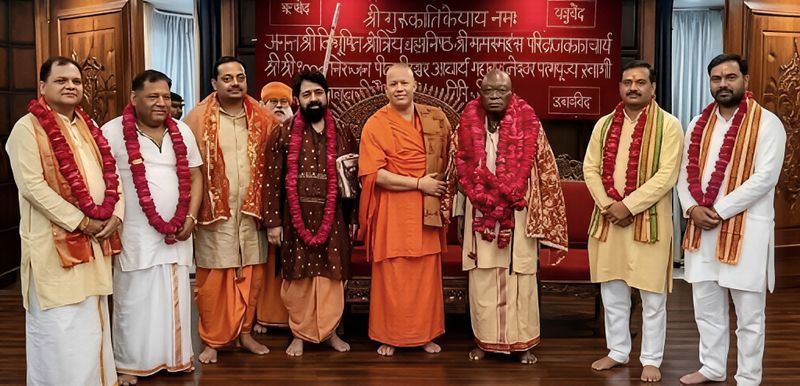
South Africa's foreign ministry has cleared its high commissioner to India, Anil Sooklal, of any wrongdoing following the emergence of photographs showing him with former President Jacob Zuma and businessman Ajay Gupta at a temple in Haridwar. The images sparked controversy, linking Mr. Sooklal to figures central to South Africa's state capture inquiry. Mr. Zuma, 84, currently leads the opposition Umkhonto we Sizwe party, which is preparing for South Africa’s local government elections scheduled for November. The country's next presidential poll is due in 2029.
Diplomat's Presence Under Scrutiny
The controversy surrounding High Commissioner Anil Sooklal stemmed from a June meeting in India involving former President Jacob Zuma and fugitive businessman Ajay Gupta. Mr. Sooklal was present at the Haridwar temple where the two men were photographed. The emergence of these photographs, depicting Mr. Zuma, Mr. Gupta, and Mr. Sooklal together, led to significant scrutiny being directed at the diplomat. The specific location of the encounter, a temple in Haridwar, added a particular context to the widely circulated images.
Mr. Sooklal has consistently maintained that his presence at the event was entirely coincidental and formed part of his official duties as the high commissioner. He explicitly stated that he neither arranged nor facilitated any private discussions or engagements between former President Zuma and Mr. Gupta. According to official reports and Mr. Sooklal’s own account, his role was strictly limited to accompanying the former president as part of established diplomatic protocol during Mr. Zuma's visit to India. This standard procedure is often extended to former heads of state when they travel abroad, ensuring appropriate logistical and representational support.
Despite his detailed explanation, officials within South Africa had described the diplomat’s apparent involvement as “a disgrace.” This strong criticism noted deep-seated concerns over any perceived association between government representatives, particularly those in high diplomatic office, and figures implicated in serious state capture allegations. The Department of International Relations and Cooperation (DIRCO), recognising the gravity of the public and internal concerns, subsequently launched an internal investigation. The primary objective of this probe was to ascertain the full context of Mr. Sooklal’s presence at the meeting and to determine if any protocols were breached or if any impropriety occurred.
Background to the Gupta Scandal
Businessman Ajay Gupta was declared a fugitive in 2018 amid accusations of widespread corruption related to his family's business dealings in South Africa. His brothers, Atul Gupta and Rajesh Gupta, subsequently relocated to the United Arab Emirates. South Africa’s efforts to bring them to justice faced a significant setback when the UAE rejected an extradition request for them in 2023, citing technical issues with the application. The Gupta family is accused of orchestrating an elaborate scheme to pay bribes to secure ministerial appointments and systematically loot state institutions during Jacob Zuma’s presidency, which spanned from 2009 to 2018.
The three Gupta brothers – Ajay, Atul, and Rajesh – established an extensive business network within South Africa, building a powerful economic empire before they departed the country in 2018 as legal pressure mounted. This broad scandal, involving allegations of significant influence over state affairs and the manipulation of state-owned enterprises for private gain, became widely known as "state capture." A full report published in 2016 by South Africa’s anti-corruption watchdog meticulously detailed these allegations, bringing them to widespread public attention and initiating a national reckoning. While Ajay Gupta was initially declared a fugitive and an arrest warrant was issued for him, South African authorities later withdrew that specific arrest warrant a year after its issuance, a move that drew further scrutiny and questions about the handling of the case. The accusations against the family have had a lasting impact on South African politics and public trust, leading to extensive inquiries and ongoing legal battles aimed at recovering state assets.
Ministry's Investigation Findings
Following a thorough internal investigation, South Africa's Department of International Relations and Cooperation (DIRCO) formally determined that High Commissioner Anil Sooklal was one of hundreds of guests present at the event in Haridwar, India. The ministry's findings indicated that the gathering was a large public affair, not an exclusive private meeting. Crucially, the investigation concluded that Mr. Sooklal had no direct contact or private interaction with businessman Ajay Gupta during the gathering. This finding was central to clearing the diplomat of any allegations of impropriety.
Mr. Sooklal's role at the event was confirmed to be limited to providing standard protocol support. This type of assistance is typically extended to former heads of state, aligning with established diplomatic conventions for such visits, ensuring their safety, logistical needs, and adherence to diplomatic courtesies. The investigation found no evidence of wrongdoing by the diplomat regarding his presence or actions at the temple where former President Jacob Zuma and Mr. Gupta were photographed. The ministry's official statement showed that Mr. Sooklal acted within the parameters of his official duties and did not engage in any activities that would compromise his position or the integrity of South Africa's foreign service.