South Africa is prepared to strengthen regulation and enforcement against plastic pollution, including targeting companies that fail to comply with waste management obligations, as the South African Plastics Pact's 2030 targets were launched. The government has adopted a proactive and evidence-based approach to this issue, combining policy reforms, scientific research, public awareness campaigns, and partnerships across sectors. This full strategy shows a commitment to addressing one of the most pressing environmental challenges facing the nation.
New Plastics Pact Targets
South Africa has made significant progress in addressing plastic waste through collaborative efforts involving government, businesses, and civil society. These concerted efforts have laid the groundwork for more ambitious goals. The Department of Forestry, Fisheries and the Environment has partnered in the Plastics Pact initiative since its inception. The SA Plastics Pact was initially established in January 2020 with the aim of reducing plastic waste and fostering a circular economy within the country. This foundational initiative brought together key stakeholders to drive systemic change. GreenCape serves as the secretariat for the Plastics Pact, playing a key role in coordinating activities and ensuring the pact’s objectives are met. The government anticipates that regulatory instruments will be necessary to ensure greater compliance with environmental standards and to eliminate problematic plastics from South Africa's ecosystem. These instruments are seen as vital tools to complement voluntary efforts and ensure widespread adherence to environmental best practices.
Strengthening Enforcement and Compliance
Stronger measures may be required to drive further change in tackling plastic pollution, according to government statements. The Department of Forestry, Fisheries and the Environment emphasized that while voluntary initiatives are valuable, a strong regulatory framework is indispensable for achieving national goals. Companies that have not joined voluntary initiatives, such as the South African Plastics Pact, may be compelled to contribute to broader industry reforms through regulatory action. This move signals a shift towards a more mandatory compliance landscape. The Department of Forestry, Fisheries and the Environment has noted continued implementation of Extended Producer Responsibility (EPR) regulations, increased industry investment in recycling and collection infrastructure, and efforts to improve the working conditions of waste reclaimers as key achievements. These achievements demonstrate tangible progress in building a more sustainable waste management system. The government recognizes that sustained investment in infrastructure and support for informal waste sector workers are critical components of a successful circular economy.
Collaboration with the Department of Trade, Industry and Competition supports investment and innovation. This collaboration is facilitated through initiatives such as the Plastics Sector Master Plan and the Industrial Policy Action Plan. These frameworks aim to align economic development with environmental protection, ensuring that the plastics industry contributes positively to South Africa's circular economy goals. The government indicates that strong regulatory instruments will be essential to ensure high levels of compliance across all sectors and to eliminate problematic plastics from the environment. Such instruments are expected to provide clear guidelines and enforcement mechanisms, fostering a level playing field for all businesses and protecting natural resources. The emphasis on both voluntary commitments and regulatory mandates illustrates a dual approach designed to maximize impact and accelerate the transition away from a linear plastics economy.
Broader Context and Future Outlook
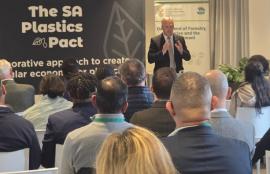
Forestry, Fisheries and the Environment Minister Willie Aucamp addressed industry leaders, environmental organisations, and government stakeholders in Cape Town on Monday evening. During his address, Minister Aucamp stated, "We now know that if we do not address problematic plastic products, they threaten the reputation and the future of all plastic products." He further elaborated on the severity of the issue, noting, "The result is growing pressure on our environment, our oceans, our communities, and our waste management systems." Plastic pollution is described as one of the most pressing environmental challenges facing South Africa and the world, demanding urgent and coordinated action. The Minister's remarks showed the interconnectedness of environmental health, economic stability, and social well-being.
Minister Aucamp emphasized the government's commitment to tackling this issue, saying, "The launch of the SA Plastics Pact 2030 is a declaration of intent to achieve more. It signals our collective determination to move beyond business as usual and towards a future in which economic growth, environmental sustainability, and social inclusion go hand in hand." This forward-looking vision notes the ambition behind the new targets. To further stimulate demand for recycled materials, amendments to plastic carrier bag regulations are expected to introduce recycled-content targets. These targets will create a direct incentive for manufacturers to incorporate more recycled content into their products, thereby closing the loop on plastic materials. Additionally, the government is exploring deposit return schemes to improve collection rates and increase material recovery. Such schemes have proven effective in other countries for significantly boosting recycling volumes and reducing litter, and their implementation in South Africa could mark a significant step towards a truly circular economy for plastics.