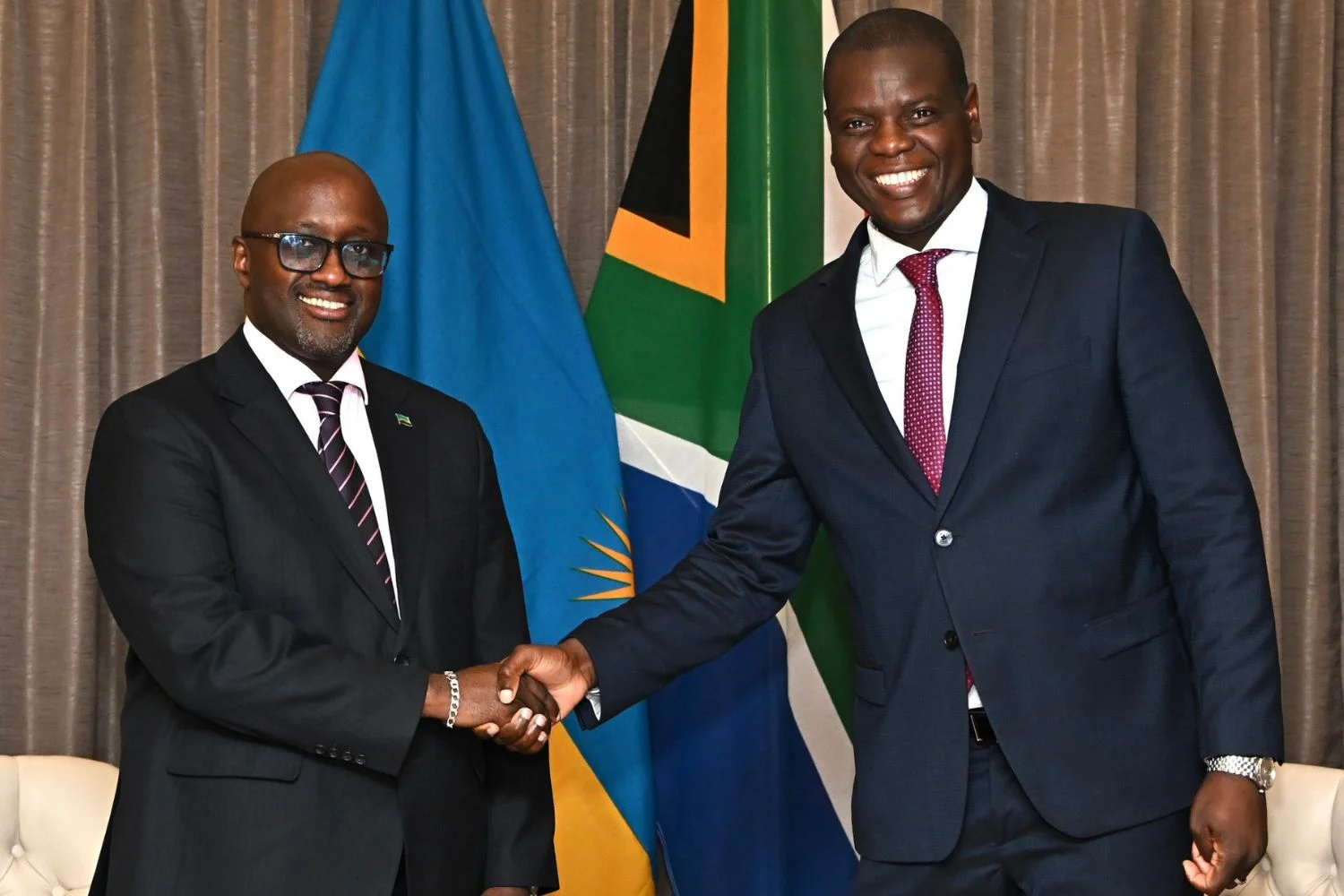
South Africa announced significant progress on normalising visa requirements for Rwandan citizens, a move that will ultimately allow them to enter the country without special passports. This key announcement, signaling a renewed commitment to strengthening bilateral relations and easing travel restrictions, was made on Wednesday, June 17, in Pretoria. The development followed a key meeting between South Africa's International Relations Minister, Ronald Lamola, and his Rwandan counterpart, Olivier Nduhungirehe. Their discussions focused comprehensively on enhancing diplomatic engagement and fostering cooperation across a broad spectrum of areas, including trade, tourism, health, education, and security. The joint effort shows a mutual desire to rebuild and deepen the ties between the two African nations.
Minister Ronald Lamola articulated South Africa's proactive stance, stating that the nation would take "steps towards enabling us to lift the ban with regard to the Rwandan ordinary passports into South Africa." He further elaborated on the procedural aspects, noting that the country was "fine-tuning its immigration laws and visa regulations" to facilitate this change. Lamola emphasized the shared responsibility and interconnectedness of the two nations, adding, "South Africa and Rwanda shoulder a responsibility to cooperate more deeply, as there is a lot that binds our peoples together." This sentiment was echoed by Minister Olivier Nduhungirehe, who expressed considerable satisfaction with the outcomes of the meeting. Nduhungirehe remarked, "We are particularly pleased with the concrete outcomes of our meeting, mainly the resumption of visas for Rwandan nationals within twelve months." This commitment to a specific timeline notes the tangible progress achieved during the diplomatic engagement and sets a clear path forward for improved relations. The agreement to lift the ban on ordinary passports for Rwandan citizens marks a significant diplomatic breakthrough, promising to enhance people-to-people connections and facilitate smoother travel between the two countries.
Visa Normalisation Progress
South Africa is currently engaged in a full process of modernizing its immigration laws and visa regulations. This ongoing effort is anticipated to not only streamline its internal systems but also to facilitate closer ties with regional partners, including Rwanda. The modernization aims to create a more efficient and welcoming environment for international visitors and residents alike. Concurrently, Rwanda has also undertaken significant reforms to its visa regime, now providing both visa-free entry and visa-on-arrival options for various nationalities, reflecting a broader strategy to boost tourism and economic engagement. These parallel efforts by both nations are part of broader initiatives designed to enhance mobility, foster regional integration, and strengthen cooperation across the continent. Such policy adjustments are key for unlocking the full potential of bilateral relations and promoting greater interaction between their respective populations.
As a direct result of these recent diplomatic discussions and the commitment to improving relations, concrete steps are being taken to lift the existing ban on Rwandan ordinary passports for entry into South Africa. This measure is specifically aimed at streamlining travel for Rwandan citizens, removing a long-standing impediment to their mobility. The full resumption of visas for Rwandan nationals is planned to occur within the next twelve months, a clear timeframe that signifies a significant step towards normalizing bilateral relations and restoring trust. This phased approach allows for the necessary administrative and legal adjustments in both countries. The lifting of travel restrictions is expected to have a positive impact on tourism, trade, and cultural exchange, fostering a more interconnected relationship.
In a related development aimed at fostering economic cooperation and resolving past trade disputes, Rwanda has agreed to lift a ban on agricultural produce originating from South Africa. This ban had been in effect since 2017, following a listeriosis outbreak in South Africa. The decision to lift this agricultural trade restriction signifies a further commitment to improving economic and diplomatic exchanges between South Africa and Rwanda. This move is expected to reopen important trade channels, benefiting agricultural producers in South Africa and offering Rwandan consumers greater access to South African goods. The resolution of this trade issue demonstrates a willingness from both sides to address and overcome obstacles to full bilateral cooperation.
Historical Context and Cooperation
Relations between South Africa and Rwanda have consistently been characterized as friendly, cordial, and founded on mutual cooperation and respect, despite occasional differences that have arisen. Both nations share a profound history of emerging from painful pasts, a common experience that has often underpinned their mutual understanding and solidarity. South Africa overcame the systemic oppression of the Apartheid era, while Rwanda recovered from the devastating Genocide against the Tutsi people. This shared journey through adversity has created a unique bond. Rwanda, in particular, has consistently emphasized the significant importance it attaches to its relations with South Africa, viewing it as a key partner on the continent.
South Africa has historically provided substantial support to Rwanda during its critical post-genocide period. This assistance has encompassed various initiatives designed to aid Rwanda's recovery and development, such as scholarships for Rwandan students to study in South Africa, full training programs in various sectors, and efforts to facilitate investment into the Rwandan economy. These cooperative measures show a deep-seated history of engagement and solidarity between the two countries, reflecting a commitment to helping Rwanda rebuild and prosper. The support offered by South Africa has been instrumental in different facets of Rwanda's national reconstruction, from human capital development to economic revitalization.
However, despite this generally positive historical backdrop, tensions between Rwanda and South Africa flared in 2025. This particular period of disagreement was primarily centered over the presence of South African troops in the Democratic Republic of Congo (DRC). This specific incident marked a point of contention and disagreement within the broader context of their bilateral relationship, noting the complexities that can arise even between friendly nations. Such moments, though challenging, often serve as catalysts for renewed diplomatic efforts to address underlying issues and reinforce the foundations of their partnership. The ability to navigate and ultimately resolve such specific points of friction is key for the long-term health of the relationship.
Future Diplomatic Engagement
Looking ahead, plans for future diplomatic engagement are strong and include the highly anticipated relaunch of the Joint Commission on Cooperation. This significant commission is scheduled to convene in the first quarter of 2027 in Kigali, Rwanda. The relaunch signifies a structured and formalized approach to deepen collaboration across the various sectors identified during recent discussions between the two nations, including trade, tourism, health, education, and security. This initiative aims to consolidate the progress made in mending ties and establishing a more strong framework for ongoing dialogue and partnership, ensuring that cooperation is sustained and strategically guided. The establishment of this commission reflects a long-term vision for a stable and productive relationship.
The Joint Commission on Cooperation is expected to serve as a key mechanism for overseeing the implementation of all agreements reached, including the key visa normalisation process and the lifting of agricultural trade restrictions. Its re-establishment shows both countries' unwavering commitment to regular high-level consultations on matters of mutual interest, providing a consistent platform for engagement. Such a forum will allow for periodic reviews of bilateral relations, ensuring that cooperation efforts remain aligned with the evolving needs and priorities of both South Africa and Rwanda. This diplomatic structure is meticulously designed to foster continued engagement, moving beyond specific agreements to cultivate a broader, more integrated, and resilient relationship. The meeting in Kigali will thus mark a significant step in formalizing the renewed impetus in their diplomatic relationship, paving the way for a future of enhanced cooperation and mutual benefit.