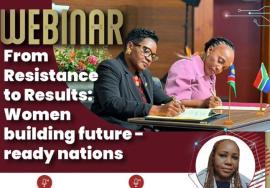
Minister in the Presidency for Women, Youth and Persons with Disabilities, Sindisiwe Chikunga, on Monday, September 7, 2026, urged South Africa and Namibia to translate their women's liberation legacy into tangible progress for contemporary women and girls. Ms. Chikunga delivered her remarks at the National School of Government’s South Africa-Namibia Ministerial Dialogue, emphasizing the shared historical struggles of both nations. The dialogue served as a key platform for both nations to reflect on their past and strategize for a future where the ideals of liberation are fully realized for women.
Ms. Chikunga stated, "The courage of generations of South African and Namibian women must translate into tangible improvements in the lives of women and girls today and in the future." She noted South Africa's commemoration of the 70th anniversary of the 1956 Women’s March, linking it to Namibia's 1959 Old Location uprising as part of the region's liberation memory. "These moments speak to one another across geography and time," Ms. Chikunga said, adding, "Legacy is what we inherit. It asks us to remember. Impact is what we are responsible for producing." Phindile Mkwanazi serves as the Acting Principal of the National School of Government, which hosted the significant bilateral discussion. The Minister's address showed the imperative for current leadership to build upon the foundations laid by past generations, ensuring that historical sacrifices lead to concrete advancements in the present.
Honouring Historical Resistance
The dialogue convened under the theme "From Resistance to Results: Honouring the Legacy of South African and Namibian Women through Leadership, Justice and Transformative Action." This theme noted the journey from historical struggles against oppression to the current imperative for measurable outcomes in women's empowerment. South Africa is commemorating the 70th anniversary of the historic 1956 Women’s March, an event where more than 20,000 women marched on the Union Buildings in Pretoria. This protest specifically targeted the pass laws implemented at the time, demonstrating a powerful collective resistance against discriminatory legislation. This seminal event remains a symbol of women's courage and determination in the fight for equality and dignity. Simultaneously, communities in Windhoek resisted forced removals during the 1959 Old Location uprising, marking another significant act of defiance in the region's history. These parallel historical events show a shared heritage of resilience and the ongoing need to honor these legacies through sustained action.
Persistent Structural Barriers
Sindisiwe Chikunga stated that measuring progress should focus on whether women’s material and lived realities have demonstrably improved. This perspective shifts the emphasis from policy formulation alone to the actual impact on the daily lives of women and girls. Phindile Mkwanazi, Acting Principal of the National School of Government, added that women in both South Africa and Namibia continue to encounter significant structural barriers. These barriers include widespread gender-based violence, which remains a critical threat to women's safety and well-being. Additionally, unequal economic participation continues to limit women's financial independence and contribution to national economies. Ms. Mkwanazi also pointed to persistent underrepresentation in leadership positions across various sectors, hindering women's influence in decision-making processes. Ms. Mkwanazi noted women's exclusion from opportunities within technology and the growing digital economy as a continuing challenge, potentially widening existing inequalities in an increasingly digital world. The observations from both officials showed the need for concrete actions beyond historical commemorations to achieve genuine women's liberation, stressing that true progress is reflected in tangible improvements in women's material and lived realities.
Call for Measurable Impact
Sindisiwe Chikunga noted the establishment of South Africa’s National Council on Gender-Based Violence and Femicide as an important step in addressing persistent issues. This initiative aims to translate policy commitments into tangible protections and support for women and girls facing violence. The Council's formation signifies a move towards a structured approach in combating gender-based violence, an issue Ms. Chikunga previously noted requires measurable improvements in the material and lived realities of women. The establishment of such a body is a direct response to the urgent need for coordinated efforts and accountability in tackling one of the most widespread structural barriers. Phindile Mkwanazi, Acting Principal of the National School of Government, had also pointed to widespread gender-based violence as a significant structural barrier still faced by women in both South Africa and Namibia, reinforcing the critical importance of such interventions. The Council is tasked with not only developing strategies but also ensuring their effective implementation and monitoring their impact on the ground. The establishment of such bodies is intended to provide a framework for accountability and concrete action, moving beyond historical recognition to active intervention in contemporary challenges and ensuring that the legacies of resistance translate into meaningful results for women today.