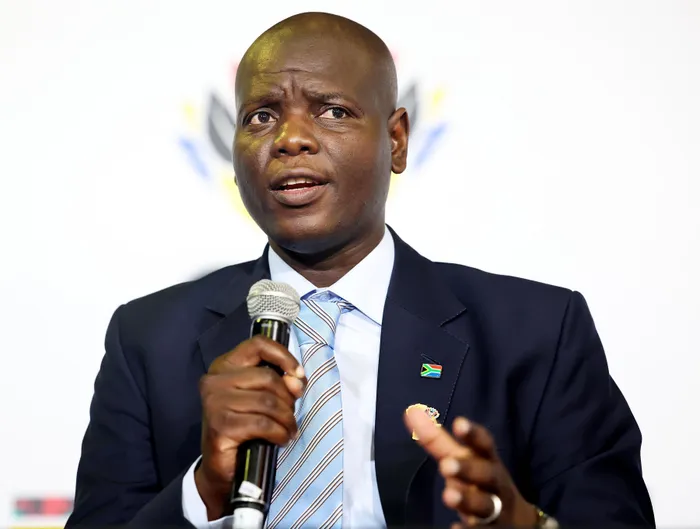
South Africa's International Relations and Co-operation Minister Ronald Lamola urged South Africa and Brazil to establish a new model of economic co-operation to ensure the Global South benefits from its natural resources. Lamola made his remarks on Wednesday at the OR Tambo Building in Pretoria during the 8th Session of the South Africa-Brazil Joint Commission, attended by Brazilian Foreign Minister Mauro Vieira and other senior officials. The Joint Commission serves as the primary mechanism for managing bilateral co-operation and gives practical expression to the strategic partnership between the two nations. It was specifically established for this purpose, providing a structured framework for ongoing dialogue and collaboration between the two countries. This mechanism is key for translating strategic partnership aspirations into tangible outcomes across various sectors.
"It is my great pleasure to welcome you, my dear friend, Mauro, and your delegation to South Africa for the 8th Session of our Joint Commission," Lamola stated, adding that the session provides an opportunity "to take stock of what we have achieved since then and to determine where our relationship should go next." This sentiment shows the forward-looking nature of the discussions, aiming not only to review past successes but also to chart a clear path for future engagement. Minister Lamola emphasized the importance of this new economic model, stating, "As this demand grows, Brazil and South Africa have an important opportunity to work together to ensure that it does not reproduce old patterns of extraction in which countries of the global South supply raw materials while wealth and prosperity are generated elsewhere." This notes a shared vision to move beyond traditional resource extraction models that have historically disadvantaged developing nations. He further noted that the two countries are well-positioned "to advance a different model – one in which the minerals that power a green future also power industrialisation, skills development, technological exchange and prosperity in our own societies." This proactive approach aims to leverage critical mineral resources for sustainable and inclusive economic development within their own borders, rather than merely exporting raw materials.
Strengthening Economic Partnership
The Joint Commission last convened in Brasília in April 2024, demonstrating a regular and consistent commitment to bilateral dialogue at a high level. During these sessions, tangible agreements are often reached, solidifying the partnership. A Memorandum of Co-operation between ApexBrasil and the Department of Trade, Industry and Competition was concluded, while a Tourism Co-operation Action Plan for 2026–2029 was adopted to bolster bilateral ties. These agreements are designed to foster practical collaboration and facilitate economic growth. Co-operation in agriculture and education has advanced, and engagement across energy, science and technology, mining, and other priority areas has deepened, reflecting the broad scope of the strategic partnership. South African International Relations and Co-operation Minister Ronald Lamola noted that Brazil holds significant economic importance for the nation. "Brazil is South Africa’s largest trading partner in Latin America and our second-largest partner in the Americas," Lamola stated, showing the deep economic connections already in place. This strong existing relationship provides a solid foundation for further expansion and diversification of trade and investment.
Trade between South Africa and Brazil reached approximately $2 billion (R32bn) in 2025, a substantial figure that reflects the strong commercial exchange between the two nations. This volume of trade encompasses a wide array of goods and services, indicating a diverse economic relationship. South African companies have established a presence in Brazil across various sectors, including pharmaceuticals, technology, mining, financial services, and chemicals. This South African investment in Brazil demonstrates a reciprocal economic engagement, contributing to job creation and economic activity in both countries. Minister Lamola noted the existing framework for commercial interactions between the two countries. "The SACU–MERCOSUR Preferential Trade Agreement gives us an existing platform to build on," Lamola said. This agreement provides a key legal and economic framework that facilitates preferential trade, reducing barriers and encouraging greater commercial flow. A bilateral 90-day visa agreement and the expansion of direct flights between South Africa and São Paulo have contributed significantly to the recovery of tourism between the two nations, making travel more accessible and convenient for business and leisure.
Tourism and People-to-People Links
Brazilian companies are investing in South Africa’s automotive and food-manufacturing sectors, contributing to the economic relationship between the two nations. These investments bring capital, technology, and expertise, fostering industrial growth and employment opportunities in South Africa. Tourism has also seen significant growth, with Brazil emerging as a key market for South Africa. South African International Relations and Co-operation Minister Ronald Lamola stated, "Brazil is now South Africa's ninth-largest source market for tourism." This ranking shows the increasing appeal of South Africa as a destination for Brazilian travelers, noting the success of tourism promotion efforts and the natural attractions of the country.
Last year, nearly 65,000 Brazilians visited South Africa, a testament to the growing interest and improved connectivity between the two nations. This volume of arrivals indicates a strong recovery in tourism between the two countries, bringing visitor numbers close to pre-pandemic levels. The resurgence in tourism is not merely an economic indicator but also signifies strengthening people-to-people links and cultural exchange. The growth in Brazilian tourism is supported by existing agreements and infrastructure, such as the bilateral 90-day visa agreement and expanded direct flights between South Africa and São Paulo. These measures have facilitated easier travel and cultural exchange, reinforcing the people-to-people links between the two Global South partners. Such connections are vital for building mutual understanding and long-term diplomatic ties, extending beyond purely economic considerations.
Global South and Critical Minerals
The demand for critical minerals is projected to rise significantly, with the International Energy Agency estimating a fourfold increase by 2040. This anticipated surge shows the strategic importance of nations rich in these resources, as these minerals are essential for the global transition to green energy technologies, electric vehicles, and advanced electronics. Both South Africa and Brazil are significant players in the global minerals market, possessing substantial reserves that are key for the energy transition and advanced technologies. Their geological endowments place them in a key position to influence global supply chains and benefit from the increasing demand. The increasing global appetite for materials like lithium, cobalt, and rare earth elements positions these countries centrally in the evolving economic landscape, offering them a unique opportunity to shape their economic futures.
As founding members of the G20, South Africa and Brazil hold considerable influence in international economic forums. Their shared status as key economies within the Global South provides a platform for coordinated action on issues such as equitable resource management and industrial development. This joint membership in the G20 allows both nations to advocate for policies that promote fair trade practices and prevent the perpetuation of historical patterns where raw material producers derive limited benefits from their resources. They can collectively push for reforms that ensure a more equitable distribution of value along the critical mineral supply chain. Their collaborative stance within such multilateral bodies can shape discussions around critical mineral supply chains, investment frameworks, and technology transfer, aiming to ensure that the economic benefits generated by these minerals contribute to broader societal development in producer countries. This includes advocating for local processing, manufacturing, and value addition, rather than simply exporting raw materials.
Addressing Global Challenges
South Africa presents an opportunity for Brazilian companies to access the broader African market, which encompasses over 1.4 billion people through the African Continental Free Trade Area. South African International Relations and Co-operation Minister Ronald Lamola stated, "South Africa offers Brazilian companies a gateway into a rapidly integrating African market of more than 1.4 billion people through the African Continental Free Trade Area." This initiative aims to foster intra-African trade and economic integration across the continent, creating one of the world's largest free trade zones. For Brazilian businesses, leveraging South Africa's established infrastructure and market access within this framework can unlock significant growth opportunities. This strategic positioning allows Brazilian firms to tap into diverse economies and consumer bases across Africa, facilitated by South Africa's strong regional ties and logistical capabilities.
The collaboration between South Africa and Brazil also addresses shared challenges in debt management and public spending, issues that disproportionately affect developing nations. In Africa, approximately 750 million people reside in countries where government expenditure on interest payments exceeds that on essential services such as hospitals and classrooms. This stark reality notes the severe fiscal constraints faced by many African nations, diverting critical funds from human development to debt servicing. Similarly, in Latin America and the Caribbean, around 350 million people live in nations that allocate more funds to debt repayments than to healthcare. These figures show the significant fiscal pressures faced by countries in both regions, noting a common need for sustainable economic policies and international financial reforms. The two nations' combined efforts within international forums could advocate for solutions to these widespread economic challenges, pushing for debt relief, more equitable lending practices, and reforms to the global financial architecture. Their unified voice as influential Global South actors can bring greater attention and impetus to these pressing issues, seeking to create a more just and sustainable global economic environment.