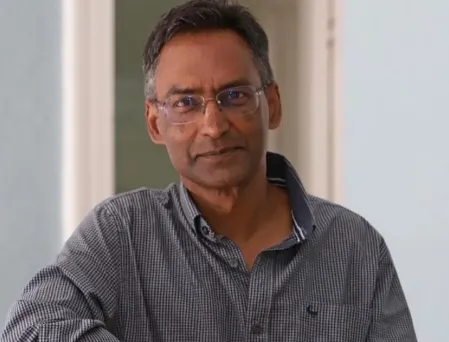
Shanil Haricharan, an anti-apartheid operative, grew up in the working-class neighbourhood of Tongaat, South Africa, a community that would deeply influence his understanding of social injustice. His formative years in Tongaat laid the groundwork for his later involvement in clandestine activities against the apartheid regime. Operating under the alias 'Ben', Haricharan served as a dedicated member of the Ashley Kriel Detachment (AKD) in the Western Cape, a unit renowned for its strategic operations. His commitment to the struggle led to his detention in 1986 under the Public Safety Act for Umkhonto we Sizwe (MK) activities. At the time of his arrest, Haricharan was working as a high school teacher in Transkei, a role he balanced with his covert revolutionary efforts. This period marked a significant turning point in his life, solidifying his resolve against the oppressive system.
Roots of Resistance
Shanil Haricharan's anti-apartheid activism was deeply rooted in a rich family history of resistance and community engagement. His late father, Billy Haricharan, was a respected activist who instilled in him early principles of social justice and a commitment to human rights. This paternal influence was complemented by the legacy of his late maternal grandfather, Ramesar Bhugwandass, who was widely known as a philanthropist and an active member of the Natal Indian Congress. The Natal Indian Congress was a key organization instrumental in the fight against racial discrimination and for the rights of Indian South Africans, contributing significantly to the broader anti-apartheid movement in South Africa.
Haricharan's own commitment to activism deepened significantly during his university years. He graduated from Wits University a year before his detention in 1986, where he was not merely a student but an actively involved activist. His time at Wits University provided a key platform for him to engage with political discourse and organize against the apartheid state. These experiences, combined with his family's enduring legacy of fighting for human rights and equality, profoundly shaped his trajectory into a clandestine operative against the apartheid regime. His strong background provided a solid foundation for his later involvement with Umkhonto we Sizwe, the armed wing of the African National Congress, and his key role within the Ashley Kriel Detachment.
Covert Operations and Detention
In his mid-twenties, Shanil Haricharan became deeply involved in the covert operations of Umkhonto we Sizwe (MK), the armed wing of the African National Congress (ANC). This period was characterized by immense personal risk and unwavering dedication to the cause of liberation. After an initial period of detention, which failed to break his spirit, he returned to the armed struggle in early 1987, having been specifically recruited back into MK by Aneez Salie, a key figure in the movement. Haricharan served with distinction in the Ashley Kriel Detachment (AKD), a unit that conducted more than 30 coordinated operations against critical apartheid infrastructure. These strategic operations were meticulously planned and executed, targeting various symbols and instruments of the apartheid state. Specifically, the AKD's efforts targeted railway lines, which were vital for economic and military logistics; rent offices, representing the oppressive administrative control over black communities; magistrate courts, symbols of an unjust legal system; police stations, centers of state repression; and even the heavily fortified South African Defence Force headquarters at the Castle of Good Hope. Each operation aimed to disrupt the regime's functionality and demonstrate the resistance's capability.
In late 1987, Haricharan undertook a particularly high-stakes mission, transporting essential weapons and communications equipment from Lusaka, Zambia, for MK operatives. This dangerous journey involved driving a white Nissan Skyline from Johannesburg to Cape Town, a considerable distance across a country under tight security. He was accompanied by Shirley Gunn, his trusted comrade and a co-commander of the AKD, noting the collaborative and interdependent nature of their work. During a subsequent period of detention, Haricharan endured severe treatment at the hands of the Security Police at Maluti Police Station. He was subjected to intense interrogation, physical assault, and deprivation of basic human necessities such as food and sleep, tactics commonly used by the apartheid regime to break political prisoners. Following this ordeal, he was subsequently held in solitary confinement at Mount Fletcher Prison, a punitive measure designed to isolate and further demoralize activists. Despite these brutal experiences, Haricharan's resolve remained unbroken, a testament to his profound commitment to the anti-apartheid struggle.
Transition to Public Service
Following his intense involvement in the anti-apartheid struggle and the eventual dismantling of the apartheid system, Shanil Haricharan transitioned into public service, initially focusing his considerable energy and experience on community development. In the early 1990s, with South Africa on the cusp of a new democratic era, he returned to his hometown of Tongaat. There, he dedicated his efforts to the Tongaat Child Welfare Society, an organization key for supporting vulnerable children and families in the post-apartheid landscape. Haricharan served diligently in this organization, applying his understanding of social justice to practical community needs, eventually assuming the key role of director. His leadership at the Tongaat Child Welfare Society demonstrated his ability to translate revolutionary ideals into tangible improvements in people's lives, particularly for the youth.
Prior to embarking on his distinguished academic career, Haricharan also held significant positions as a senior official and adviser within the nascent South African government. In these key roles, his work centered on public policy and development planning, contributing directly to the monumental post-apartheid nation-building efforts. His deep understanding of societal inequities, forged during his years in the resistance, proved invaluable in shaping policies aimed at creating a more equitable and just society. He played a part in laying the administrative and policy foundations for the new democratic state, utilizing his strategic thinking and commitment to public good in a different, yet equally vital, arena. His journey from clandestine operative to government adviser showcased his versatility and unwavering dedication to the betterment of South Africa.
Academic and Public Life
Today, Shanil Haricharan continues to contribute significantly to South African society, albeit through a different lens. He currently teaches and conducts vital research on public leadership and governance in Africa at the esteemed Nelson Mandela School of Public Governance at the University of Cape Town. In this academic capacity, he imparts his profound insights and experiences to a new generation of leaders, focusing on the challenges and opportunities for effective governance across the continent. His work here bridges his past as an activist with the future needs of democratic institutions, ensuring that the lessons of the struggle inform contemporary leadership practices.
Beyond his impactful academic work, Haricharan has also made significant contributions to literature documenting the anti-apartheid struggle, ensuring that the narratives and sacrifices of those who fought are preserved and understood. He notably co-edited the compelling book, 'Voices from the Underground', alongside his former comrade Shirley Gunn. This important publication, released by Penguin Random House, features poignant reflections and testimonies from various MK operatives, offering an intimate and authentic perspective on the clandestine fight against apartheid. The book serves as a key historical record, shedding light on the personal courage and collective determination that characterized the liberation movement. Through his teaching, research, and literary contributions, Shanil Haricharan remains a powerful voice, continually shaping public discourse and inspiring future generations with his unwavering commitment to justice and good governance. His life story is a testament to the enduring power of resistance and the transformative potential of dedicated public service.