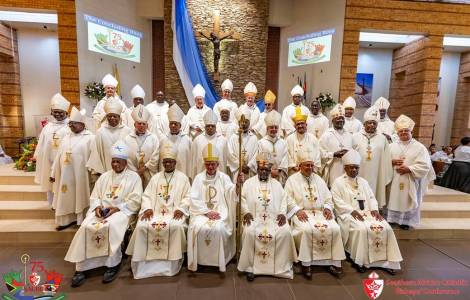
The South African Catholic Bishops' Conference (SACBC) issued a pastoral statement on Wednesday, May 20, 2026, addressing escalating violence and tensions against foreign migrants across various regions of South Africa. This significant declaration from the religious body noted the widespread nature of the issue, acknowledging its presence in multiple communities throughout the nation. The statement, titled “Pastoral Statement on Violence Against Migrants in South Africa,” was signed by Cardinal Stephen Brislin, president of the SACBC. In releasing this document, the SACBC stated it approached this "critical moment with a profound sense of urgency and moral responsibility," emphasizing that "Violence against migrants can never be justified, tolerated, or accepted." This unequivocal stance shows the gravity with which the Conference views the ongoing acts of aggression and discrimination.
The Bishops' Conference condemned the violence "unequivocally," describing it as actions that "constitute a grave violation of human dignity and a betrayal of the values that should define our society." Their condemnation extended specifically to acts of violence, intimidation, and forced expulsion directed at migrants and refugees, noting the multifaceted nature of the challenges faced by these vulnerable groups. They further articulated that the "protests and these waves of violence” are “symptoms of deeper, older failures and broken promises that can no longer be ignored." The SACBC called for these underlying issues to be "honestly addressed," warning that otherwise, "the cycle of anger, resentment, and violence will continue to intensify." This call for introspection suggests that the root causes of the unrest must be tackled comprehensively to prevent future recurrences. Cardinal Brislin also affirmed that "regardless of immigration status, every person has a right to medical care and education," a principle the Conference has consistently upheld.
Bishops' Call for Justice
The South African Catholic Bishops' Conference (SACBC) issued a strong condemnation of the violence targeting migrants and refugees. The bishops stated they "unequivocally" denounce acts of violence, intimidation, and forced expulsion directed at these groups. This strong language reflects the Conference's moral outrage at the treatment of foreign nationals within South Africa's borders. The SACBC emphasized that such actions are unacceptable, asserting that "Violence against migrants can never be justified, tolerated, or accepted." This foundational principle guides their pastoral message, advocating for a society built on respect and human rights.
The Conference further described these acts as a fundamental affront to human rights and societal principles. The bishops declared that the violence and intimidation "constitute a grave violation of human dignity and a betrayal of the values that should define our society." This statement not only condemns the physical acts of violence but also notes the erosion of ethical standards within the community. This stance reaffirms the Church's long-standing advocacy for the protection of vulnerable populations, urging a return to humanitarian principles. The SACBC's consistent message shows the importance of upholding the inherent dignity of every individual, irrespective of their origin or legal standing. The statement from the SACBC shows the moral imperative to safeguard the rights and safety of all individuals within South Africa's borders, regardless of their origin or legal status.
Context and Root Causes
The bishops identified several root causes contributing to the violence, including unfulfilled promises of dignity, inclusion, and equal opportunity, persistent deficiencies in public services, growing inequality, and mass unemployment. These systemic issues, they noted, create a fertile ground for social unrest and scapegoating. They specifically pointed out that tensions arise from competition for scarce resources such as jobs, housing, and public services, which are exacerbated by existing societal inequalities. The South African Catholic Bishops' Conference (SACBC) stated that "porous borders, corruption in the Ministry of Home Affairs, and irregular immigration procedures have eroded public confidence in the state’s ability to effectively manage migration." This erosion of trust, they argue, contributes to a climate where frustration can easily turn into hostility towards foreign nationals.
In their statement, the bishops referenced Pope Francis' Encyclical "Fratelli Tutti," drawing parallels between the global message of fraternity and the local challenges faced in South Africa. The SACBC has previously addressed related issues, demonstrating a consistent focus on social justice. In January 2023, the Conference condemned "racism of a colonial and apartheid-like nature" in South African society, indicating a historical and structural dimension to the current challenges. This earlier condemnation noted the enduring legacy of discrimination that continues to manifest in various forms. Cardinal Stephen Brislin also previously denounced groups "denying" foreigners access to hospitals and schools in 2025, showing a pattern of discrimination against migrants in essential services. In a pastoral letter dated October 4, Cardinal Brislin called practices denying foreigners access to essential services "deeply repugnant," reiterating his stance that "regardless of immigration status, every person has a right to medical care and education." These previous statements illustrate the SACBC's long-standing commitment to advocating for the rights and welfare of migrants and refugees.
Appeals and Broader Concerns
The bishops appealed to political parties and candidates for public office, urging them not to exploit the migration situation or the suffering within communities for political gain. This plea reflects concerns that the plight of migrants could be weaponized for electoral advantage, further exacerbating tensions. The SACBC emphasized the need for responsible leadership that prioritizes unity and human dignity over divisive rhetoric. This call came as the South African Human Rights Commission (SAHRC) also expressed "deep concern" regarding reports and videos depicting violent attacks against undocumented immigrants, particularly those occurring in KwaZulu-Natal. The SAHRC’s statement, which noted these concerns, was published on May 19, 2026, just a day before the SACBC's pastoral message. The convergence of these statements from two prominent bodies shows the severity and urgency of the situation, drawing national attention to the escalating violence and the systemic issues contributing to it. Both organizations are advocating for immediate action and a more humane approach to managing migration and addressing societal grievances.