South Africa's water sector is undergoing significant transformation, marked by legislative reforms, new operational models, and strategic infrastructure development. At the forefront of these changes is the Water Services Amendment Bill, which aims to strengthen the separation between Water Services Authorities (WSAs) and Water Services Providers (WSPs). This legislative initiative is a key component of broader reforms designed to enhance efficiency, accountability, and service delivery across the nation's water landscape. The proposed separation seeks to clarify roles and responsibilities, ensuring that regulatory and operational functions are distinct, thereby improving governance within the sector.
In a related and pioneering development, Rand Water established a new public-public Special Purpose Vehicle (SPV) with the Emfuleni Local Municipality, named The Vaal Corporation Water Utility. This collaboration represents a strategic partnership model intended to improve water management and service provision at the local level, addressing specific municipal needs through a dedicated entity. Ramateu Monyokolo, a prominent figure in the sector, stated, "We should not be shy of what we are capable of as South Africans. The continent, and indeed the world, has a great deal to learn from us as well." This statement shows a broader confidence in South Africa's capacity for innovation and leadership in water resource management.
New Water Service Models and Regulatory Oversight
Under the proposed reforms, a key regulatory change will see all Water Services Providers (WSPs) required to obtain an operating licence from the Department of Water and Sanitation. This new licensing regime is designed to streamline oversight within the sector, ensuring that all WSPs adhere to established standards of quality, reliability, and financial prudence. The requirement for a formal operating licence will introduce a more rigorous framework for accountability, enhancing consumer protection and promoting sustainable water management practices. This move is expected to professionalize the sector further and bring greater consistency to service delivery nationwide.
Rand Water has also expanded its operational reach internationally, showcasing South African expertise beyond its borders. The utility has been selected as the preferred partner for the Zanzibar Water Authority (ZAWA). This significant international partnership involves a full 10-year management, operations, and maintenance contract. The collaboration with ZAWA notes Rand Water's growing reputation and capacity to export its operational knowledge and technical skills to other regions. Ramateu Monyokolo reiterated his earlier sentiment regarding national capabilities, stating, "We should not be shy of what we are capable of as South Africans. The continent, and indeed the world, has a great deal to learn from us as well." This international engagement is a testament to the advanced capabilities developed within South Africa's water sector.
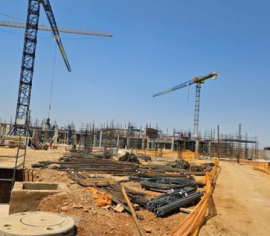
Domestically, many of Rand Water's existing infrastructure projects continue to play a vital role in securing the nation's water supply. Major undertakings, such as the Vlakfontein Reservoir and the System 5A Water Purification Plant at Rand Water’s Zuikerbosch Station, were initiated as part of the ambitious Rand Water Strategy in 2009. These long-term projects represent significant investments in critical infrastructure, continuing to support water provision efforts for millions of South Africans. Their ongoing operation and maintenance are key for ensuring the reliability and quality of bulk water supply.
Infrastructure Agency's Role in National Water Security
A cornerstone of the national water sector reform agenda is the establishment of the South African National Water Resources Infrastructure Agency (NWRIA). This new agency is being created with the explicit intention of strengthening the planning, financing, development, operation, and maintenance of South Africa’s strategic water resource infrastructure. The NWRIA will assume direct oversight of major assets, including the country's extensive network of dams and complex bulk water transfer schemes. This move is part of a broader governmental effort to reform the nation's water sector and ensure the long-term sustainability of its water resources, particularly in the face of climate change and increasing demand.
The agency's formation reflects a strategic decision to consolidate management of critical water assets under a single, dedicated entity, thereby enhancing coordination and efficiency. Ramateu Monyokolo, whose affiliation was not specified in this context but is a recognized voice in the sector, has previously stated, "We should not be shy of what we are capable of as South Africans. The continent, and indeed the world, has a great deal to learn from us as well." This sentiment notes a broader confidence in South Africa's capacity to innovate and manage complex infrastructure projects on a national scale. The NWRIA's mandate will include ensuring efficient water allocation across various sectors and maintaining the integrity and operational readiness of the country's essential water supply systems. By centralizing these functions, the government aims to create a more resilient and responsive water infrastructure system for the future.
Water Boards' Evolving Mandate and Financial Strategies
Rand Water currently supplies an impressive 4.57 billion litres of water daily, showing its key role in the country's water supply chain. The operational scope of South African water entities is also expanding, with South African Water Works notably operating concessions in Mbombela and another in Ballito. These developments reflect a shifting landscape for water service providers in the country, with a growing emphasis on specialized management and public-private partnership models to enhance service delivery and operational efficiency. Such concessions allow for focused management and investment in specific areas, tailoring solutions to local needs.
Further indicating a change in financial strategy and an embrace of market-based funding mechanisms, two of South Africa’s prominent water boards, Rand Water and uMngeni-uThukela Water, have become debt listed on the Johannesburg Stock Exchange. This strategic move provides new avenues for capital investment in vital water infrastructure projects, allowing these entities to raise funds directly from financial markets rather than solely relying on government allocations or traditional bank loans. This diversification of funding sources is key for addressing the substantial capital requirements for upgrading and expanding water infrastructure across the country. Ramateu Monyokolo noted that South Africans should be confident in their capabilities, stating, "We should not be shy of what we are capable of as South Africans. The continent, and indeed the world, has a great deal to learn from us as well." This confidence is particularly relevant as these institutions navigate new financial territories to secure the future of South Africa's water resources.